


More news on this day
Saudi Arabia is emerging as the anchor of a fast-expanding Middle East tourism market, as new data and long-range forecasts point to the region building a travel economy worth about $605 billion by 2036, with the kingdom providing nearly half of that value.
Get the latest news straight to your inbox!
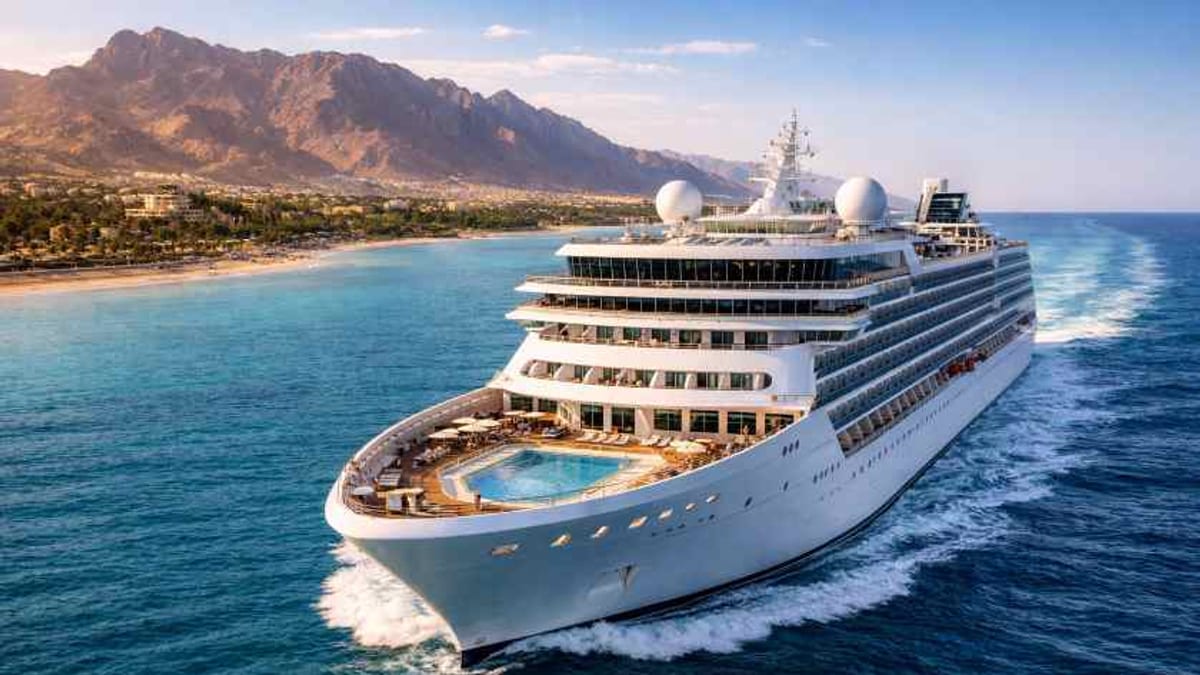
Middle East Travel Economy Targets $605 Billion by 2036
Recent economic impact research on the Middle East tourism sector indicates that the region is on track to reach a travel and tourism economy in the range of $600 billion by 2036, with analysts commonly citing a working target of about $605 billion when combining national and regional projections. Forecasts compiled from industry bodies and regional plans suggest that this would represent a substantial increase from an expected contribution of roughly $360 billion to $380 billion in the mid 2020s, implying growth noticeably faster than the global average through the next decade.
Publicly available briefing material from international tourism research platforms highlights that the Middle East is already one of the fastest growing regions for travel and tourism, supported by large-scale investment, infrastructure development and policy reforms. Forward-looking scenarios for 2036 factor in expanded air connectivity, new destination cities across the Gulf and Red Sea, and an ongoing pivot from oil revenues to service and experience-based sectors.
Within these projections, Saudi Arabia is consistently identified as the single largest contributor to regional travel activity, both in terms of total visitor spending and tourism-related gross domestic product. Forecasts also assume that other Gulf and Levant economies, including the United Arab Emirates, Qatar and Egypt, will continue to build complementary hubs focused on aviation, culture, events and coastal tourism.
Saudi Arabia Consolidates Its Role as Regional Tourism Powerhouse
Data released in 2026 drawing on the World Travel and Tourism Council’s most recent Economic Impact Report shows that Saudi Arabia has become the largest travel and tourism market in the Middle East by a wide margin, with sector activity in 2025 estimated at about 178 billion dollars. That figure represents around 46 percent of the region’s total travel and tourism economy, underscoring the scale of Saudi Arabia’s contribution to the wider regional boom.
Earlier research from the council projected that Saudi Arabia’s travel and tourism sector could grow at an average pace in the low double digits annually over a decade, outstripping the expected expansion of the broader national economy. More recent summaries of the 2025 and 2026 data continue to portray the kingdom as both the largest and fastest growing tourism market in the Middle East, supported by high levels of capital spending on airports, cruise facilities, hospitality and entertainment districts.
The kingdom’s national targets envisage tourism’s share of gross domestic product rising from single digits a decade ago to the mid-teens by the early 2030s, and approaching one fifth of economic output under some scenarios by the mid 2030s. Employment linked directly and indirectly to tourism is projected in published modeling to exceed 3.5 million jobs over the same horizon, helping to diversify labor markets that have historically been dominated by energy and public sector roles.
Record Visitor Numbers and Tourism Milestones in Saudi Arabia
Visitor data for 2023 and 2024 underline the pace of Saudi Arabia’s ascent. According to official statistical releases and international monitoring, the country surpassed 100 million total tourists, combining domestic and international visitors, in 2023, several years ahead of its original 2030 target. The achievement was later confirmed in national reporting as a milestone for Saudi Vision 2030.
Government figures for 2024 indicate that inbound international arrivals reached about 30 million, an increase of approximately 8 percent from the previous year. This performance helped cement Saudi Arabia’s position among the fastest growing major destinations worldwide, with some global tourism agencies identifying the kingdom as the leading G20 economy in terms of growth in international tourist arrivals compared with pre pandemic baselines.
Parallel assessments that compile data from the World Travel and Tourism Council estimate that Saudi Arabia’s travel and tourism sector contributed slightly more than 100 billion dollars to national gross domestic product in 2024 and supported around 2.6 million jobs. These indicators frame the country as not only a regional leader, but also a key driver of global tourism recovery, with momentum expected to carry into the next decade as new developments come online.
Mega Projects and Policy Reforms Reshaping the Tourism Landscape
The scale of Saudi Arabia’s ambition is most visible in a pipeline of mega projects that aim to remake large stretches of its coastline and cities into global destinations. Flagship initiatives associated with the national transformation agenda include new resort regions along the Red Sea, futuristic urban developments in the northwest, and large mixed-use entertainment and cultural districts near Riyadh and Jeddah. Collectively, these projects are designed to add tens of thousands of hotel rooms, marinas, golf courses, theme parks and heritage attractions.
International organizations and market reports describe these schemes as among the largest tourism investment programs in the world, with multi year spending plans measured in hundreds of billions of dollars. Beyond new builds, Saudi authorities have eased entry rules for many markets, created streamlined electronic visa systems and expanded capacity at key airports, measures that analysts say have reduced friction for inbound travel and encouraged more frequent regional trips.
Policy reforms also extend to cultural and entertainment offerings, with Saudi Arabia now regularly hosting concerts, sporting events, business forums and exhibitions that were rare less than a decade ago. Upcoming major events in the wider region, including World Expos and global sports tournaments, are expected to interact with Saudi Arabia’s infrastructure build out, creating multi stop itineraries that keep visitors circulating within the Middle East.
Regional Competition, Headwinds and Long Range Outlook
The Middle East tourism boom is not confined to Saudi Arabia. Neighboring economies such as the United Arab Emirates, Qatar, Oman and Egypt continue to invest heavily in aviation, cruise ports and hospitality, targeting high spending leisure and business travelers. New cultural districts, heritage restorations and desert or coastal resorts across the region are intended to broaden the visitor base beyond traditional transit and shopping niches.
At the same time, the regional outlook faces headwinds. Reports from multilateral agencies and travel industry observers point to heightened geopolitical risks, fluctuations in fuel prices and concerns about aviation capacity and ticket costs. Periodic tensions have already influenced traveler sentiment in specific markets, and some European tour operators have noted a preference among their customers for destinations perceived as closer or less exposed to regional conflict.
Despite these challenges, most long range tourism scenarios released in 2025 and 2026 still envisage the Middle East significantly increasing its global market share by 2036, with Saudi Arabia accounting for a large portion of that expansion. The combination of sustained investment, young populations, and continued policy shifts toward openness and diversification is viewed as a structural driver of demand that can offset cyclical shocks.
If current trajectories hold, the region’s travel and tourism economy could approach or exceed the frequently cited 605 billion dollar mark by 2036, making it one of the most dynamic tourism growth stories of the coming decade and positioning Saudi Arabia as a central hub in a reconfigured global travel map.