


More news on this day
Saudi Arabia’s Foreign Ministry has urged citizens stranded abroad or unable to reach their destinations amid mounting flight cancellations to seek assistance from Saudi diplomatic missions, as a wave of Houthi attacks on airports in Riyadh, Jeddah and Dammam disrupts air travel across the kingdom and beyond.
Get the latest news straight to your inbox!
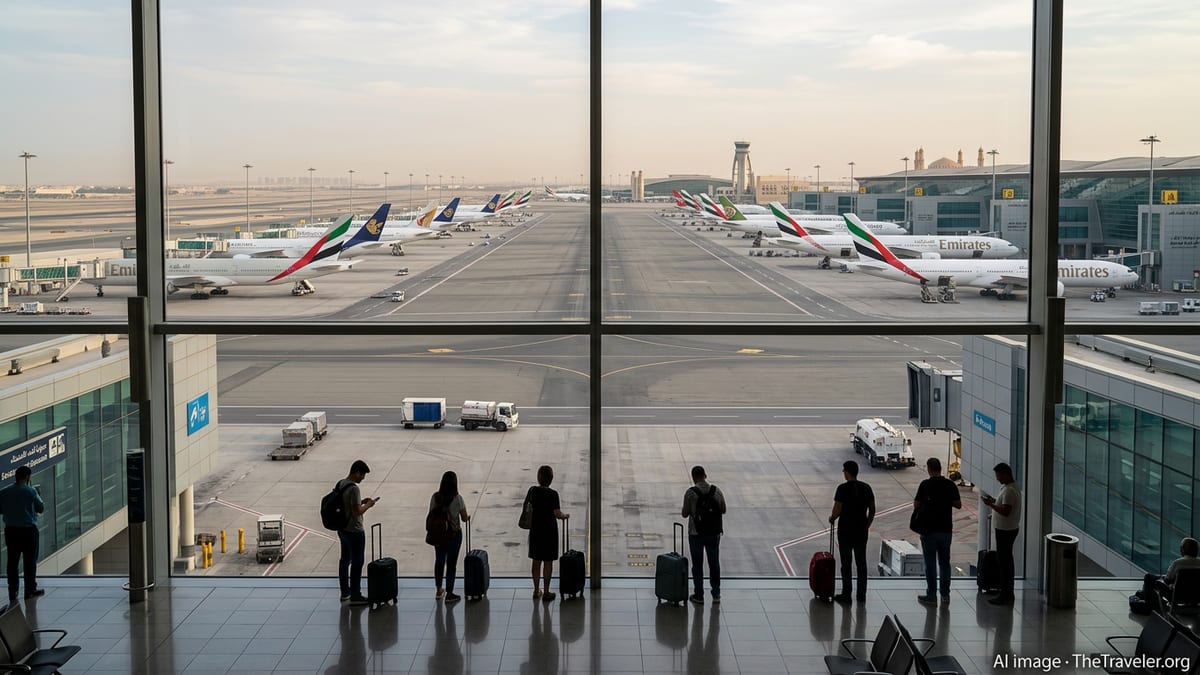
Foreign Ministry advisory targets citizens hit by flight chaos
Publicly available statements from Saudi Arabia’s Foreign Ministry indicate that the advisory is aimed at citizens whose journeys have been interrupted by the suspension or delay of flights serving King Khalid International Airport in Riyadh. The airport has been repeatedly targeted in recent days, prompting evacuations, diversions and a rolling pattern of schedule changes that have left passengers stranded in multiple countries.
The ministry has called on affected citizens who are currently outside the kingdom to contact Saudi embassies and consulates where they are staying in order to request assistance and obtain guidance. Coverage in regional media notes that missions have been instructed to prioritize stranded travelers whose flights to Riyadh have been cancelled or significantly delayed.
The advisory follows a series of deadly strikes on Riyadh’s main airport over the past week that, according to civil aviation updates and press reports, have killed at least a dozen people and injured several hundred. Operations at King Khalid International Airport were suspended for periods while damage assessments and safety checks were carried out, resulting in more than one day of severe disruption to both domestic and international services.
Reports from Saudi outlets also highlight that travel disruption is not limited to the capital. Flight operations at Jeddah and Dammam have been affected after missile and drone attacks and related security incidents in the country’s east and along the Gulf coast, contributing to a patchwork of cancellations and delays that continues to evolve hour by hour.
Riyadh, Jeddah and Dammam airports under sustained threat
Information collated from aviation authorities and open-source reporting shows that Houthi forces based in Yemen have intensified their campaign against Saudi civilian infrastructure since mid-year, with airports in Riyadh, Jeddah and Dammam among the primary targets. In the latest incidents, ballistic missiles and drones were reportedly launched toward King Khalid International Airport, forcing inbound flights to divert and halting departures during active alerts.
In Dammam, a projectile reportedly landed near King Fahd International Airport during the current escalation, illustrating how the threat has extended beyond the capital to key hubs on the Gulf. While structural damage assessments are ongoing, local coverage describes precautionary measures that include temporary closure of parts of the terminal and expanded security cordons around aviation facilities.
Airport advisories reviewed by TheTraveler.org show that King Khalid International Airport has urged passengers to verify their flight status directly with their airline before travelling to the terminal, particularly for services to and from destinations in Europe, South Asia and the wider Middle East. Travel alerts from foreign governments similarly warn of the potential for sudden airspace restrictions, diversions and extended ground holds affecting flights across Saudi Arabia.
Published coverage from Riyadh notes that the recent attacks follow earlier strikes on the same facilities this year, part of a broader pattern of missile and drone activity linked to the conflict in Yemen. Governments in Europe, North America and Asia have reiterated existing advice that travelers remain alert to local security announcements and be prepared for short-notice changes to travel plans within the kingdom.
International airlines adjust schedules and suspend services
The disruption has rippled through airline networks serving Saudi Arabia, with several international carriers announcing temporary suspensions or reductions in service to Riyadh as they reassess risk. Reporting from global aviation and news outlets indicates that some European and Asian airlines have halted flights for periods of several days, while others are operating limited schedules subject to real-time security assessments.
Flight-tracking data reviewed in recent days shows waves of cancellations and diversions affecting King Khalid International Airport, particularly during and immediately after attack alerts. Aircraft approaching Riyadh have in some cases diverted to alternative airports within the region, adding to congestion at nearby hubs and complicating onward connections for passengers bound for Saudi Arabia.
Some Gulf-based carriers have continued to operate selected services into the kingdom while adjusting routings and timings around known periods of elevated risk. However, industry analysis carried in regional media suggests that airlines remain highly cautious about exposure to missile and drone activity near major airports, especially after the most recent incidents resulting in fatalities and significant injuries.
Travelers booked on upcoming flights to or from Saudi airports are being advised in multiple advisories to monitor airline notifications closely, ensure that contact details in reservations are up to date and build in extra time for potential security-related delays. There is particular emphasis on those connecting through Riyadh to long-haul destinations, where missed connections may lead to extended layovers or unplanned stopovers in third countries.
Guidance for Saudi citizens and foreign travelers in transit
According to published guidance, Saudi citizens who find themselves stranded abroad because of suspended or heavily delayed flights to the kingdom are encouraged to call or visit the nearest Saudi embassy or consulate. Missions have publicized emergency contact numbers and, in some cases, 24-hour response arrangements to help with rerouting, temporary accommodation queries and documentation issues that may arise from unplanned changes in itinerary.
Foreign travel advisories from countries including the United States and the United Kingdom already highlight the risk of missile and drone attacks on Saudi airports, urging their nationals to maintain flexible travel plans, keep passports and essential documents accessible and follow instructions issued by local airport operators. Recent security alerts reiterate that airspace closures or restrictions can occur with little warning when attacks or intercept operations are underway.
For passengers in transit within Saudi Arabia, publicly available information from airport operators recommends remaining inside secure terminal areas, paying close attention to public address announcements and information screens, and maintaining regular communication with airlines via official apps or customer service channels. Travellers are also encouraged to keep essential items such as medications, chargers and a change of clothes in carry-on luggage in case of extended ground delays.
While some flights are continuing to operate into and out of the kingdom, the combination of staggered suspensions, diversions and heightened security checks means that overall capacity remains constrained. Travel industry observers note that the situation is fluid and heavily dependent on the frequency and intensity of further attacks, with little clarity yet on when a stable, predictable schedule pattern might resume.
Escalating regional conflict raises broader airspace concerns
The latest Houthi attacks on Saudi airports come against the backdrop of a broader regional conflict in which missile and drone technology is increasingly being used against civilian infrastructure. Open-source reporting points to a steady rise in the range and accuracy of such weapons, raising concerns among aviation safety experts about the exposure of commercial aircraft both in flight and on the ground.
International civil aviation bodies have previously highlighted Saudi Arabia and neighboring airspace as areas requiring careful risk assessment by airlines and corporate flight departments. Advisories compiled by governments and aviation information services stress that operators must balance demand for travel to the kingdom with the need to protect passengers and crew from evolving threats that may not always be predictable in timing or location.
For travelers and the tourism sector, the immediate impact is visible in disrupted itineraries, postponed business trips and uncertainty around major upcoming events in Saudi Arabia’s calendar. While hotels and conference organizers in Riyadh and other cities continue to operate, reports indicate that some visitors have opted to delay travel until flight operations stabilize and the security situation becomes clearer.
As authorities in Saudi Arabia and partner countries assess the latest incidents and calibrate their responses, it remains uncertain how long the current pattern of attacks on airports will persist. For now, official and private-sector guidance converges on one point for anyone planning to travel to or through the kingdom: monitor developments closely, stay in contact with airlines and, for Saudi nationals, make active use of diplomatic missions if flights are cancelled or routes abruptly change.