


More news on this day
Governments across North America, Europe and the Asia-Pacific region have sharply tightened their travel advice for Saudi Arabia and parts of the wider Middle East after a series of deadly missile and drone attacks on Riyadh’s King Khalid International Airport and growing concerns over aviation security.
Get the latest news straight to your inbox!
Riyadh airport strikes trigger wave of new advisories
Publicly available reporting indicates that King Khalid International Airport, the main gateway to the Saudi capital, has been struck multiple times since early October 2026 by missiles and drones attributed to Yemen’s Houthi movement. Coverage from international news agencies describes a major attack on October 10 that hit a passenger terminal in the mid-afternoon, killing at least a dozen people and injuring more than 300, including foreign nationals. Follow-on strikes and debris incidents have been reported around the wider airport complex, leading to further casualties and structural damage.
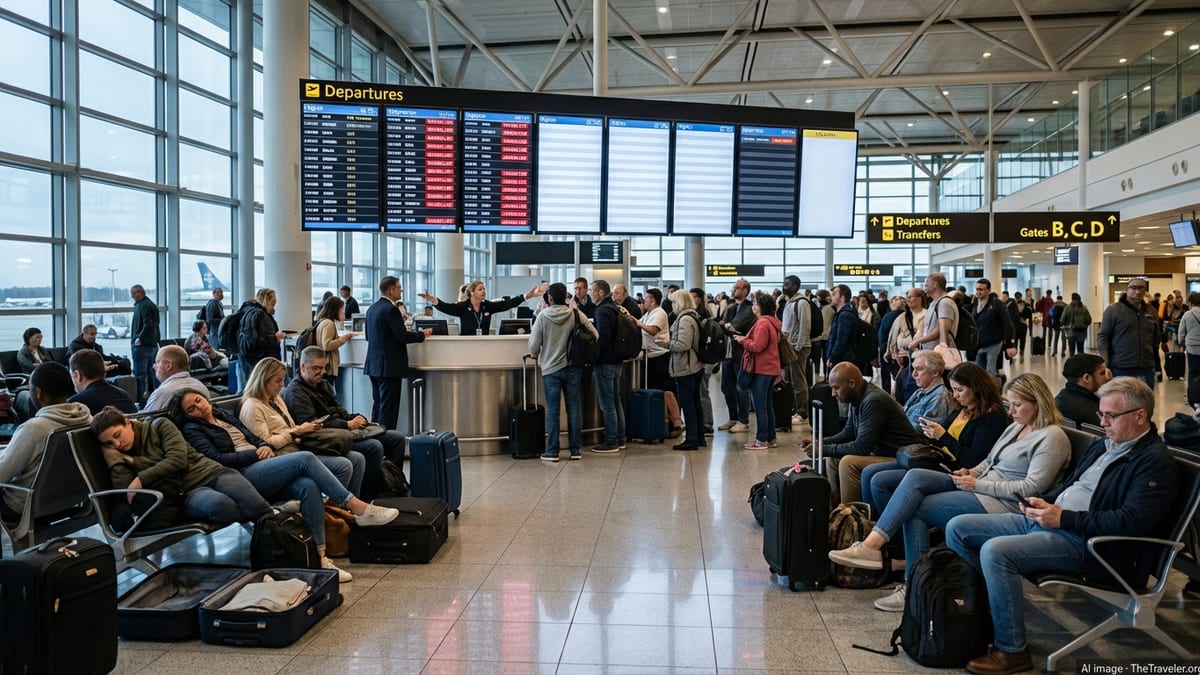
Flight-tracking data and airline statements referenced in media coverage show that hundreds of flights were cancelled, diverted or heavily delayed in the aftermath of the October 10 attack. Travellers transiting through Riyadh reported large-scale evacuations, long queues at security checkpoints and uncertainty over when departures would resume. Images verified by major outlets show smoke rising from terminal buildings and damaged aircraft stands.
In the days since, airspace risk assessments produced by aviation analysts and travel-industry bulletins have been revised to treat Riyadh as one of the most volatile major hubs in the Gulf, with particular concern about the accuracy and frequency of missile and drone launches. These assessments emphasise that even when the airport is technically open, operations can change rapidly if incoming threats are detected.
Saudi Arabia and Middle East risk levels raised
The United States now lists Saudi Arabia at Level 3, “Reconsider travel,” reflecting the risk of drone and missile attacks linked to Iran and Iranian-aligned groups, armed conflict, terrorism, exit bans and restrictions on speech and social media activity. The advisory, updated in mid-October, specifically highlights the threat to airports and civil aviation, and points travellers toward ground transport alternatives where feasible.
Updated guidance from the United Kingdom’s Foreign, Commonwealth and Development Office advises against all travel to areas near the Yemeni border and against all but essential travel to several provinces, including parts of Riyadh province. The notice issued after the October 10 incident urges British nationals to avoid King Khalid International Airport until security is re-established and to verify flight status before setting out for any Saudi airport.
Australia’s Smartraveller service has moved to an overall “reconsider your need to travel” rating for Saudi Arabia and now explicitly advises against travel to King Khalid International Airport. The update on October 12 warns that renewed Houthi attacks since July have targeted Riyadh and regional airports, and notes that Houthi statements have threatened further strikes against Saudi airports and airspace, excluding the holy cities of Mecca and Medina.
Canada, New Zealand, Japan and South Korea have also adjusted their travel pages for Saudi Arabia in recent days, according to a survey of official advisories and international media reports. The common themes include warnings about the potential for further missile and drone attacks without notice, the possibility of sudden airspace closures and the risk that insurance coverage may be affected if travellers ignore government guidance.
Alleged attempted hijacking raises aviation-security concerns
Alongside the missile and drone threat, international coverage has drawn attention to reports of an alleged attempted hijacking involving a Middle East-bound passenger flight in recent days. Open-source information suggests that crew and security personnel intervened before the aircraft left the gate area, and no injuries were reported, but the episode has nonetheless intensified scrutiny of security vetting and screening for flights operating to and from the region.
While details of the alleged hijacking attempt remain limited and subject to ongoing investigation, aviation analysts quoted in regional outlets indicate that it has reinforced existing concerns about the convergence of traditional aviation-security risks with the newer dangers posed by long-range missiles and unmanned aerial systems. Industry commentary notes that even an incident resolved on the ground can prompt airlines and regulators to review cockpit-access protocols, passenger-screening procedures and contingency planning for flights transiting high-risk airspace.
Travel advisories reviewed by TheTraveler.org do not yet list the alleged hijacking attempt as a standalone reason to avoid specific routes, but several governments now reference a combination of armed conflict, terrorism and threats to civil aviation in their overall assessments for parts of the Middle East. This bundling of risks suggests that authorities are looking at the region’s air-travel environment in a more holistic way than in previous years.
What airlines and airports are doing
According to airline statements and schedule data compiled since the October 10 attack, a number of international carriers have temporarily reduced or suspended services to Riyadh, with some rerouting passengers through alternative hubs such as Doha, Dubai or Abu Dhabi. Others continue to operate but have introduced extended ground-time buffers, adjusted departure banks to daylight hours or implemented dynamic rerouting to avoid perceived missile threat corridors near the Yemeni border.
Publicly available notices from Saudi civil aviation authorities and airport operators describe a range of visible security measures at major airports, including increased screening of passengers and baggage, additional checkpoints on access roads and restrictions on photography of military or security infrastructure. Notices to airmen have highlighted the risk of missile and drone activity and set out procedures for temporary runway and airspace closures if incoming threats are detected.
Regional travel and tourism bodies report a downturn in bookings involving direct stops in Saudi Arabia, particularly for leisure travellers, while corporate itineraries are being reworked to limit staff time on the ground in higher-risk locations. Industry guidance encourages travel managers to maintain flexible, changeable tickets and to ensure that travellers have access to real-time flight alerts and local security updates while in transit.
For airports elsewhere in the Middle East, the situation is more mixed. Gulf hubs not directly targeted by recent attacks continue to market themselves as stable alternatives for connections between Europe, Asia and Africa, but route-planning data shows that some carriers are adding extra flight time to skirt contentious airspace or shifting night-time operations to periods considered less exposed to attack.
Practical advice for travellers considering the region
Government advisories and specialist travel-risk bulletins converge on several practical steps for anyone still planning to travel to or through Saudi Arabia in the near term. Travellers are urged to read the full text of their own government’s travel advice before booking, paying particular attention to any “do not travel” or “reconsider travel” designations that may affect insurance coverage. Many policies exclude claims arising from travel to areas under high-level warnings.
For those who proceed with travel despite elevated risk levels, official guidance emphasises confirming flight status directly with airlines shortly before leaving for the airport, allowing extra time for enhanced security screening and being prepared for last-minute gate changes, delays or diversions. Some advisories recommend minimising time spent inside terminal buildings, remaining aware of emergency exits and following the instructions provided through airport public-address systems during any security incident.
Travel-risk firms highlight the importance of registering contact details with consular services where such programs exist, keeping copies of identity documents stored securely online, and having a contingency plan in case commercial flights are disrupted for an extended period. For business travel, companies are being encouraged to conduct formal risk assessments, document their decision-making and provide staff with clear guidance on what to do if routes are altered mid-journey.
Prospective visitors who are uncomfortable with the current level of uncertainty around air travel in and out of Saudi Arabia may opt to postpone non-essential trips or route through alternative hubs in the wider region that are currently assessed as lower risk. Given the dynamic nature of the conflict and fast-moving security developments, authorities stress that advisories for Saudi Arabia and neighbouring states are subject to frequent change and should be checked repeatedly in the days and hours before departure.