


More news on this day
Saudi authorities and foreign governments have issued fresh emergency and security warnings for Riyadh after a series of recent attacks and security incidents around King Khalid International Airport prompted flight suspensions, diversions, and new risk assessments for travelers.
Get the latest news straight to your inbox!
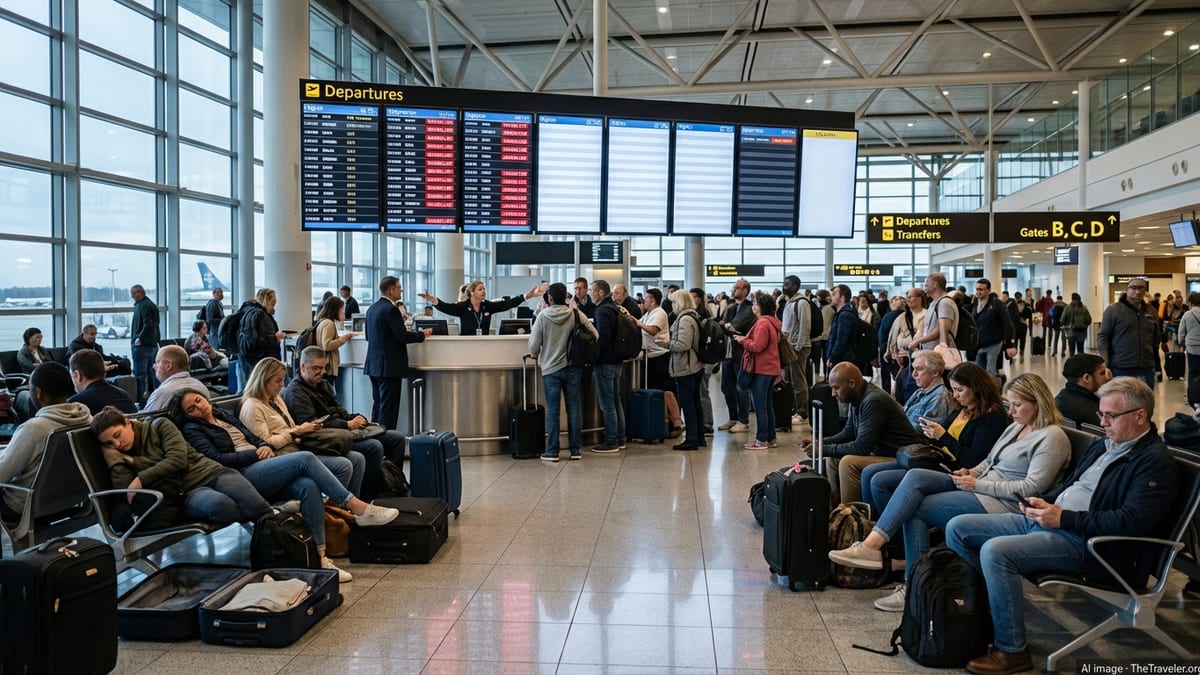
Escalating Security Concerns at King Khalid International Airport
Published coverage over recent days describes multiple attacks targeting King Khalid International Airport in Riyadh, including missile and drone strikes that have caused fatalities, mass casualties, and damage to passenger facilities. Reports from international news agencies indicate that at least one strike on the airport terminal in mid-October left more than a dozen people dead and hundreds injured, with further incidents reported within 24 hours at the same site.
Saudi Arabia’s General Authority of Civil Aviation has announced at times the temporary suspension of operations at the airport following these incidents, with domestic media describing the halt as a safety measure while damage is assessed and security procedures are reviewed. Airport statements have urged passengers to confirm their flight status directly with airlines before traveling to the terminal, reflecting the uncertainty around schedules and the potential for last-minute operational changes.
These attacks in the Riyadh region are part of a wider pattern of missile and drone launches linked in open-source reporting to the Yemen-based Houthi movement, which has publicly threatened further action against airports and infrastructure across Saudi Arabia. The renewed targeting of the capital’s main gateway has led foreign governments to update their travel advice, focusing on the possibility of further incidents occurring with little or no warning.
The situation around King Khalid International Airport has also affected day-to-day life in Riyadh, with reports of loud explosions, visible plumes of smoke, and the activation of civil-defense protocols. While the core tourist districts and business areas in central Riyadh remain accessible, the atmosphere for visitors is now shaped by the prospect of sudden airspace closures, diversions, and security alerts as military tensions fluctuate.
Fresh Emergency and Security Warnings for Travelers
The latest travel advisories from several governments now single out Riyadh and its main airport for heightened caution. The United States maintains a Level 3 “Reconsider travel” advisory for Saudi Arabia, and its most recent update highlights the risk of drone and missile targeting, armed conflict, exit bans, and terrorism, along with specific restrictions on the use of King Khalid International Airport by U.S. government employees.
Australia’s Smartraveller service, updated on October 12, 2026, advises travelers to reconsider the need to travel to Saudi Arabia overall and explicitly states that travelers should not go to King Khalid International Airport in Riyadh due to recent security incidents that have disrupted operations. The advisory notes that military strikes and reprisal attacks are ongoing across the country, including in the capital, and that Houthis have threatened to target Saudi airports and airspace apart from facilities in Mecca and Medina.
Travel advice published by the United Kingdom’s Foreign, Commonwealth and Development Office now warns against all but essential travel to Riyadh province and advises people to stay away from King Khalid International Airport following a serious incident there on October 10, 2026. The same guidance notes that the UK now advises against all but essential travel to most major Saudi airports apart from Medina, reflecting a broader reassessment of aviation risk in the kingdom.
In parallel, media coverage from the Gulf region reports that the U.S. Mission in Saudi Arabia has released a fresh security alert for American citizens, highlighting the potential for flight cancellations, airspace closures, and other travel disruptions. The alert reiterates that missile and drone attacks may occur without notice and advises travelers to monitor official advisories closely and maintain contingency plans if they are flying into or out of Riyadh.
Impact on Flights, Airlines, and Itineraries
The attacks and subsequent emergency warnings have produced visible knock-on effects across the airline network serving Riyadh. Reporting by international outlets notes that carriers such as Lufthansa and certain Indian airlines have temporarily suspended services to the Saudi capital after explosions in the city, including at or near the international airport. Other airlines continue to operate but with tighter security procedures, modified schedules, and a greater likelihood of disruption.
Travel advisories from multiple governments now recommend that passengers do not depart for any Saudi airport, and particularly Riyadh, until they have reconfirmed their flight with their airline or travel provider. This reflects the risk of same-day cancellations, re-routings to alternative airports within the kingdom, or sudden airspace restrictions that can leave travelers stranded in transit hubs or facing extended layovers.
For those already in Saudi Arabia, guidance from foreign ministries emphasizes the importance of flexible bookings and comprehensive travel insurance that covers trip interruption, medical treatment, and emergency evacuation. Some travelers are being advised to consider alternative gateways such as Medina or smaller regional airports that may be less directly affected, though recent updates from governments like Australia and the UK caution that risk levels have increased across much of the national aviation network.
On the ground in Riyadh, airport operations have periodically resumed between incidents, but public information indicates that security screening, access controls, and perimeter checks have been tightened, contributing to longer processing times. Travelers are being urged to arrive early when flights are confirmed, but not to proceed to the airport at all if there is any doubt about whether their service is operating.
Local Alert Systems and On-the-Ground Safety Measures
Within Saudi Arabia, national and regional agencies operate early-warning systems for both security and weather-related hazards. The National Center for Meteorology runs an automated early-warning platform that issues color-coded alerts for conditions such as rain, fog, and raised dust across regions including Riyadh. Recent updates show yellow-level advisories for light rain and fog in parts of the Riyadh region, indicating the potential for reduced visibility on highways and around the airport perimeter.
Civil defense bodies also disseminate mobile alerts for certain categories of incident, and foreign travel advice encourages visitors to ensure that their phones are configured to receive government or wireless emergency warnings. This can include messages about security situations, severe weather, or other hazards that may affect transport routes to and from King Khalid International Airport, as well as instructions to shelter in place or avoid specific districts.
Public information from foreign embassies in Saudi Arabia lists key emergency numbers that can be dialed nationwide, including the unified emergency line and dedicated services for medical assistance. Travelers are encouraged to store these contacts before arrival and to keep copies of passport data pages and visa details both on their person and in secure cloud storage, in case documents are lost or damaged during an emergency.
Local guidance within Riyadh advises that, in the event of missile or drone activity, people should move away from windows, seek shelter in internal rooms or designated safe areas, and avoid filming or photographing incoming projectiles or debris. Recent security alerts specifically caution against stopping on highways or near strategic locations to capture video of incidents, noting that such behavior can create additional safety risks and obstruct response efforts.
Practical Advice for Travelers Planning or Continuing Trips
Given the evolving security picture in and around Riyadh, prospective visitors are being urged in publicly available advisories to review whether their travel is essential and to consider postponing non-urgent trips. Those who decide to proceed are encouraged to register with their embassy or consulate, monitor host government announcements and airline notices, and maintain flexible itineraries that can be adjusted at short notice.
For travelers with existing bookings through King Khalid International Airport, the most consistent recommendation across official advisories is to maintain close contact with airlines and travel agents, checking for schedule changes several times in the 24 hours before departure. Where possible, fully flexible tickets and accommodation that allows last-minute changes can help to reduce financial exposure if flights are canceled or diverted.
Visitors already in Riyadh are advised to minimize time spent in and around major transport hubs, avoid gathering near security installations or critical infrastructure, and keep a low profile in public places. Travel guidance from several countries also suggests preparing a basic emergency kit that includes copies of key documents, essential medications, a portable power bank, and a small supply of food and water in case movement is restricted for a period after an incident.
While the city’s hotels, malls, and cultural attractions continue to operate, the combination of renewed missile and drone threats, repeated alerts, and shifting airline schedules means that any trip to Riyadh currently requires a higher tolerance for risk and disruption. Travelers are being encouraged to reassess plans on a day-by-day basis, based on the latest official information, and to treat emergency warnings regarding the capital and its main airport as a critical factor in their decision-making.