


More news on this day
Major Gulf aviation hubs are slowly coming back onto insurers’ maps after months of heightened conflict risk, but rapidly rising war-risk premiums and recent strikes around the Saudi capital are turning Riyadh into a new red line for many underwriters and travel operators.
Get the latest news straight to your inbox!
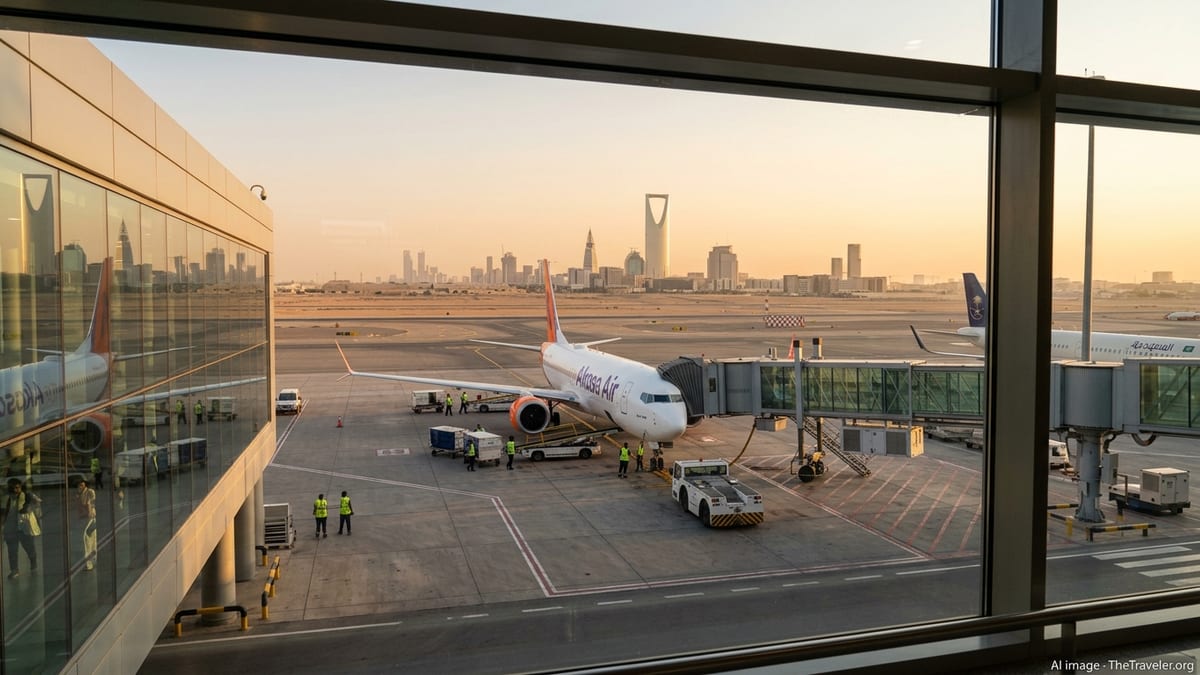
War-Risk Market Reprices the Gulf
Travel across the Gulf has been shaped in 2026 not only by airspace advisories and airline schedule changes, but by a sharp repricing of war-risk insurance. Publicly available aviation risk reviews indicate that premiums on some routes near the wider Gulf conflict zone have risen by 50 to 500 percent since the start of the year, as underwriters tighten terms or demand higher rates for operations perceived as exposed to missile and drone activity.
Conflict-zone insurance data shows that transit through Gulf state airspace now attracts significantly higher war-risk charges than before the latest round of regional tensions. One mapping service that tracks war-risk premiums reports that Gulf transit rates have climbed from around 0.01 percent of an aircraft’s value to as much as 0.03 to 0.06 percent, a fourfold increase that can add hundreds of thousands of dollars in cost for a single widebody flight once multiple sectors and stopovers are considered.
These higher costs are feeding directly into airline route economics and, by extension, the options available to travelers. Industry briefings from Gulf-based carriers and airport operators describe a constant process of reassessing whether to route flights through compressed corridors around conflict areas, accept longer diversions, or suspend services entirely when insurance or risk thresholds are breached. The result has been an uneven but noticeable reshaping of long-haul connections between Europe, Asia and Africa.
Gulf Megahubs Edge Back Into Insurer Comfort Zones
Despite the pricing shock, the core transfer hubs of Dubai, Doha and Abu Dhabi are gradually reestablishing their position with insurers as acceptable, if more expensive, risks. Specialist aviation publications report that these airports have remained operational throughout recent missile and drone incidents affecting parts of the region, supported by layered air defense systems, routing adjustments and periods of schedule thinning rather than full closure.
Operational intelligence briefings on the Gulf describe how hub carriers have tweaked flight paths and sometimes capped capacity to limit exposure during heightened alert periods. Some foreign airlines temporarily halted services into certain Gulf cities earlier in the year, but many have since reinstated limited schedules as conflict-zone guidance has been refined and underwriters have differentiated between higher and lower risk areas within the broader region.
For insurers, this has allowed a partial reopening of appetite for flights that simply connect through major Gulf hubs on tightly controlled routings. Market commentary suggests that while war-risk surcharges remain elevated for hub operations, the combination of risk management measures and clearer regulatory guidance has made it easier to price and place cover. This, in turn, has enabled global network airlines to market Gulf connections again to leisure and business travelers, albeit with fewer frequencies and some lingering uncertainty.
Riyadh’s Risk Profile Shifts After Airport Attacks
In contrast, the risk picture around Riyadh has deteriorated sharply following a series of high-impact attacks on King Khalid International Airport and surrounding infrastructure. News coverage over recent days has detailed multiple missile and drone strikes on the airport, including incidents that damaged a parked aircraft and caused casualties in the passenger terminal. The facility has faced repeated closures as authorities worked to assess structural damage and manage the threat from further projectiles and falling debris.
Conflict-zone monitoring platforms that track airspace safety have updated their assessments for Saudi Arabia to reflect the expanded reach of missile and drone activity, noting that the threat now extends across much of the country, including the capital. These assessments point to an increased risk of misidentification of civil aircraft during interceptor engagements, as well as exposure to shrapnel and debris from successful and unsuccessful interceptions around key infrastructure.
This pattern has significant implications for the insurance market. Industry-focused reporting on marine and aviation war-risk has already documented a tightening of cover for ships and aircraft with a strong Saudi nexus in other regions, such as the Red Sea. With Riyadh airport now experiencing direct attacks, underwriters appear to be drawing a clearer distinction between transit through Gulf hubs that are deemed manageable and point-to-point traffic into the Saudi capital, which is increasingly treated as a high-risk proposition.
From Higher Premiums to a De Facto No-Go Zone
Insurance market analyses describe how very high war-risk premiums can effectively turn certain routes into no-go zones for commercial carriers long before formal airspace closures are imposed. As premiums rise as a percentage of hull value, the extra cost per flight can erode or eliminate any commercial margin on a route, leading airlines and lessors to redeploy aircraft to safer, more profitable networks.
Data from conflict-zone insurance mapping services illustrates this dynamic by quantifying the point at which war-risk costs become unsustainable. For example, at a 0.25 percent war-risk rate applied to a widebody valued at 150 million dollars, the additional premium could reach 375,000 dollars per transit through designated high-risk airspace. When combined with higher fuel burn on diversions, crew constraints and softening demand from risk-averse travelers, such surcharges can push airlines to suspend or avoid certain destinations.
For Riyadh, the recent attacks and subsequent airport disruption mean underwriters must price not simply the chance of an overflight incident, but the demonstrated targeting of the airport itself. Market briefings indicate that while some annual insurance programs with an existing Saudi focus may still find renewal options at sharply higher rates, fresh cover for new operations into Riyadh is becoming more difficult to arrange. In practical terms, that leaves many international airlines and charter operators with a shrinking set of insurable options for serving the Saudi capital, even as their insurance partners slowly reopen to Gulf hub overflights elsewhere.
Travel Planning in a Fragmented Risk Landscape
For travelers, the emerging split between relatively accessible Gulf hubs and a more constrained Riyadh market is beginning to show up in booking choices and corporate travel policies. Aviation safety briefings encourage operators and travel managers to review not only whether flights to a city are still being sold, but also whether war-risk coverage is in place and how conflict-zone advisories apply to the planned routing and alternates.
Some Gulf carriers have responded to the new environment by highlighting additional insurance and assistance benefits included with tickets, including cover for travel disruptions linked to conflict. At the same time, insurers and industry bodies continue to remind customers that many standard travel insurance policies exclude losses connected to war or acts of hostility, particularly in countries or regions flagged by specialist risk advisories.
As long as the current pattern holds, Gulf megahubs are likely to remain central to long-haul connectivity, albeit with elevated costs and periodic schedule upheavals. Riyadh, however, faces a more fundamental challenge. Until the risk of further attacks around the capital eases sufficiently for both regulators and insurers to recalibrate their assessments, the Saudi capital is likely to sit at the edge of many route maps, underscoring how quickly conflict dynamics can redraw the practical geography of global air travel.