


More news on this day
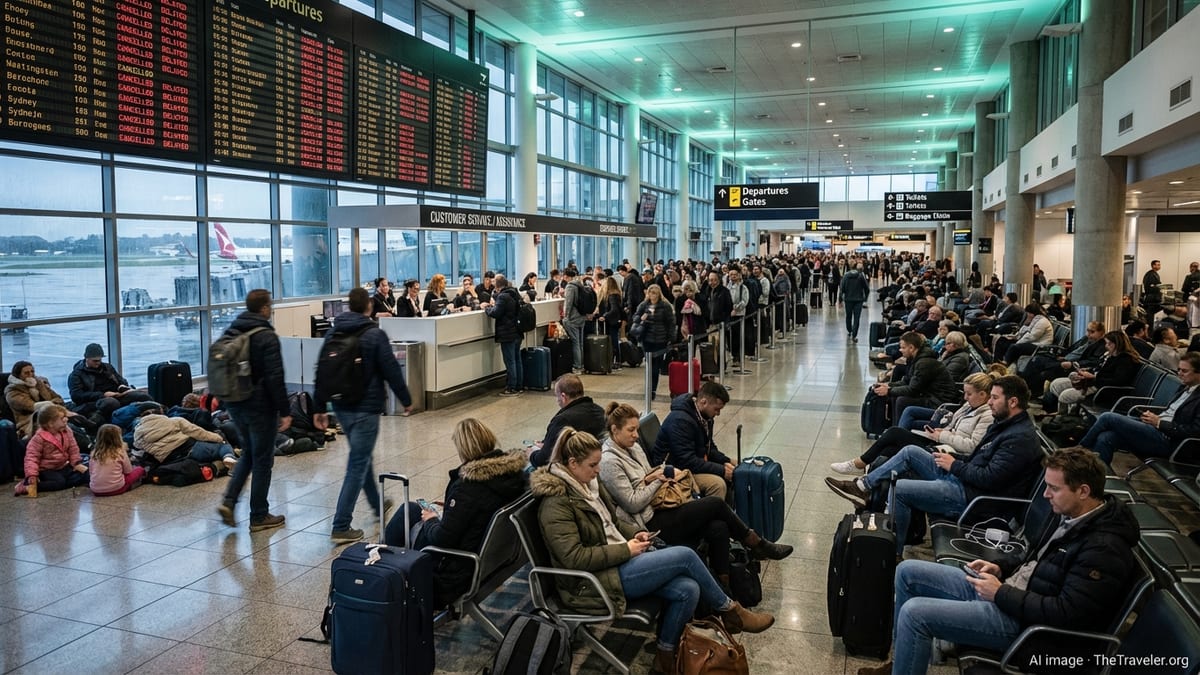
Domestic travel in Saudi Arabia faced fresh disruption today as publicly available tracking data showed at least 95 flight delays and nine cancellations on services operated by flyadeal, Saudia, Flynas and other carriers across Riyadh and Jeddah, affecting thousands of passengers on one of the kingdom’s busiest air corridors.
Get the latest news straight to your inbox!
Wave of Disruptions Hits Key Domestic Hubs
Data from multiple flight-tracking and timetable services for May 26 indicated an unusual concentration of disrupted services on routes linking Riyadh’s King Khalid International Airport and Jeddah’s King Abdulaziz International Airport, as well as other domestic connections touching the two cities. The cluster of delays and cancellations spanned morning through late evening operations, suggesting a systemwide strain rather than isolated operational issues.
The affected flights were spread across Saudi Arabia’s main national and low cost carriers, including Saudia, its budget arm flyadeal and privately owned Flynas. These three airlines collectively operate hundreds of weekly services on the Riyadh–Jeddah sector alone, supported by a dense network of additional domestic routes into both airports, which amplified the knock-on impact of disruptions.
While delays of varying length are common on heavily trafficked corridors, the number logged today significantly exceeded routine patterns reported for the route in recent months. Aggregated schedule and performance data for Riyadh–Jeddah show the sector normally sustaining a mix of on-time and moderately delayed operations, but not the volume of extended delays and outright cancellations seen in the latest update.
The disruptions added further pressure to Jeddah and Riyadh, which function as key domestic gateways and connection points for international services. With many flights sold under codeshares between Saudia and flyadeal or shared across alliance partners, individual cancellations in either city risked cascading through broader itineraries.
Saudia, flyadeal and Flynas Most Exposed
The concentration of delays and cancellations underscored the central role of Saudia, flyadeal and Flynas in handling domestic passenger flows and how operational challenges at these carriers can quickly ripple through the network. Industry profiles describe Saudia as the country’s longstanding flag carrier with major hubs in Jeddah and Riyadh, while flyadeal, created as its low cost subsidiary, is based in Jeddah with a large narrowbody fleet dedicated to high-frequency domestic routes.
Flynas, one of the region’s largest low cost airlines, has continued expanding its Saudi domestic footprint, with publicly available corporate disclosures pointing to multiple bases around the kingdom and recent growth in its network. This expansion, combined with the dense schedule on the Riyadh–Jeddah axis, leaves the airline particularly exposed when schedule disruptions strike these hubs.
Published performance metrics for the route between Riyadh and Jeddah show that, under normal conditions, the three main Saudi carriers collectively operate hundreds of flights a week on the corridor, supporting both point-to-point traffic and connections to international services. When even a fraction of these services experience extended delays or cancellations, it can affect large numbers of travelers and strain airport facilities, customer service teams and alternative transport options.
Recent marketing materials and punctuality reports have highlighted efforts by the main carriers to improve on time performance, yet the latest disruption illustrates how quickly those gains can be challenged by congestion, rolling delays or scheduling bottlenecks on peak days.
Riyadh–Jeddah Corridor Under Pressure
The Riyadh–Jeddah corridor is one of Saudi Arabia’s most important domestic air links, connecting the political capital with the Red Sea commercial hub and key religious gateway at Jeddah. Timetable data show a near-continuous shuttle pattern operated throughout the day by Saudia, flyadeal and Flynas, with additional services by other regional airlines depending on the season.
Because many flights on this corridor are scheduled with relatively tight turnaround times, even minor operational hiccups early in the day can feed into longer delays later. When aircraft or crews run behind schedule at one end, subsequent rotations may depart late, compounding the problem across multiple departures between Riyadh and Jeddah.
Today’s pattern of 95 delays and nine cancellations suggests that such knock-on effects were widespread. In practical terms, this translated into prolonged waiting times in departure lounges, missed onward connections and last minute rebookings, particularly for passengers trying to connect via Jeddah to international services or reach Riyadh for time-sensitive appointments.
For Saudi Arabia’s domestic travelers, the corridor’s importance leaves few immediate alternatives when aviation schedules falter. While intercity rail and highway links exist between the two cities, the sheer distance and travel time involved make same day switches from air to land transport a challenge for many passengers caught up in late-notice cancellations.
Passenger Impact and Options for Redress
Passenger accounts shared on travel forums and social platforms in recent weeks have already pointed to frustration over repeated rebookings, late schedule changes and difficulties securing timely refunds across several Saudi carriers. These experiences provide context for the disruption seen today, as some travelers report a pattern of rolling delays and cancellations affecting multiple bookings.
Publicly available guidance on passenger rights in Saudi Arabia indicates that travelers affected by substantial delays or cancellations may, in certain circumstances, be eligible for compensation or re-routing, depending on the exact cause of disruption and the terms of carriage. However, passengers often need to proactively submit claims through airline channels or relevant regulatory platforms, which can be time consuming, especially when large numbers seek assistance at once.
Industry observers note that coordination between airlines and airport operators is critical on days when disruption spikes. When multiple flights are delayed out of Riyadh and Jeddah simultaneously, airport terminals can quickly become congested, stretching seating capacity, food and beverage outlets and ground transport options. Travelers with limited flexibility in their plans are particularly vulnerable to these strains.
For visitors transiting through Saudi Arabia, the latest disruptions serve as a reminder to allow longer connection windows on domestic links and to monitor flight-status tools closely on the day of travel. For residents, the events highlight the importance of checking for schedule changes well in advance and keeping digital boarding passes and contact details up to date with airlines to receive push notifications.
Operational Scrutiny Likely to Intensify
The combination of high passenger volumes, rapid expansion of low cost operations and ongoing infrastructure upgrades across Saudi airports means that operational reliability is likely to remain under close scrutiny. Recent performance reports from aviation authorities and corporate disclosures from airlines have emphasized improvements in punctuality, but also acknowledge that cancellations are excluded from some headline metrics, which can mask the full passenger experience during periods of disruption.
With the kingdom positioning itself as a growing hub for both religious and leisure tourism, maintaining robust and resilient domestic air links between Riyadh, Jeddah and other major cities will be crucial. Prolonged or repeated disruption risks undermining that ambition, particularly if travelers perceive that rebooking, refund and support processes are slow or inconsistent.
In the near term, aviation analysts expect further focus on schedule planning, crew allocation and contingency capacity on high density routes such as Riyadh–Jeddah. Monitoring of flight-tracking data in the coming days will show whether today’s spike in delays and cancellations represents a one off operational flare up or the beginning of a more persistent pattern on Saudi Arabia’s busiest domestic corridors.