


More news on this day
Nepal Airlines has introduced a fresh round of cancellations and waivers on services linking Kathmandu with Gulf hubs, as ongoing Middle East airspace closures continue to complicate travel for passengers connecting through Saudi Arabia and neighboring states.
Get the latest news straight to your inbox!
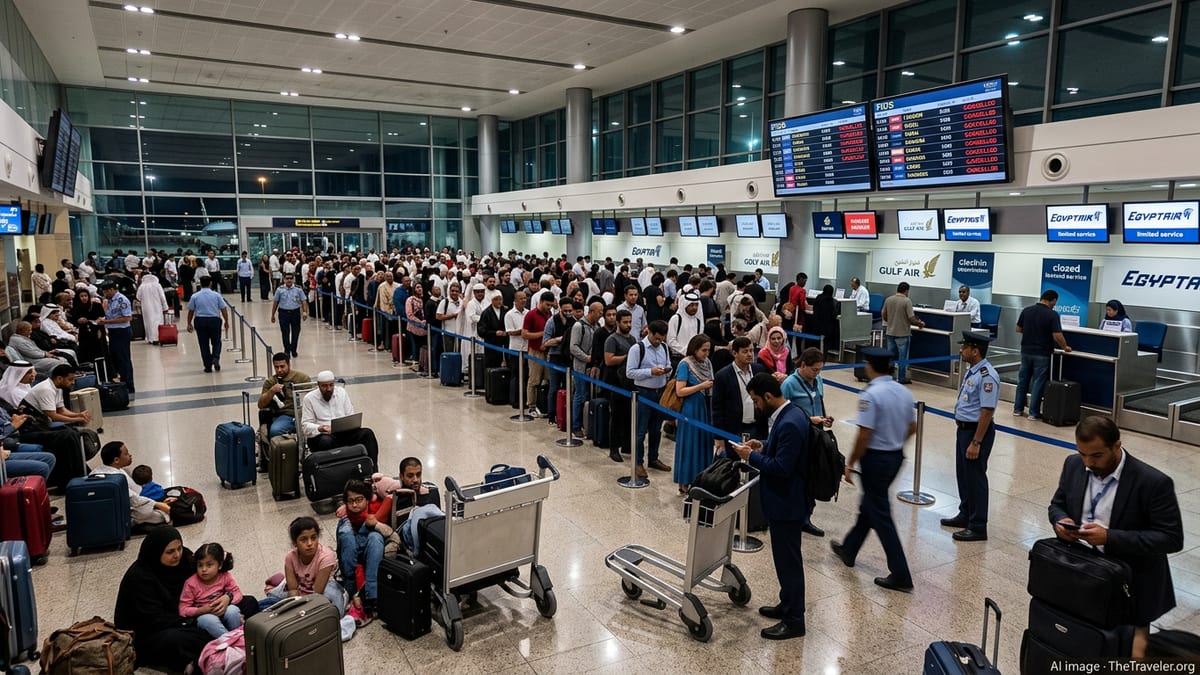
Regional Airspace Closures Ripple Across Saudi and Gulf Corridors
Airspace restrictions across parts of the Middle East in early 2026 have reshaped one of the world’s busiest aviation corridors, forcing airlines to divert or suspend flights serving the Gulf. Publicly available information indicates that closures and operational limits were introduced over several countries following a sharp escalation in regional tensions, prompting regulators and carriers to avoid large swaths of airspace for safety and insurance reasons.
Travel analysis outlets report that airports in Qatar, the United Arab Emirates, Bahrain, Kuwait, and selected parts of Saudi Arabia have all experienced periods of disruption, with schedules repeatedly reworked as authorities opened narrow corridors and nighttime curfews for overflights. Longer routings via the Caucasus or over Egypt and the Red Sea have added hours to some journeys and increased operating costs, while certain point to point links have been suspended entirely.
Saudi Arabia’s major gateways, including Riyadh, Jeddah, and Dammam, have mostly remained operational but are functioning within a constrained regional network. Industry briefings suggest that, although these airports continue to receive international services, airlines are adjusting flight paths and timings to comply with evolving notices to airmen and risk assessments related to nearby conflict zones.
For travelers from South Asia and Southeast Asia, who often rely on Gulf hubs and Saudi cities to connect to Europe, North America, and Africa, these changes have translated into reduced seat availability, higher fares on remaining routes, and a greater likelihood of last minute disruptions.
Nepal Airlines Cancels Middle East Services as Pressures Mount
Nepal’s flag carrier has become one of the latest airlines to adjust its Middle East schedule in response to the airspace closures. Notices published by Nepal Airlines in recent weeks show cancellations and schedule changes affecting flights between Kathmandu and several Gulf destinations, including Doha and Dammam, with the carrier citing the ongoing situation in the Middle East and the closure of airspace as key reasons for the suspensions.
A detailed notice issued in early March outlined that flights to selected Middle Eastern points would not operate as planned, and urged passengers to follow only official airline communications for confirmation of travel. Subsequent coverage from regional aviation outlets highlighted specific cancellations on the Kathmandu–Doha route in late April, describing them as part of a broader pattern of disruption to the airline’s limited widebody operations.
Separate reporting from Nepal-focused tourism media in May indicated that Nepal Airlines has also faced fleet availability issues after both of its Airbus A330 widebody aircraft were temporarily grounded, leading to cancellations on routes to Dubai, Dammam, and Tokyo Narita. Although those technical problems are distinct from the airspace closures, their overlap has compounded the impact on Middle East services and reduced the carrier’s flexibility to reassign aircraft or operate longer detours around restricted zones.
The combined effect is that travelers who once relied on direct Nepal Airlines flights from Kathmandu to Gulf gateways for onward connections into Saudi Arabia have a narrower set of non stop options, making them more vulnerable to cascading disruptions elsewhere in the region.
Impact on Saudi Arabia–Nepal Travel and Pilgrim Traffic
The timing of these disruptions is particularly sensitive for travel between Nepal and Saudi Arabia, a corridor that serves not only migrant workers but also religious visitors heading to the kingdom for Umrah and the approaching Hajj season in June and July 2026. With Middle East airspace still partly restricted and several foreign carriers trimming or reshaping their Gulf schedules, capacity into Saudi hubs remains under pressure.
Travel advisories and independent monitoring platforms describe Saudi Arabia as one of the more stable operational nodes in the region, with Jeddah in particular handling sustained traffic despite reroutings around sensitive airspace. However, the knock on effect of suspended or reduced services at neighboring hubs means that passengers who previously connected via Doha, Dubai, or Kuwait City into Saudi Arabia may now face fewer through ticket options, longer total journey times, or the need to backtrack through alternate transit points.
For Nepal based travelers, the loss or reduction of Nepal Airlines services to Doha and Dammam narrows the pipeline of direct links into the Gulf that feed onward itineraries to Riyadh, Jeddah, and Madinah. Those who had already booked tickets for late spring and early summer are now confronted with last minute cancellations, limited alternatives during peak religious travel periods, and the prospect of routing through third country carriers at higher cost.
Industry observers note that some Gulf airlines are attempting to consolidate demand through Saudi gateways that remain reliably open, using airports such as Dammam and Jeddah as alternative connectors when other routes are curtailed. Even so, the overall network remains fragile, and relatively small schedule changes can have outsize effects on passengers starting their journeys in smaller markets like Kathmandu.
Waivers, Refunds, and What Affected Passengers Should Do
To mitigate the disruption, Nepal Airlines has issued waiver notices for passengers booked on affected Middle East routes over the coming weeks. According to the airline’s published guidance, travelers holding tickets on cancelled services to destinations such as Dubai, Doha, and Dammam are being offered options to change their travel dates, reroute where feasible, or request refunds without standard penalties within a specified window that currently runs into mid June 2026.
Travel rights organizations emphasize that, because the disruption is closely linked to regional security concerns and official airspace restrictions, many cancellations are classified as being outside the airline’s control. This generally limits eligibility for financial compensation under European style passenger protection rules for carriers that fall within those frameworks, although obligations to provide rebooking or refunds still apply under most jurisdictions and airline contracts of carriage.
Experts advise affected passengers to start by checking the latest status of their booking on the airline’s official channels rather than relying on third party intermediaries or informal social media reports. If the original flight is listed as cancelled, travelers should contact the airline or their travel agent promptly to secure available rebooking options, as remaining seats on alternative routings are often snapped up quickly during regional crises.
Travel insurance policies may also play a critical role. Many standard plans exclude events directly tied to war or armed conflict, but some higher tier or business focused policies include benefits for trip interruption, missed connections, or involuntary rerouting. Passengers are encouraged to review policy wording carefully and retain all documentation related to cancellations, additional accommodation, and replacement tickets for potential claims.
Planning Future Journeys Between Nepal and Saudi Arabia
With regional forecasts suggesting that Middle East airspace restrictions could remain fluid in the near term, planning travel between Nepal and Saudi Arabia now requires more contingency than in previous years. Aviation consultancies note that much of the long haul traffic that once crossed the heart of the region has shifted north over central Asia or south via Egypt and Saudi Arabia, creating congestion along the remaining viable corridors.
For travelers whose trips are not time sensitive, one widely shared recommendation is to seek flexible tickets that allow date and routing changes without significant penalties. Opting for itineraries operated on a single ticket by one major airline group, rather than stitching together separate tickets across multiple carriers, can also reduce the risk of being stranded if one leg is cancelled due to sudden airspace closures.
Prospective passengers from Nepal may wish to consider alternative connection patterns, including flying via South or Southeast Asian hubs with stable operations, then onward to Saudi Arabia with carriers that have publicly maintained their schedules to Riyadh or Jeddah. While this can increase travel time and cost, it may offer greater resilience compared with routes heavily dependent on currently constrained Gulf airspace.
Analysts point out that the situation remains highly dynamic, with both airspace rules and airline schedules subject to rapid change. Anyone planning to travel between Kathmandu and Saudi cities in the coming months is therefore advised to monitor airline advisories and reputable travel news sources up to the day of departure, recognizing that same day or even en route changes to flight plans remain a realistic possibility in the current environment.