

More news on this day
A United Airlines Airbus A320-232 operating as Flight UAL1942 from Eugene, Oregon to Denver, Colorado diverted to Grand Junction Regional Airport, interrupting its scheduled journey and triggering a fresh round of disruption for passengers already navigating a busy early-summer travel period.
Get the latest news straight to your inbox!
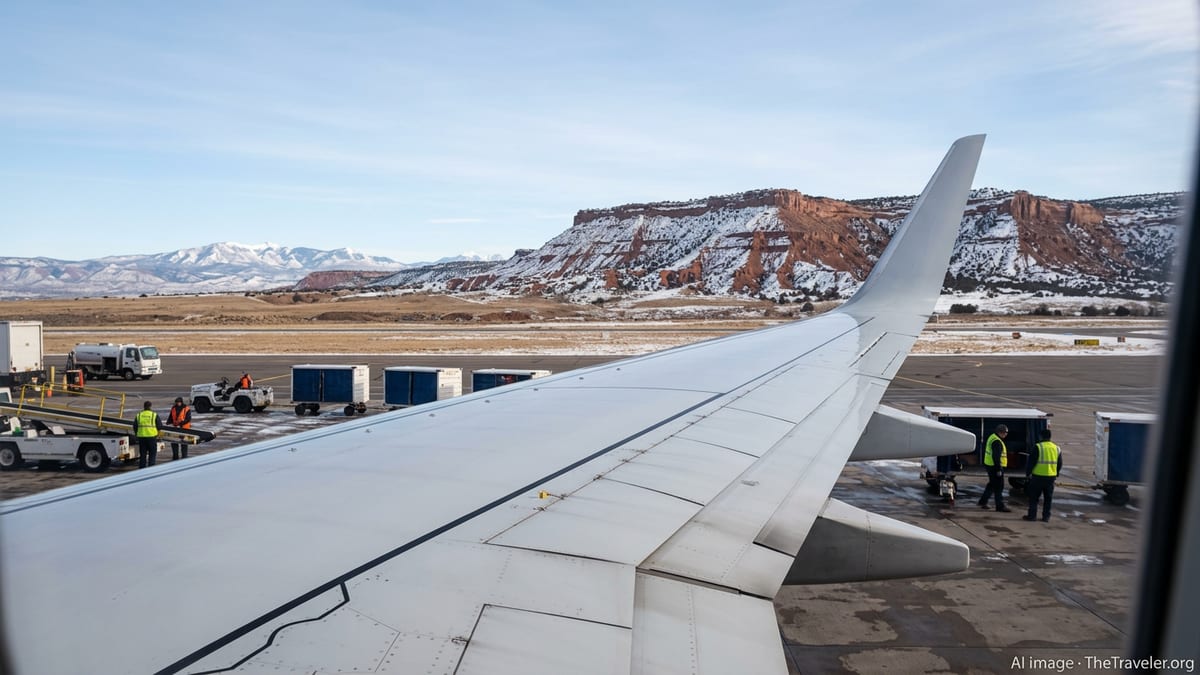
Unscheduled Stop on a Routine West Coast Route
Publicly available flight-tracking data indicates that United Airlines Flight UAL1942 departed Eugene bound for Denver on an Airbus A320-232 before altering course partway through the journey and landing at Grand Junction Regional Airport in western Colorado instead of continuing to Denver International Airport.
The Eugene to Denver route is a regular link in United’s domestic network, typically used by both leisure travelers and those connecting onward through the airline’s Denver hub. On this occasion, the flight’s unscheduled arrival in Grand Junction turned an otherwise routine transmountain hop into an extended travel day for those on board.
Airport reference materials describe Grand Junction Regional Airport as a key commercial facility for western Colorado, with scheduled service from several major U.S. carriers and a role as an alternate landing point when conditions or operational constraints affect Denver or mountain destinations. That positioning helps explain why flights bound for Denver occasionally touch down at Grand Junction when irregular operations arise.
While specific technical details of this diversion were not immediately outlined in public reports, flight-tracking history and comparable recent disruptions in the Denver region suggest a combination of weather, airspace congestion, or operational limits may have influenced the decision to divert.
Grand Junction’s Role as a Diversion Airport
Grand Junction Regional Airport frequently serves as a relief valve when air traffic into Denver slows or when conditions on the Front Range deteriorate. Aviation data and local airport documentation show that the facility handles a mix of scheduled services and occasional diversions from larger hubs, benefitting from its long runway, instrument approaches, and location to the west of the Rockies.
Regional reports on airport activity in recent years have noted periods in which Grand Junction experienced elevated landing volumes tied to diversion events, including aircraft from airlines that do not normally serve the city. Analysts point to those patterns as evidence that carriers, including United, rely on Grand Junction when weather or capacity constraints ripple across Denver’s operation.
In practice, the use of Grand Junction as an alternate stops short of being routine for passengers, but aviation observers note that it is a well-established part of contingency planning. Diversions allow crews to refuel, wait out adverse conditions, or obtain maintenance support while remaining within the broader Colorado air transport network.
For those on Flight UAL1942, the diversion meant an unexpected arrival in a midsize regional airport rather than a familiar connecting hub, underscoring how infrastructure beyond the largest hubs supports resilience in the national air transportation system.
Impact on Passengers and Downline Connections
For travelers, the immediate effect of the diversion centered on delays, missed onward flights, and uncertainty about when they would ultimately reach Denver or their final destinations. On a hub-bound service like the Eugene to Denver route, a significant share of passengers typically hold onward connections, magnifying the consequences of an unscheduled stop.
Based on patterns from similar disruptions documented across the U.S. network, passengers can expect a mix of same-day rebooking options, overnight arrangements when necessary, and itinerary changes that may route them through alternative hubs. Those with tightly timed connections, such as international departures from Denver, are often the most affected.
Consumer advocates usually advise travelers in such situations to monitor airline apps and airport departure boards closely, as re-accommodation options can shift rapidly once an aircraft diverts. Historical cases involving diversions into western Colorado also show that some passengers may be offered ground transport if onward flights become constrained, although such arrangements depend on real-time operational decisions.
While diversions are a recognized feature of air travel, they highlight the importance of flexible planning, including allowing buffer time for connections and maintaining updated contact information with airlines so that notifications and revised boarding passes reach passengers quickly.
Operational Context: Weather, Traffic and Summer Capacity
The diversion of Flight UAL1942 occurred during a period when the Denver region often contends with rapidly changing weather, including thunderstorms and gusty winds that can limit arrivals and departures. Aviation agencies provide real-time updates on airport status, and past advisories for Denver have included ground stops and flow-control measures that can force flights already en route to hold or seek alternate airports.
Industry analysis of Denver’s operations in recent seasons has described how relatively small weather cells can have outsized impact when the airport is already running near capacity. When arrival rates are cut or runways are temporarily constrained, inbound flights may face extended holding patterns, fuel considerations, and crew duty-time limits, all of which can push a diversion from contingency to necessity.
Grand Junction’s geographic position to the west of Denver offers a practical option in such scenarios, particularly for flights crossing the Rockies from the Pacific Northwest. Diverting there allows airlines to keep aircraft within a manageable distance of Denver while avoiding prolonged holds over crowded airspace.
As carriers continue to rebuild schedules and add frequencies across their domestic networks, operational resilience around large hubs like Denver remains in focus. Diversions such as that of Flight UAL1942 illustrate the balancing act between schedule density, weather-related risk, and the capacity of alternate airports to absorb temporary surges in traffic.
What Travelers Can Expect Next
In the wake of the diversion, passengers from Flight UAL1942 are expected to complete their journeys either on a continuing segment into Denver, on later departures, or through alternative routings depending on seat availability and timing. Airline practice in similar events has included a mix of options, from rebooking on the next available Denver-bound flight to shifting travelers onto itineraries that bypass Denver entirely.
Travelers reviewing this case as they plan their own trips through Denver may draw a few practical lessons. Travel advisers often recommend building extra time into itineraries that rely on late-day connections through weather-sensitive hubs, particularly during thunderstorm seasons. Purchasing tickets on a single itinerary, rather than separate legs, also makes it easier for airlines to manage rebooking when irregular operations occur.
For Grand Junction, diversions like Flight UAL1942 reinforce the airport’s dual role as both a local gateway and a strategic alternate within the wider network. While such events can be disruptive for individual travelers, they are also a reminder of the layered system of airports, aircraft, and crews that work together to keep air traffic moving when conditions change suddenly.
As more information emerges from publicly accessible flight records and operational summaries, the diversion of the United service from Eugene to Denver will likely be logged as one of many weather and traffic-related adjustments shaping this season’s air-travel experience in the Interior West.