


More news on this day
Amsterdam’s Schiphol Airport faced another day of heavy disruption this week, with 293 delayed flights and seven cancellations leaving several travellers stranded and itineraries across the Netherlands, France, Italy, Portugal and other European destinations in disarray.
Get the latest news straight to your inbox!
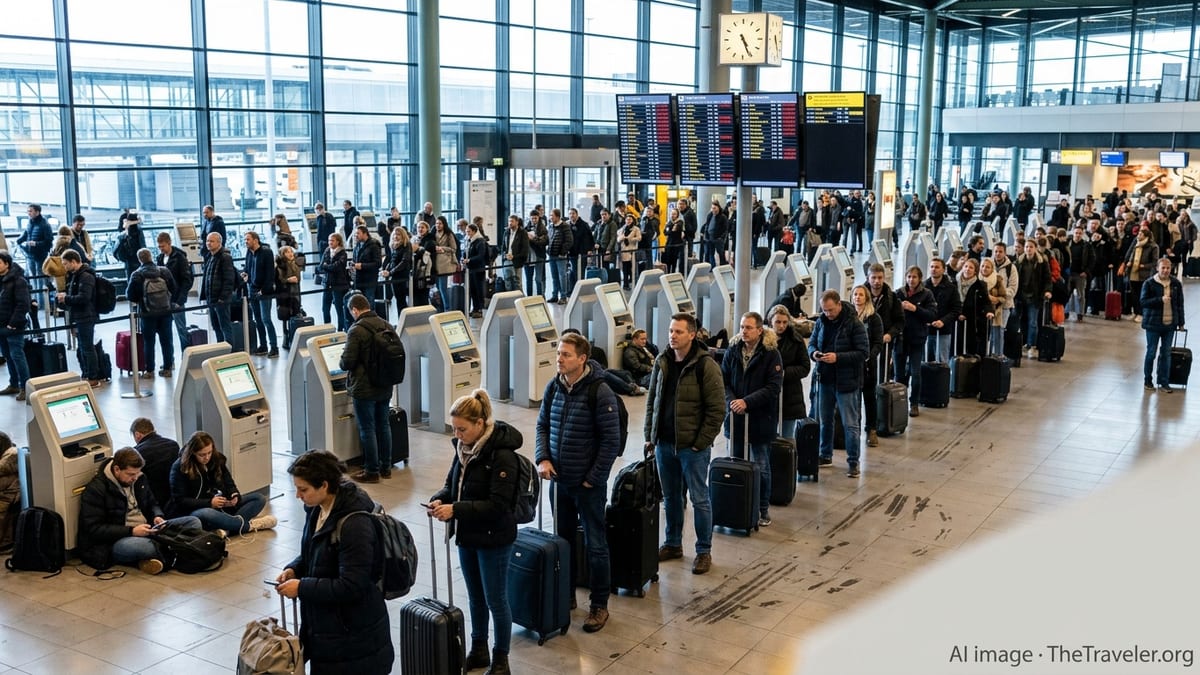
Operational strain at one of Europe’s busiest hubs
The disruption hit during the peak of the European summer travel period, when Schiphol is expecting more than 12.7 million travellers between early July and the end of August. The high passenger volumes mean even a relatively small proportion of delayed or cancelled flights can translate into large numbers of stranded people, particularly at connecting hubs.
Publicly available operational data and airport information show Schiphol handling well over 1,400 flights per day in recent weeks. In that context, 293 delayed movements in a single day, along with seven outright cancellations, represent a significant strain on schedules and ground operations, affecting both departures and arrivals.
Delays at a major European hub quickly cascade through the network, as aircraft and crews arrive late for subsequent sectors. With many services operating to tight turnarounds, one late inbound can trigger knock-on delays for several later flights on the same aircraft, spreading disruption far beyond Amsterdam.
Industry data for the current season indicate that low cost and leisure carriers form a substantial share of Schiphol’s short haul traffic. These airlines connect Amsterdam with tourist destinations across southern Europe, making the airport a critical gateway for holidaymakers heading to and from the Mediterranean.
Ripple effects across France, Italy, Portugal and beyond
The delays and cancellations at Schiphol sent ripples across multiple European countries, particularly popular summer destinations. Flight-tracking information and schedule data show dense connectivity from Amsterdam to cities in France, Italy and Portugal, including Paris, Marseille, Nice, Rome, Milan, Venice, Lisbon and Faro, among others.
On the day of disruption, services to major Italian hubs such as Rome and regional airports including Venice experienced schedule changes and, in some cases, cancellations. Similar patterns were visible on routes to French and Portuguese airports, where late departures from Amsterdam translated into missed slots and reduced punctuality on arrival.
Network planning documents for Europe underline how closely interlinked the continent’s air traffic flows have become. Amsterdam regularly ranks among the busiest airports in the region by daily movements, which means any concentrated period of delays can affect aircraft rotations touching multiple countries within a matter of hours.
For travellers, the practical impact was felt in missed connections, rebooked itineraries and long waits at transfer desks. Passengers heading for secondary or regional airports were particularly exposed, as limited daily frequencies reduce the chances of same day re-accommodation when an early service runs late or is cancelled.
Check in issues and capacity pressures add to queues
The disruption came shortly after reports of overnight check in problems affecting Transavia flights at Schiphol earlier in the week. According to published coverage in Dutch media, technical and staffing issues at airline counters led to long queues, with some travellers arriving on time but still missing departures after waiting at the desks.
Those earlier incidents highlighted the sensitivity of airport operations during the school holiday rush, when leisure traffic peaks and many passengers travel with checked baggage. Any bottleneck at check in, security or boarding can quickly back up through the terminal, especially at times when aircraft are scheduled in tight waves.
Schiphol’s own summer outlook, released ahead of the holiday period, anticipated intense but manageable traffic, with advice for passengers to follow airline guidance on arrival times and to monitor flight status closely. The combination of very high volumes and a day featuring nearly 300 delayed flights has nonetheless tested that resilience, particularly for carriers operating large early morning and late evening banks.
While airlines and the airport have taken steps in recent seasons to spread departures more evenly and build in more buffer, the latest disruption shows that irregular operations remain a challenge when weather, technical issues or staffing constraints coincide with peak demand.
Stranded travellers face rebooking hurdles
For those directly affected by the 293 delays and seven cancellations, the immediate concern was how and when they could continue their journeys. With many flights fully booked at the height of summer, options for same day rebooking were limited, especially on routes to beach destinations in southern Europe.
Passengers arriving too late for departing flights after long check in or security queues faced additional complications, as airlines and airport operators applied varying policies regarding rebooking and accommodation support. Publicly available consumer information on European air passenger rights outlines specific entitlements in cases of cancellation or severe delay, but the practical process of invoking those rights often requires documentation and persistence.
For travellers with onward connections beyond Europe, missed flights in Amsterdam created further itinerary changes and, in some cases, unexpected overnight stays. Long haul passengers connecting through Schiphol to North America, Africa or Asia were dependent on availability on later services from their carrier or alliance partners, adding further complexity to re-routing efforts.
Social media posts and local coverage described crowded customer service desks and long waits to speak with airline representatives, a recurring feature of irregular operation days in major hubs. Some passengers sought alternatives by rebooking at their own expense on other airlines or via different airports in the region.
Ongoing summer vulnerability across European skies
The Schiphol disruption comes against a backdrop of sustained high traffic levels across European airspace this summer. Recent operational planning documents for the region show daily flight volumes at or above pre pandemic levels for many major hubs, including those in the Netherlands, France and Italy.
European air navigation and airport planning forecasts point to a busy high season marked by pockets of capacity constraint, whether due to staffing, airspace restrictions or infrastructure works. In such an environment, a single day of concentrated delays at one major hub can contribute to wider schedule volatility across the network.
Travellers scheduled to pass through Schiphol and other large European airports in the coming weeks are being advised in publicly available guidance to keep a close eye on flight status, use airline apps where possible and allow extra time in the terminal. While most journeys continue to operate broadly as planned, the recent experience in Amsterdam underlines how quickly conditions can change when pressure points align.
For now, operations at Schiphol are gradually returning closer to planned levels, but the incident serves as a reminder that the balance between high demand and finite capacity remains delicate during Europe’s peak summer holiday season.