


More news on this day
Travelers across Europe and North America are facing cascading disruption after Amsterdam Schiphol Airport reported 221 delayed flights and 9 cancellations in a single day, unsettling operations for KLM, Delta Air Lines, Lufthansa and other carriers on busy routes to New York, Paris, London, Toronto and Frankfurt.
Get the latest news straight to your inbox!
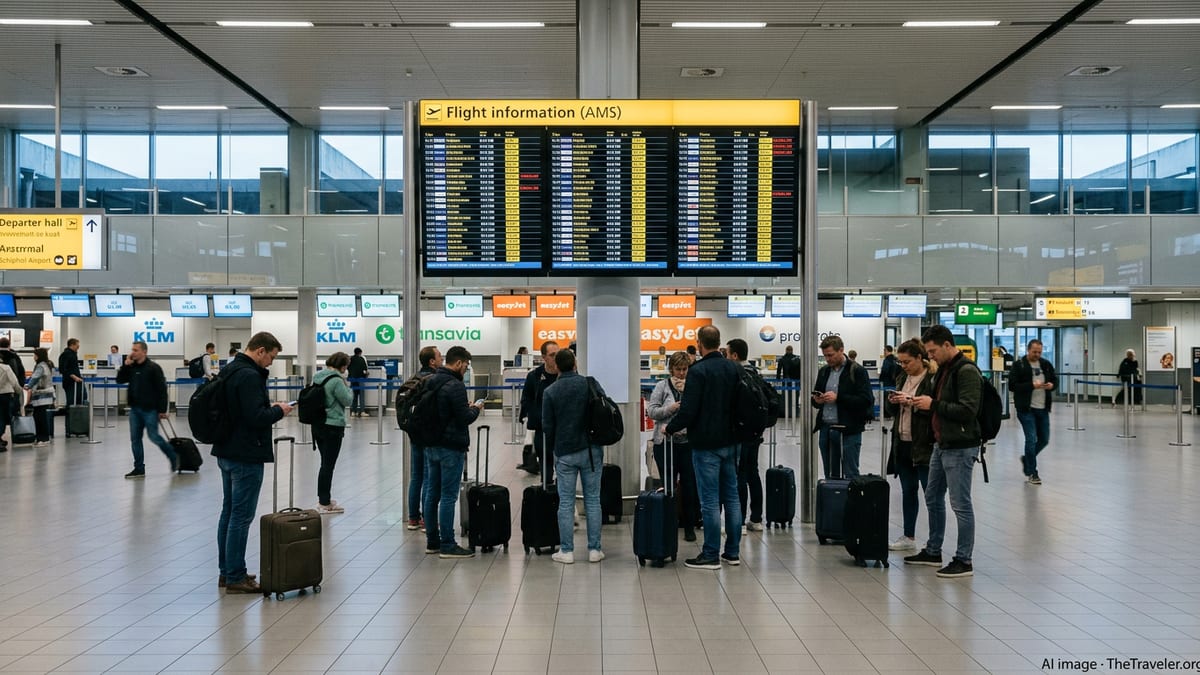
Wide Network Impact From a Single-Hub Disruption
Amsterdam Schiphol functions as one of Europe’s largest transfer hubs, and public data shows that concentrated disruption at the airport can quickly spread across airline networks. Recent operational statistics and consumer-rights analyses describe similar days this year in which Schiphol logged more than 200 delayed departures and around a dozen cancellations, with knock-on effects felt well beyond the Netherlands.
On the latest day of disruption, 221 flights registered significant delays and 9 were canceled, affecting both short-haul European services and long-haul intercontinental routes. KLM and its SkyTeam partners saw schedules from Amsterdam to New York, Paris and Toronto altered, while Lufthansa and other European carriers experienced interruptions on services linking Amsterdam with Frankfurt and London.
Published coverage of recent events at Schiphol emphasizes how quickly aircraft and crew fall out of position when a hub experiences dense clusters of delays. Once rotations are disrupted, later departures in the day often suffer extended delays or are removed from the schedule entirely, creating a ripple effect into the following days as airlines work to reposition equipment and staff.
Consumer-rights platforms tracking flight performance across Europe describe Schiphol as a recurring focal point for disruption this year, citing a combination of challenging weather, congested airspace and network-wide schedule tightening by major carriers responding to fuel and cost pressures.
Major Carriers Scramble to Protect Key Long-Haul Routes
KLM, which uses Schiphol as its primary hub, has already thinned parts of its timetable this year and continues to adjust frequencies to maintain stability on its most profitable corridors. Publicly available information shows the airline prioritizing core intercontinental routes from Amsterdam to New York and Toronto, even as some departures operate off-schedule or are combined to manage aircraft availability.
Delta Air Lines, a transatlantic partner of KLM, relies on Schiphol for feed into its long-haul services between Amsterdam and major United States gateways. Real-time schedule data indicates that Delta has preserved its primary Amsterdam links, including services to New York, while occasionally retiming flights and consolidating capacity in response to the broader pressures on the transatlantic market.
Lufthansa has also been reshaping its European network amid a broader jet-fuel squeeze and separate periods of labor-related disruption. Recent company statements and independent reporting describe thousands of short-haul flights across the wider Lufthansa Group being removed from schedules through the summer season, with some services to and from Amsterdam shifted to alternative hubs or reduced in frequency.
Analysts note that on days like this at Schiphol, airlines often focus on keeping at least one daily round-trip operating on trunk routes such as Amsterdam to Frankfurt, London and Paris, while less critical frequencies are delayed, down-gauged or canceled outright. This approach can preserve connectivity for the greatest number of passengers, but it also increases the risk of crowding on remaining flights and complicates rebooking efforts.
Routes to New York, Paris, London, Toronto and Frankfurt Disrupted
The latest wave of delays and cancellations at Schiphol has highlighted the fragility of some of Europe’s busiest air corridors. Flight-tracking services and schedule databases show punctuality deteriorating sharply on routes linking Amsterdam with New York John F. Kennedy, Paris Charles de Gaulle, London Heathrow and London City, Toronto Pearson and Frankfurt Airport.
On the New York route in particular, which is jointly served by KLM and Delta, disruptions at the hub can quickly strand passengers awaiting onward connections to the United States interior. When an Amsterdam departure to New York leaves late or is canceled, travelers often miss late-evening domestic connections in North America and must be rerouted through alternative hubs or accommodated overnight.
Schiphol’s short-haul links to Paris and London are similarly sensitive. These flights provide key feeder traffic into long-haul networks operated by Air France, KLM and British Airways. When departures from Amsterdam to Paris or London fall behind schedule, it can lead to missed onward connections to destinations in Africa, Asia and the Americas, multiplying the impact of a single delay at the origin.
Connections to Frankfurt are also important, especially for corporate travelers and those linking onto Lufthansa’s global network. Recent reports on network planning decisions at Lufthansa indicate that, in a constrained operating environment, the airline has been consolidating traffic over its main German hubs. Any additional delay or cancellation on the Amsterdam to Frankfurt leg therefore risks further disruption within an already tightened system.
Structural Pressures: Fuel Prices, Weather and Airport Congestion
While each delayed or canceled flight has its own cause, aviation industry coverage points to several structural factors behind Schiphol’s latest day of disruption. A global surge in jet-fuel prices, coupled with regional supply constraints, has pushed airlines to trim less profitable flights and build tighter schedules around core routes, leaving less slack to absorb irregular operations.
In parallel, seasonal weather patterns across Northern Europe continue to affect capacity. Earlier this year, significant snowfall and periods of low visibility forced Schiphol and other airports in the region to curtail movements, leading carriers such as KLM to preemptively cancel large numbers of flights on multiple days in order to restore stability to their networks.
Airport congestion adds another layer of complexity. Amsterdam Schiphol remains one of Europe’s busiest hubs by aircraft movements, and even minor bottlenecks at security, baggage handling or air traffic control can trigger delays that build throughout the day. Publicly available performance data and passenger accounts describe recurring queues and ground-handling challenges that can cause late departures even in otherwise clear weather.
Experts in airline operations note that when fuel costs are high and capacity is tight, carriers are more likely to consolidate services and accept that some passengers will face longer journey times. The pattern observed on the day with 221 delayed flights and 9 cancellations aligns with this broader trend of operating fewer, fuller flights while absorbing periodic clusters of disruption at major hubs.
What Passengers Can Expect Under European Air Passenger Rules
The large number of disrupted flights at Schiphol has renewed attention on air passenger protections in Europe. Consumer-advocacy organizations and legal guides point travelers toward Regulation EC 261 and related frameworks, which may entitle passengers to care, rerouting and financial compensation when flights are heavily delayed or canceled, depending on the cause.
Under these rules, airlines are generally responsible for providing assistance such as meals, refreshments and hotel accommodation when disruption keeps passengers away from home for extended periods. Monetary compensation may be available when delays or cancellations are within the airline’s control, though not in cases deemed to arise from extraordinary circumstances such as severe weather or certain air traffic control restrictions.
Advisories published in recent months urge travelers affected by disruptions at Schiphol to retain boarding passes, booking confirmations and receipts for out-of-pocket expenses, as these documents can be useful when filing claims. Many passengers now use online tools to check whether their individual delay or cancellation may qualify for compensation before submitting a formal request to the airline.
With 221 delayed flights and 9 cancellations affecting journeys to New York, Paris, London, Toronto, Frankfurt and beyond, the latest operational difficulties at Amsterdam Schiphol underline how quickly a single day of disruption at a major European hub can reverberate through global travel plans, testing both airline resilience and passenger patience.