


More news on this day
Persistent flight disruptions at Toronto Pearson International Airport continued to frustrate travelers on Tuesday, with publicly available tracking boards showing 113 delayed departures and six cancellations affecting a mix of domestic and transatlantic routes operated by airlines including Air Canada, Jazz and Lufthansa.
Get the latest news straight to your inbox!
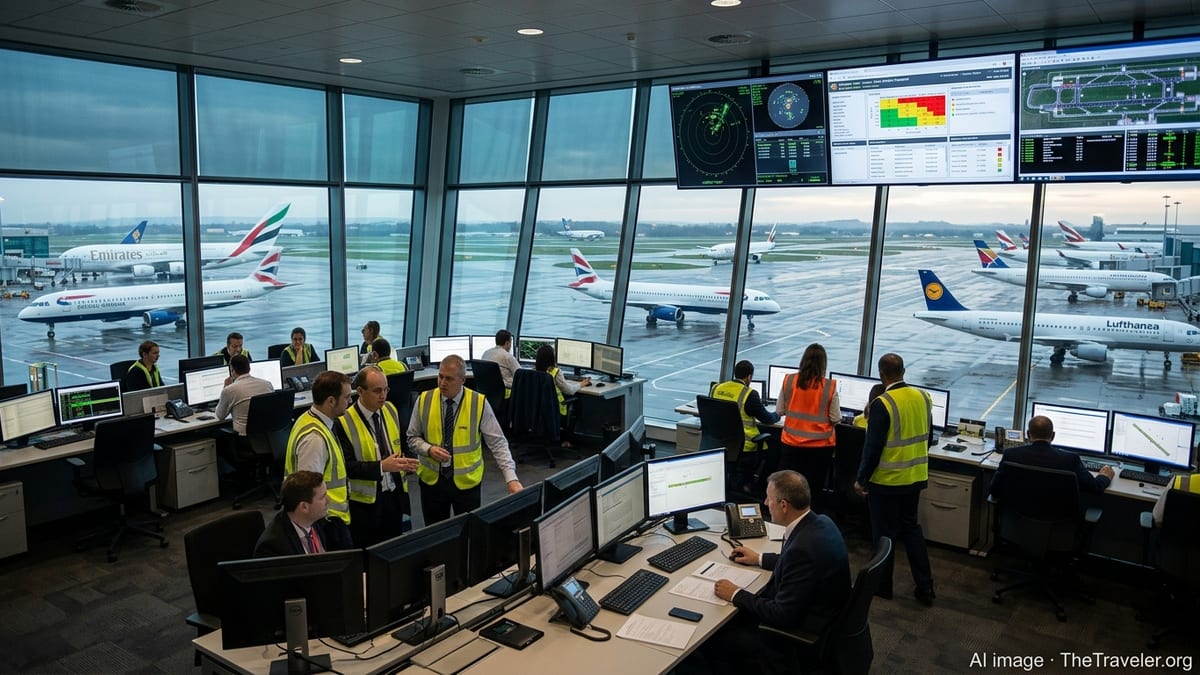
Delays Mount At Canada’s Busiest Hub
Toronto Pearson, Canada’s largest air hub by passenger volume, has faced another day of operational strain as a high number of departures left late or failed to take off at all. Data compiled from live flight-status services and airport departure boards on May 12 indicated that 113 scheduled flights were running behind, alongside six outright cancellations. The disruption concentrated largely in the afternoon and evening peak, when traffic density is typically at its highest.
While the pattern of delays fluctuated throughout the day, travelers on short-haul routes bore the brunt, particularly those heading to other major Canadian cities and key U.S. business markets. Publicly available information showed knock-on effects from even modest schedule slippages, with a single late departure often cascading into subsequent pushbacks as aircraft and crew rotated between flights.
The latest disruption episode comes as the Greater Toronto Airports Authority reports continued growth in passenger numbers through early 2026. Rising volumes have increased the sensitivity of the schedule to any operational pressure, whether from weather, air traffic flow restrictions or staffing constraints in the broader aviation system.
Industry observers note that Pearson’s role as a primary hub for Air Canada and its partners means localized delays can quickly spread across the network. As aircraft based in Toronto connect onward to regional and international destinations, even a limited number of cancellations can reconfigure travel plans for passengers far beyond southern Ontario.
Air Canada, Jazz And Lufthansa Among Affected Carriers
Air Canada and its regional affiliate Jazz featured prominently in Tuesday’s disruption picture, reflecting their dominant presence at Toronto Pearson. Shuttle-style routes to Montreal and Ottawa, which operate at high frequency, showed clusters of delayed departures according to multiple tracking platforms. Some services remained listed as on time, underscoring the uneven impact across the schedule, but enough were pushed back to create crowding at gates and added pressure on airport facilities.
Internationally, alliance partners and codeshare flights also appeared in the mix. Public schedules showed transatlantic services marketed jointly by Air Canada and Lufthansa that were operating off their planned timings, with delays compounding as aircraft prepared for overnight crossings to Europe. For passengers booked on multi-leg itineraries, late departures from Toronto raised the risk of missed connections at onward hubs.
Regional partner Jazz, which operates many of Air Canada’s shorter sectors under the Air Canada Express brand, experienced a familiar set of challenges. Its flights link Toronto with a range of smaller Canadian and U.S. cities, so any disruption at the hub can quickly radiate outward, affecting communities that rely on a small number of daily departures for business and leisure travel.
Although low-cost and leisure-focused airlines account for a smaller share of Pearson’s departures, they were not entirely insulated from the day’s problems. Congested runways and crowded airspace can affect arrival slots for carriers across the board, leaving some aircraft holding in the sky or idling on taxiways as they await clearance.
Key Routes To Montreal, Chicago And Glasgow Disrupted
The operational difficulties were especially visible on high-demand corridors linking Toronto to Montreal and Chicago. These routes function as both business shuttles and critical connectors to long-haul flights. Real-time trackers showed multiple services on the Toronto to Montreal corridor departing behind schedule, even as others remained on time, creating an inconsistent experience for travelers attempting to plan same-day returns or onward rail and air connections.
On the Toronto to Chicago route, schedule adjustments and minor delays added complexity for passengers aiming to connect to United States domestic networks via Chicago O’Hare. Air Canada has recently filed changes to its U.S. schedule, including a modest frequency reduction on the Toronto to Chicago link later this year, and the current pattern of delays may further sharpen attention on the reliability of these important cross-border services.
Across the Atlantic, flights connecting Toronto with European destinations, including Glasgow, also appeared within the day’s disrupted cohort, according to publicly accessible aviation data services. Even when these long-haul departures ultimately left the gate, pushed-back takeoff times risked shortening connection windows for travelers headed on to other European or Middle Eastern cities.
For leisure travelers, delayed departures on overnight routes meant uncertainty around hotel check-in times and tour departures the following day. Business passengers, meanwhile, faced the prospect of rescheduled meetings or lost working time as itineraries stretched beyond their planned duration.
Travelers Face Ongoing Uncertainty In 2026
The latest round of disruptions adds to a broader picture of volatility that has characterized travel through major Canadian hubs over recent seasons. Earlier in 2026, winter weather systems passing through Ontario and Quebec led to significant schedule adjustments, particularly at Toronto Pearson and Montreal Trudeau. These events highlighted how quickly conditions can shift from manageable to highly disruptive when freezing precipitation or high winds intersect with dense flight banks.
Beyond weather, the broader aviation ecosystem continues to adapt to strong post-pandemic demand. Airport authorities, airlines and ground handling companies have been rebuilding their workforces, but public reports and traveler accounts indicate that peak periods can still strain available staffing. Screening, baggage handling and aircraft servicing are all time-sensitive steps, and any bottleneck can reverberate through the departure and arrival sequence.
Regulatory changes have also reshaped the context for disruptions. Updated passenger rights rules in Canada have placed clearer obligations on airlines when flights are significantly delayed or canceled, including provisions around rebooking and potential compensation in certain circumstances. However, interpretations of these rules can vary, and travelers often need to familiarize themselves with the precise conditions that apply to their tickets and the causes of any delay.
For Toronto Pearson, which continues to post rising passenger volumes in 2026, maintaining resilience during peak travel days remains a central challenge. The airport’s role as both a national gateway and a key link in global alliance networks means any operational issues are closely watched by carriers, regulators and travelers alike.
What Passengers Can Expect In The Coming Days
With no single triggering event identified for Tuesday’s pattern of 113 delays and six cancellations, aviation analysts suggest the disruptions reflect the cumulative impact of a busy schedule operating near capacity. As aircraft utilization remains high and turnaround times stay tight, even relatively minor issues can translate into visible delays on public boards.
Travelers planning to pass through Toronto Pearson in the near term are likely to see a familiar mix of on-time departures and pockets of disruption, particularly in the late afternoon and evening. Industry data indicates that peak travel days around weekends and holidays are typically the most vulnerable to schedule slippage, while midweek and off-peak hours may offer slightly more stability.
Passenger advocacy groups recommend that travelers monitor flight status frequently on the day of departure, build in extra time for airport formalities and consider the potential for missed connections when booking tight connections through major hubs. Rebooking options, including alternate routings via Montreal or U.S. gateways such as Chicago, can provide a measure of flexibility when original itineraries are compromised.
For now, the latest disruptions at Toronto Pearson underline an ongoing reality for air travel in 2026. Canada’s busiest airport continues to handle growing volumes and increasingly complex networks, and while most flights still depart close to schedule, a notable minority are subject to delays that can ripple across routes to Montreal, Chicago, Glasgow and beyond.