


More news on this day
The United Kingdom is keeping heightened travel warnings for Italy in place as unrest in Milan and other northern cities continues, prompting renewed scrutiny of security measures, protest-related disruption and the risk landscape for visitors planning winter and early 2027 trips.
Get the latest news straight to your inbox!
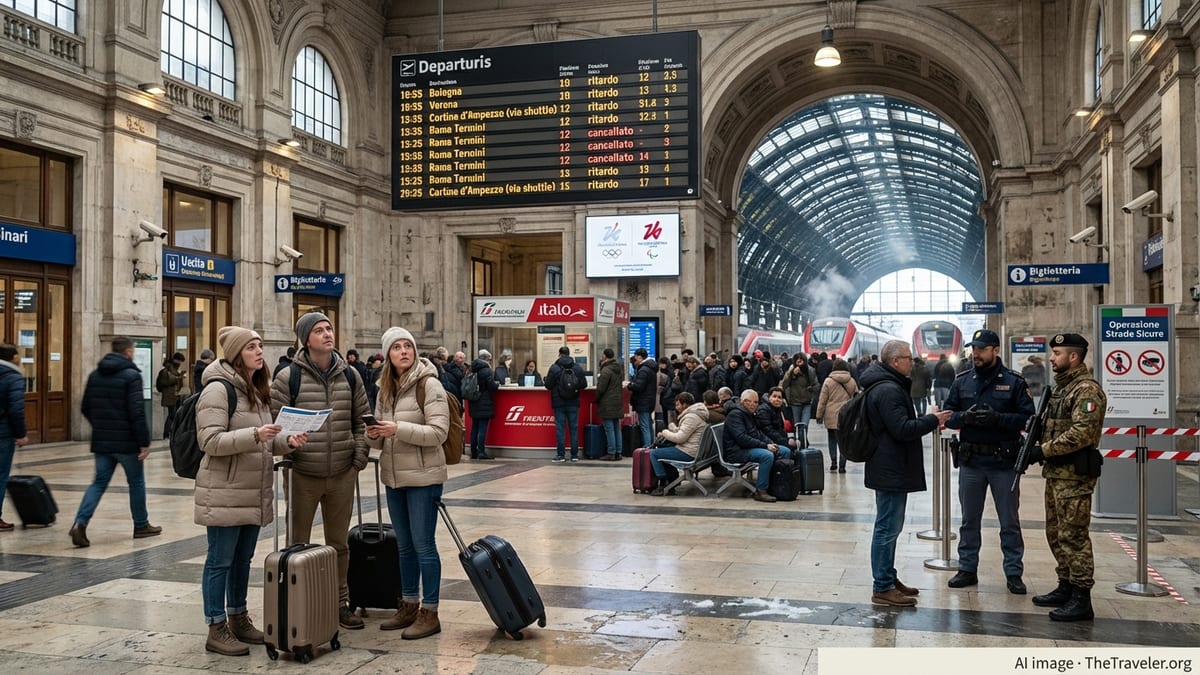
Foreign Office advice highlights Milan and northern cities
Publicly available UK government travel advice for Italy was updated in late October and again on 2 November 2026, retaining a warning that recent demonstrations in northern cities, including Milan, have led to violent unrest and looting. The notice points to an increased presence of police and military personnel in parts of Milan and cautions that further protests may be announced at short notice in major urban centers.
The guidance does not advise against travel to Italy, but it urges visitors to be alert in city centers, avoid protest sites and follow local announcements. The Italy page on the UK travel advice portal continues to classify the country at a general level of heightened awareness due to security concerns, while drawing particular attention to the potential for disruption around demonstrations and strikes.
Separate travel advisories from the United States, Canada, Australia and Ireland all currently recommend a similar posture of increased caution, especially around large gatherings and protest flashpoints. These notices collectively underline that crowds have the potential to turn confrontational, and that even peaceful marches can cause sudden road closures, diversions and delays on public transport.
For British travelers, the Foreign Office also reiterates the importance of registering for email updates for Italy so that any rapid change in risk level, or a new disruption in Milan and other hubs, can be relayed directly ahead of and during trips.
Milan unrest and emergency protest measures
Recent coverage from international media outlets describes a series of demonstrations across northern Italy that escalated in October into riots and localized looting in parts of Milan, Turin, Bologna and Naples. In Milan, widely circulated images showed clashes between small groups of protesters and riot police, damaged shopfronts and a heavy deployment of security forces in the historic center.
Reports indicate that the Italian government responded by approving a package of emergency measures aimed at protest groups considered to endanger public safety. According to national and international reporting, the new legal tools allow for prison sentences of up to five years and fines of around 20,000 euros for participation in organizations deemed responsible for serious public order offenses, along with extended powers to restrict demonstrations.
This tougher stance has been justified domestically as a response to the destruction and intimidation associated with the most violent episodes, though civil liberties advocates and some opposition figures have voiced concern about the breadth of the new provisions. For travelers, the practical impact is more visible in the form of increased checks, a stronger police and military presence around central squares and transport nodes, and the possibility that routes may be sealed off with limited notice when demonstrations are scheduled.
In Milan’s core districts, including the Duomo area and nearby shopping streets, visitors over recent weeks have faced occasional cordons, diversions and temporary closures around protest days. Publicly available images and video show armored vehicles and heavily equipped officers protecting key landmarks and commercial zones on the busiest weekends of unrest.
Impact on flights, trains and city travel
Despite the elevated language in some advisories, Italy’s main transport infrastructure has continued to function, although travelers can expect disruption linked to both protests and strike action. Milan’s Malpensa and Linate airports remain fully operational, but previous national and sector-specific strikes over the autumn led to cancellations and delays, and further walkouts may coincide with demonstrations during the winter season.
Rail services through Milano Centrale and Porta Garibaldi have largely kept to schedule, yet publicly available timetables and operator updates show that protest days have occasionally brought crowding, minor timetable changes and heavier security checks at station entrances. Local tram and metro lines in central Milan have also experienced short suspensions or diversions where marches crossed key junctions, particularly around evening rush hours and weekends.
Travel advisories stress that most unrest is concentrated in restricted areas and that violence has not been directed at tourists as such. Nevertheless, foreign visitors caught in the vicinity of fast-moving events face a higher chance of being delayed, exposed to tear gas or pushed by crowds. Official and consular guidance for Italy therefore emphasizes practical steps such as monitoring local news, allowing extra time for journeys in and around Milan’s central districts and making contingency plans if a chosen museum, venue or route is closed at short notice.
Travelers using rental cars are also being urged in public information notices to avoid parking close to protest sites or leaving valuables in vehicles, particularly near central squares where demonstrations are regularly authorized. In addition, there is a long-standing congestion charge for Milan city center that continues to apply regardless of unrest, which visitors arriving by car should factor into their plans.
How current alerts compare internationally
While Italy features in headlines because of recent scenes in Milan, the overall advisory level from the UK, United States and several other governments remains broadly consistent with long-term ratings. The US State Department, for example, currently assigns Italy a Level 2 advisory, “exercise increased caution,” principally due to terrorism concerns and the possibility of civil unrest. Canadian and Australian advice also recommends vigilance rather than avoidance, referencing ongoing demonstrations and a moderate risk of protest-related disruption.
Destination risk assessments from commercial travel security providers generally characterize unrest levels in Italy as moderate, with protests described as frequent but typically announced in advance and confined to set routes. Documentation available through universities and study abroad programs notes that while clashes with police do occur, serious injury to bystanders is uncommon and can usually be avoided by steering clear of the immediate protest perimeter.
The UK’s decision to keep Italy’s advisory at its present level, while retaining specific references to violent incidents and looting, places the country in a similar category to other European states that have seen sizeable demonstrations in recent years. What distinguishes the current Italian situation in these notices is the combination of highly publicized Milan clashes, the adoption of stringent new protest penalties and the visible deployment of military vehicles in major tourist zones.
Industry commentary suggests that package operators and airlines serving Milan have not announced systematic schedule reductions based on security assessments. However, some have updated customer information pages to highlight protest dates, likely disruption windows and the importance of flexible booking conditions in case of localized shutdowns.
Practical guidance for travelers planning Milan trips
For travelers with upcoming bookings to Milan or wider itineraries across northern Italy, the prevailing advice is to stay informed rather than cancel automatically. Public guidance from government and consular channels emphasizes checking official travel advice pages, subscribing to alerts, and reviewing airline and rail operator updates in the days before departure.
Visitors are encouraged to map their accommodation and key sightseeing stops against common protest routes, which typically pass through central squares, university areas and government buildings. Choosing lodging slightly away from the most symbolic plazas, or planning museum and shopping trips earlier in the day when marches are less likely, can reduce exposure to sudden disruption.
Standard urban safety guidance remains relevant alongside unrest-specific considerations. Travelers are advised in publicly accessible materials to safeguard passports and valuables in crowded locations, be cautious with bags and wallets on public transport, and avoid engaging with any confrontational groups. Advice for Italy also reiterates that those who find themselves near an unexpected demonstration should leave the area, heed police and transport staff instructions and not attempt to cross barricades or film clashes from close range.
For now, the UK’s maintained warning underscores that Milan and other northern cities are experiencing a volatile protest phase that may continue to flare intermittently. At the same time, the absence of a directive against travel and the continued flow of flights and trains point to a destination where trips remain feasible, provided visitors allow for extra flexibility and pay close attention to evolving local conditions.