


More news on this day
The United Kingdom is maintaining strengthened travel advice for Italy after October unrest in Milan, keeping warnings about violent demonstrations and an increased security presence in place even as most journeys continue uninterrupted.
Get the latest news straight to your inbox!
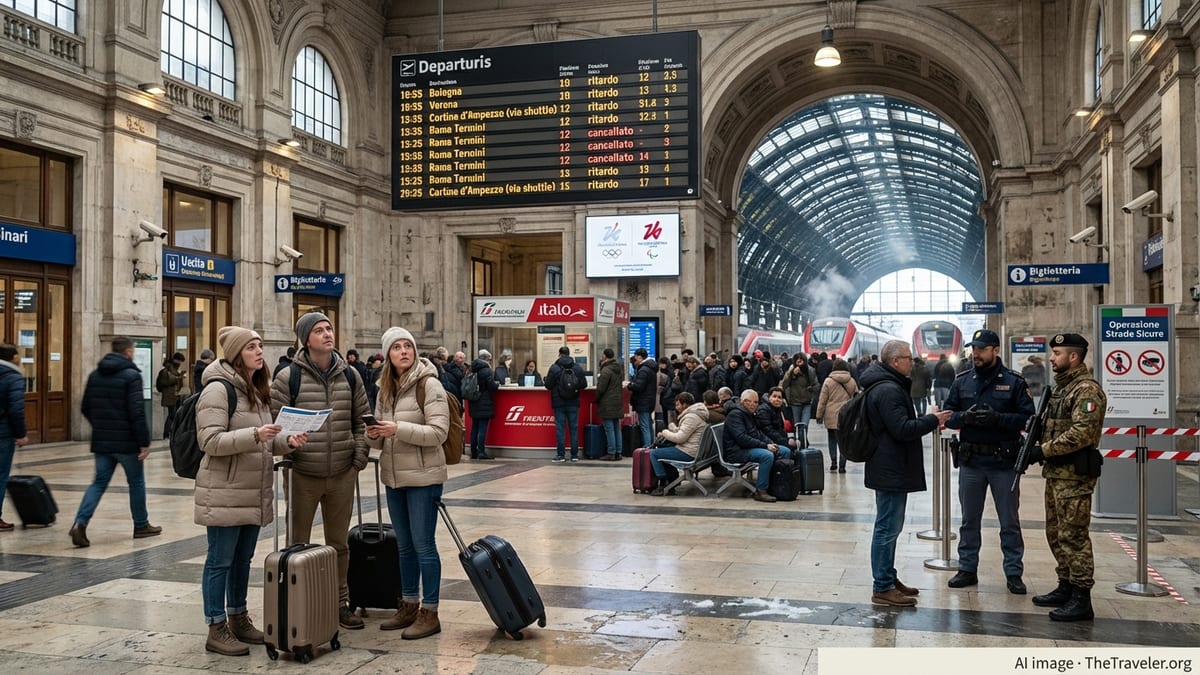
Travel warning stays in place after October unrest
Updated Foreign, Commonwealth and Development Office guidance for Italy, revised on 3 November 2026 and current as of 4 November, continues to highlight the risk of civil unrest following recent protests in northern cities. The advisory notes that demonstrations in areas including Milan have at times turned violent, resulting in riots and looting in some districts.
The wording, which applies across Italy, singles out Milan for its heavier deployment of police and military personnel. Publicly available information states that further demonstrations may take place in major cities and that disruption can occur with little or no notice, particularly around political gatherings and marches.
The same update removed a separate reference to a nationwide strike, underlining that the primary concern at present relates to protests and crowd control measures rather than organised industrial action. The overall advice remains that travel can continue, but with a recommendation that visitors stay aware of their surroundings and avoid large gatherings where possible.
Milan sees prolonged security presence and localised disruption
Reports on the 2026 Italian unrest describe Milan as one of the focal points, with protests that began in mid-October evolving into clashes in some central neighbourhoods. Published accounts indicate that armoured vehicles and additional troops were deployed to the city after incidents of looting and damage to shopfronts around key commercial streets.
The ongoing security posture is most visible around central transport and shopping areas. Information compiled from local coverage points to Piazza Duomo, Cadorna and Porta Venezia as recurring flashpoints for marches, where trams and metro services have occasionally been diverted or paused to keep crowds and vehicles apart.
Despite these high-profile images, daily life in much of Milan appears to be continuing, with businesses, hotels and cultural sites largely open. Independent commentary from residents and travellers portrays a mixed picture on the ground, with some visitors reporting only a noticeable increase in uniformed officers and spontaneous road closures close to rally points.
Impact on flights, trains and city-centre movements
Long-distance transport links within Italy remain broadly intact. High-speed rail services connecting Milan with Rome, Florence and Venice have continued to operate, according to recent travel reporting, although short-notice timetable adjustments and platform changes have occurred during peak protest days.
For air travel, no blanket cancellations linked directly to the unrest have been reported in publicly available airline and airport updates. However, travellers using Milan Malpensa (MXP), Linate (LIN) or Bergamo Orio al Serio (BGY) are being advised in specialist travel coverage to allow additional time to reach terminals, particularly when demonstrations are announced along main arterial routes or near rail hubs.
Within Milan itself, visitors have faced sporadic diversions of tram and bus routes as authorities temporarily close streets and squares to traffic around processions. Travel-focused outlets recommend checking local transport apps and station departure boards on the day of travel rather than relying solely on printed timetables, and building flexible margins into connections to flights, long-distance trains or timed museum entries.
How the UK advisory compares with other nations
International travel advisories show a broadly similar picture of heightened caution rather than outright deterrence. The United States currently lists Italy at Level 2, advising travellers to exercise increased caution because of risks such as terrorism and petty crime, while also noting the potential for demonstrations to disrupt movement in major cities.
Canadian and Australian government guidance for Italy likewise references ongoing protests and the possibility of strikes or marches affecting public transport and city access. These advisories generally recommend avoiding protest areas, monitoring local media and following instructions from local services, echoing the tone of the UK’s updated language on civil unrest.
What distinguishes the current UK wording is its specific reference to recent riots and looting in northern cities and the explicitly noted increase in police and military presence in Milan. That emphasis is shaping perceptions among British travellers, even as many foreign visitors continue to transit Italy without incident.
Practical advice for UK travellers heading to Italy
For British visitors with autumn and winter trips already booked, publicly available guidance does not advise against travel to Italy as a whole. Instead, it focuses on personal awareness and forward planning, particularly for time-sensitive activities such as airport transfers, cruise departures or pre-booked museum slots in Milan and other large cities.
Travel industry updates encourage visitors to track local news for information on planned demonstrations, which are often announced in advance, and to adjust itineraries away from central squares or government buildings on those days. Booking accommodation slightly outside the most protest-affected districts of Milan and allowing extra time to cross the city by tram or metro are among the strategies being suggested to reduce stress.
Insurance providers are drawing attention to policy wording around civil unrest, with many standard policies covering delays or missed connections only in limited circumstances. Prospective travellers are being advised in consumer-facing coverage to confirm whether their policy includes disruption linked to strikes or demonstrations, and to retain receipts if last-minute changes become necessary.
With the UK maintaining its reinforced travel warning and Milan’s unrest still described as ongoing, the current environment requires more preparation than usual but does not preclude a visit. Travellers who stay informed, avoid large crowds and keep flexible margins in their schedules are, according to the latest published advice, still managing to enjoy Italy’s major cities while navigating a period of heightened tension.