


More news on this day
Southern Cross Travel Insurance has introduced a real-time flight delay benefit for eligible policyholders in Australia and New Zealand, aiming to automate support and reduce the stress and paperwork typically associated with disrupted international journeys.
Get the latest news straight to your inbox!
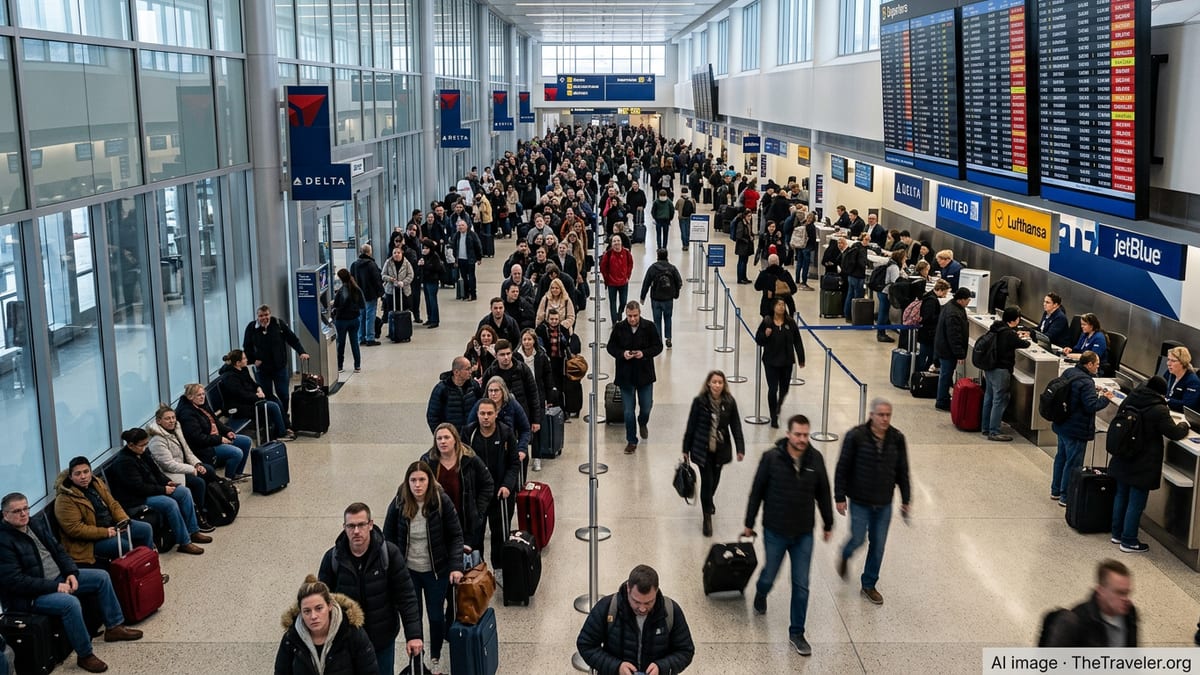
New automated delay benefit for trans-Tasman customers
Southern Cross Travel Insurance has launched an automated flight delay feature, TravelCare Delay Assist, across its international comprehensive single-trip policies for customers in Australia and New Zealand. The benefit is designed to provide practical assistance when an international flight is delayed, using real-time monitoring rather than traditional claim-based processes.
According to publicly available product information, TravelCare Delay Assist is triggered when a registered, eligible flight is delayed by at least two hours within 24 hours of its scheduled departure time. Once this threshold is reached, the system automatically recognises the disruption and processes a benefit without requiring travellers to complete a separate claim solely for the delay event.
The launch is being positioned in industry coverage as a first-of-its-kind automated flight delay benefit spanning both the Australian and New Zealand travel insurance markets. The feature builds on Southern Cross Travel Insurance’s existing presence in the region, where the brand has operated for decades and regularly appears in comparisons of comprehensive travel cover for overseas trips.
How TravelCare Delay Assist works in practice
TravelCare Delay Assist relies on real-time flight data and a registration process that links a traveller’s policy to their outbound international flight. Policy documents indicate that customers need to register their flight details at least 24 hours before the scheduled departure time in order to be eligible for the automated delay benefit.
Once registered, flights are monitored automatically. If a delay of two hours or more occurs within the specified time window, the benefit is activated and a digital voucher is issued. Current information from Southern Cross Travel Insurance materials indicates the voucher value is set at 40 Australian or New Zealand dollars, depending on the customer’s country of residence and policy.
The voucher is intended to help travellers manage the immediate inconvenience of waiting at the airport, such as purchasing food, drinks or other essentials while they navigate a disrupted itinerary. The benefit can be used either during the trip or after returning home, subject to the specific terms and conditions set out in each market’s policy wording.
Partnership with parametric insurtech provider
The real-time element of the new benefit is delivered through a partnership with Blink Parametric, an insurtech provider focused on using live data to automate claims-like events. Industry reports describe Blink Parametric’s model as one that connects airline data feeds with insurers’ policy systems, allowing qualifying delays to be detected and processed without manual intervention from the customer.
In this case, Southern Cross Travel Insurance uses Blink Parametric’s technology to monitor flights and automatically validate whether a delay meets the required threshold. This approach is an example of parametric insurance, where a predefined event such as a two-hour delay triggers a fixed benefit, rather than requiring detailed evidence of actual financial loss.
Observers in the travel insurance sector have noted that parametric solutions are increasingly being adopted to simplify smaller, high-frequency claims categories like delays and missed connections. By automating the process and paying a fixed amount, insurers can reduce administrative costs, while customers receive faster, more predictable outcomes.
Positioning within Australia and New Zealand travel insurance markets
Travel insurance products in Australia and New Zealand have traditionally offered delay cover as part of broader trip disruption benefits, often requiring travellers to submit receipts and documentation after their journey. TravelCare Delay Assist is being framed as an enhancement to this model, offering a straightforward, pre-set benefit alongside more conventional cover for larger losses.
Southern Cross Travel Insurance materials describe the new feature as included within its International Comprehensive Single Trip products rather than an optional add-on. This positions the benefit as a built-in value component at a time when travellers are paying close attention to cover details following years of operational disruption in global aviation.
Regional travel industry commentary suggests that innovations that reduce friction at claim time are increasingly important for travellers in Australia and New Zealand. With flight delays and cancellations remaining relatively common on busy international routes, the ability to receive automatic support without engaging in lengthy post-trip claims processes is viewed as a competitive advantage.
What the change means for travellers planning overseas trips
For policyholders, the key distinction with the new benefit lies in its speed and simplicity. Instead of needing to collect documentation and lodge a claim solely for a moderate delay, eligible travellers receive a pre-determined voucher once the system confirms that the disruption meets the policy criteria.
However, the benefit does not replace traditional cover for more substantial costs such as rebooked flights, additional accommodation or missed connections. Travellers are still advised, according to publicly available guidance from Southern Cross Travel Insurance and other providers, to review their policy documents carefully to understand the limits, exclusions and supporting evidence required for larger claims linked to transport disruption.
As international travel from Australia and New Zealand continues to recover, the introduction of TravelCare Delay Assist signals a broader trend toward using real-time data and automation to handle routine travel insurance events. For customers, the development offers a modest but tangible form of reassurance that some aspects of an unexpected delay can be handled automatically while they focus on reaching their destination.