


More news on this day
A late-night derailment on Seattle’s Link light rail near International District/Chinatown station brought trains to an abrupt halt, triggering a widespread suspension of service and forcing thousands of weekend riders to seek alternate routes across the region.
Get the latest news straight to your inbox!
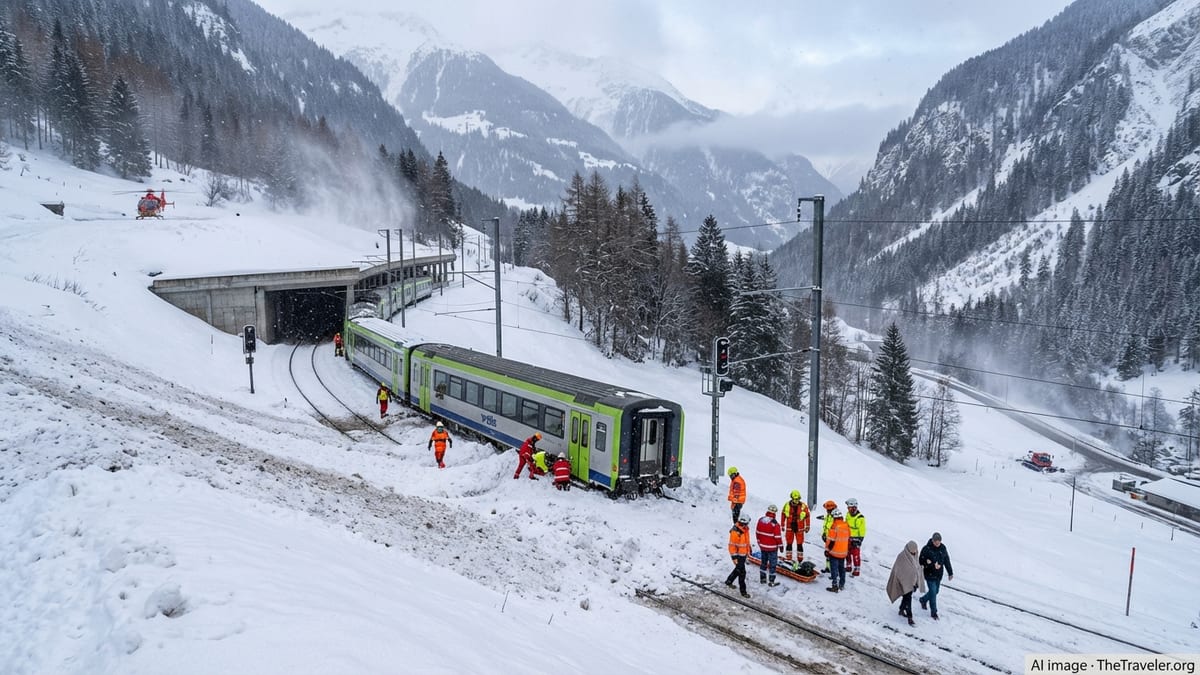
Derailment near downtown shutters key transit corridor
Reports circulating early Sunday indicate that a southbound Link train left the tracks just outside International District/Chinatown Station, one of the system’s busiest transfer points. Images and rider accounts shared on social media suggest the incident occurred as the train was entering or exiting the Downtown Seattle Transit Tunnel, a critical chokepoint for both the 1 and 2 light rail lines.
Publicly available information shows that overhead wires in the tunnel were de-energized after the derailment and the operator was escorted from the train, prompting an immediate shutdown of rail movements through the core segment. There were no early indications of serious injuries, but the disruption quickly cascaded across the network as trains were held at stations from Northgate to the Rainier Valley and Eastside.
The location of the derailment, adjacent to regional bus corridors and the city’s largest concentration of connecting routes, amplified the impact. Riders described being asked first to remain on trains, then to clear platforms entirely as the full extent of the damage and necessary safety checks became clearer.
Link light rail has experienced several major outages in recent months related to power issues, maintenance needs and signaling problems, but this incident is one of the most severe derailment-related disruptions reported since the system expanded north to Lynnwood and east toward Bellevue.
Service suspended across central segment, limited trains on edges
According to rider alerts and transit bulletins, Link service through downtown Seattle was suspended shortly after the derailment, effectively severing the network into isolated sections. Initial information pointed to a full closure between Northgate and Judkins Park, with no trains allowed through the downtown tunnel while crews assessed track conditions and overhead wire damage.
North of the closure, some trains reportedly continued to operate in limited fashion between Northgate and University of Washington, though at sharply reduced frequency and with significant crowding. South and east of the affected segment, trains either turned back short of downtown or were taken out of service, leaving stations such as Beacon Hill, Rainier Beach and South Bellevue without through connections.
Transit tracking apps and on-the-ground reports showed long gaps between trains even on segments that remained open, as equipment and staffing were repositioned around the blocked zone. Riders who rely on late-night service to reach jobs at Seattle–Tacoma International Airport and major hospitals faced particular uncertainty, with some trains terminating unexpectedly and announcements varying by station.
Sound Transit has not yet provided a detailed public breakdown of the damage, but online discussions among regular riders and transit enthusiasts suggest concern that track switches or other key infrastructure near the downtown tunnel portal may have been affected, potentially extending the time needed to restore full service.
Bus bridges, regular routes and streetcar pick up stranded riders
In the hours following the derailment, bus bridges were organized to move passengers around the closure, though riders described waits considerably longer than typical train headways. The ad hoc network of shuttles focused on linking stations closest to the blocked segment, particularly between Stadium, International District/Chinatown, Capitol Hill and Judkins Park.
Experienced transit users advised others to favor regular fixed bus routes over special shuttles wherever possible, noting that Link replacement buses can be infrequent and slow through downtown traffic. King County Metro routes along Third Avenue, the RapidRide lines and frequent east–west corridors through Capitol Hill and the Central District emerged as key alternatives for reaching destinations normally served by Link.
Some riders also turned to the First Hill Streetcar and local trolleybus routes to bypass the tunnel, especially for trips between Pioneer Square, Capitol Hill and the hospitals on First Hill. While these services lack the capacity and speed of light rail, they offered more predictable headways during the disruption.
For travelers heading to or from Seattle–Tacoma International Airport, airport-area bus routes and ride-hail services saw a surge in demand. Transit blogs and community forums highlighted the importance of the existing and planned overnight bus links between downtown and the airport, which are increasingly viewed as a safety net when light rail is interrupted.
Travel advice for commuters and visitors in the coming days
Based on recent disruption patterns and commentary from transportation planners in prior incidents, riders may face several days of altered service while inspections, repairs and safety reviews proceed along the affected segment. Even once trains resume running through the downtown tunnel, frequencies could remain lower than usual and turnback points may shift as crews test equipment.
Regular users are being urged, through online alerts and local media coverage, to check real-time service updates before leaving home and to build in additional travel time, particularly for early morning flights, hospital shifts and special events. Many riders have adopted a strategy of confirming light rail status immediately before entering a station, as conditions can change quickly during ongoing recovery work.
Visitors unfamiliar with Seattle’s transit network are encouraged to identify at least one bus-based backup route between downtown and major hubs such as the University District, Capitol Hill, the airport and Bellevue. Trip-planning tools and mobile maps typically include both bus and rail options and can automatically reroute around active closures.
Those who must travel late at night or early in the morning may find that frequent bus corridors provide more reliable service than rail during the immediate aftermath of the derailment. Riders are also advised to allow extra time when transferring between rail and bus near the closure points, as platforms and sidewalks can become crowded when entire trainloads of passengers are directed to surface streets.
Derailment adds to broader questions about system reliability
The derailment arrives at a sensitive moment for Seattle-area transit. In recent months, riders have documented a series of unplanned outages affecting both the 1 and 2 lines, including power problems, tunnel closures and maintenance issues that have required repeated bus bridges and partial suspensions. Publicly available planning documents for upcoming service changes already highlight the need for better contingency planning and overnight coverage.
Transit commentators note that as the Link network has grown north to Lynnwood and east across Lake Washington, its role in the region’s mobility has become more central, with disruptions now affecting a wider array of commuters, event-goers and airport travelers. Each major incident has prompted fresh debate about maintenance investment, staffing levels and the balance between rail expansion and operational resilience.
Community discussions in recent weeks have also focused on the performance of temporary “Link shuttles,” with some riders reporting that these buses arrive infrequently and lack the capacity to absorb full trainloads of passengers. The latest derailment and resulting suspension are likely to intensify calls for more robust backup routes that can be activated quickly and run at high frequency when rail is out of service.
As investigators and engineers work to determine exactly how the train left the tracks near International District/Chinatown, travelers across the Seattle region are adjusting their routines once again, navigating a patchwork of buses, streetcars and shuttles in place of the rapid, continuous light rail service many have come to depend on.