


More news on this day
Passengers planning to fly out of the United Arab Emirates today are being urged to check their flight status repeatedly, as Etihad Airways, Emirates and Air Arabia continue to adjust schedules, clear backlogs and reroute services in the wake of recent airspace disruptions affecting key Gulf hubs.
Get the latest news straight to your inbox!
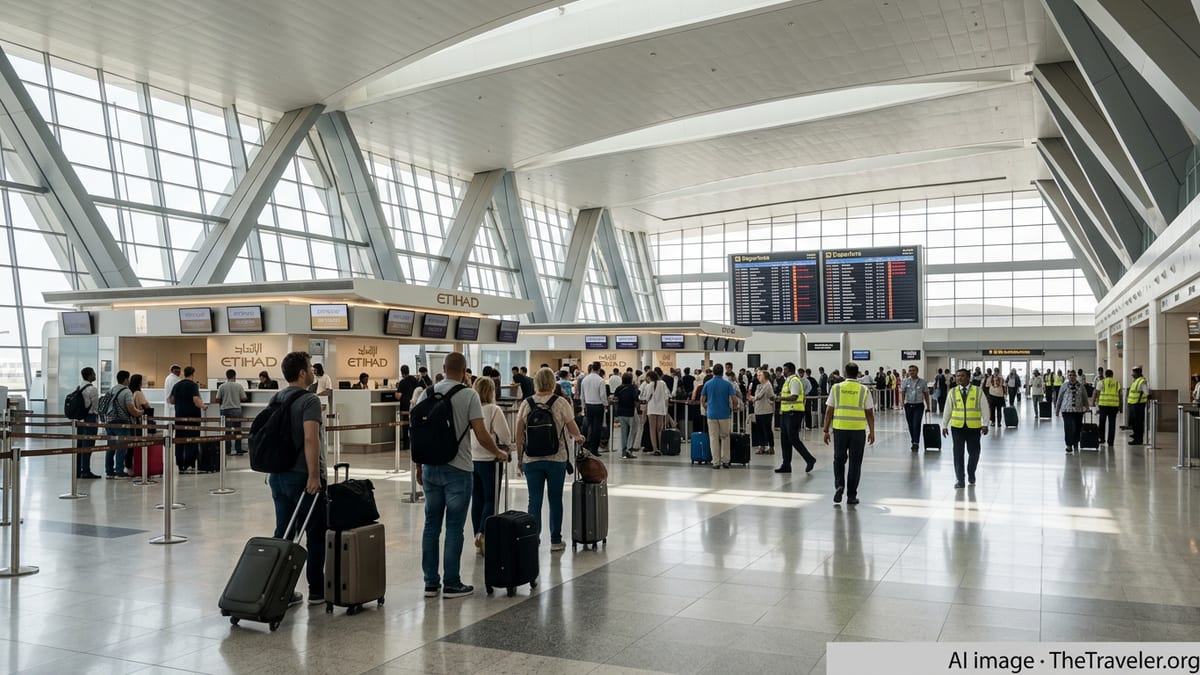
Etihad operating reduced schedule from Abu Dhabi
Publicly available information indicates that Etihad Airways is running a limited, carefully managed schedule from Abu Dhabi, prioritising core long haul and regional routes while trimming frequencies on others. Flight tracking data and recent advisories show patterns of consolidated services, with some departures combined or retimed to make better use of available aircraft and crew.
Travel industry updates for March and April highlighted a period in which Etihad scaled back operations in response to regional airspace restrictions, offering free rebooking and refunds for affected journeys. While the airline has gradually rebuilt much of its network, schedules this week still show a higher than usual number of timing changes and occasional cancellations on select routes, particularly overnight and early morning departures.
Passengers departing from Abu Dhabi today are being advised by published guidance to rely on real time information rather than assuming original ticketed times remain valid. Travellers are encouraged to use airline apps and online flight status tools on the day of departure and again before leaving for the airport, as some flights that appear on older itineraries have been replaced by different service numbers or merged into alternative departures.
For travellers already holding tickets, consumer guidance circulating in the UAE market stresses that those whose flights are cancelled can generally choose between moving to the next available service or requesting a refund, depending on fare conditions. Given the dynamic situation, rebooking options may involve longer routings or different connection points than originally planned.
Emirates clearing backlogs at Dubai International
Dubai International Airport remains one of the busiest hubs in the world, and Emirates continues to play a central role in the recovery of traffic through the UAE after earlier airspace closures. According to recent operational updates referenced in regional coverage, Emirates has progressively reinstated flights on many trunk routes but is still managing a backlog of displaced passengers from previous days of disruption.
Past advisories during the period of heaviest disruption described Emirates operating a limited schedule while airspace was constrained. More recent schedule data shows a fuller pattern of departures, but with scattered cancellations and retimings still visible across Europe, North America and parts of Asia. Some long haul flights have shifted departure times, while others appear as “disrupted” or “subject to change” in public listings.
Travellers flying from Dubai today are being cautioned that the airport can experience longer than usual processing times at check in and security when operations ramp back up after a disruption cycle. Travel experts in the region recommend arriving well in advance of departure, travelling only with confirmed bookings, and monitoring gate information closely inside the terminal, as last minute stand changes have been common during recent irregular operations.
For passengers whose Emirates flights today are cancelled outright, previously published policies suggest that rebooking within a defined travel window or seeking a refund remain the primary options. However, availability on some high demand routes may be constrained, prompting some travellers to accept alternative routings or travel dates to complete their journeys.
Air Arabia adjusts Sharjah and regional services
Low cost carrier Air Arabia, which operates from Sharjah and other bases in the region, has also been adapting its schedule in response to the broader airspace situation. Community reports and recent airport departure boards indicate that most core services are operating, but with pockets of cancellations and rescheduled flights, especially on certain Gulf and South Asian routes.
Unlike the larger network carriers, Air Arabia’s point to point model can make short notice disruptions more visible to travellers when a specific flight is removed from the schedule rather than consolidated into an alternative departure. Over recent weeks, passengers posting on public forums have described a mix of normal operations alongside sudden cancellations and reroutes, underscoring the need to verify flight status directly with the airline on the day of travel.
The carrier’s published conditions for some higher tier fare products detail more flexible cancellation and change options, including partial refunds under specific fare types when a journey cannot proceed as planned. Travel advisers note that eligibility for these options depends heavily on the original fare purchased, and that passengers should review their booking conditions before making decisions about voluntary changes.
At Sharjah International Airport, where Air Arabia is the dominant operator, the overall pattern today appears broadly stable, but residual effects from earlier disruptions mean that individual flights may still be retimed or rerouted. Travellers connecting onward on separate tickets are being encouraged to build in additional buffer time between flights in case of short notice schedule shifts.
What flyers from the UAE should expect today
Across the UAE, a common theme in airline and airport communications has been the emphasis on flexibility and real time information. Published advisories from recent weeks repeatedly stress that passengers should not travel to airports unless they hold a confirmed, operating booking and have checked the latest status shortly before departure.
For those flying today with Etihad, Emirates or Air Arabia, this translates into a more hands on approach to trip management than in more typical periods. Travellers are being encouraged to keep app notifications enabled, verify that contact details in their bookings are correct, and refresh flight status pages in the hours leading up to check in. In many cases, schedule changes are being communicated by email or mobile alert first, with global reservation systems updating shortly afterward.
Given the lingering congestion from earlier cancellations, passengers may also encounter fuller flights than usual, with fewer spare seats available for same day changes. Travel agencies in the region report that some customers have accepted departures a day or two later than planned in order to secure firm confirmations, particularly on long haul routes to Europe and North America, where aircraft and crew rotation remain under pressure.
On the ground, observers note that airport operations are largely steady, but that security queues, immigration lines and baggage delivery times can all lengthen when schedules are in flux. Those departing from Dubai, Abu Dhabi or Sharjah today are advised to factor in this additional time, travel with essential items in cabin baggage, and prepare for the possibility of late gate changes or aircraft swaps.
Practical steps for affected passengers
For travellers whose flights are cancelled or significantly changed today, passenger rights and options will depend on the ticket type, routing and the specific airline’s policies. Recent travel bulletins summarising the situation across the Middle East highlight that most major carriers, including Etihad and Emirates, have been waiving change fees for trips directly affected by airspace closures and related disruptions.
In practice, this often means that passengers can select a new travel date within a specified window or reroute via alternative gateways, subject to seat availability. Some travellers may also be eligible for refunds if their journey is no longer possible or if the delay exceeds a certain threshold. However, low cost and promotional fares may carry more restrictions, and any additional costs for accommodation, meals or surface transport generally remain the traveller’s responsibility unless explicitly covered by the airline.
Consumer advocates in the region continue to recommend that passengers keep detailed records of cancellations, including screenshots of flight status pages and copies of airline communications, in case they need to pursue claims or travel insurance benefits later. Policies that include disruption or missed connection cover can sometimes offset extra expenses when schedules change at short notice.
With regional airspace gradually stabilising but not yet fully back to pre disruption norms, the operating environment for UAE based airlines remains fluid. For anyone flying from the UAE today, the most reliable strategy is to stay informed, stay flexible and treat official flight status tools as the primary source of truth about whether a specific departure is running, retimed or cancelled.