


Beaulieu-sur-Mer sits in plain sight between Nice and Monaco, yet most travelers treat it as a brief train stop on the way to somewhere else. Those who do get off often head straight for the main beach or a quick look at the Belle Époque villas before rejoining the coastal crowds. Stay a little longer, though, and a quieter Beaulieu emerges: one of pine-framed coves, early-morning rituals at the port, and tiny local haunts tucked between grand hotels. This guide explores the corners of Beaulieu-sur-Mer that many visitors never quite find.
Get the latest updates straight to your inbox!
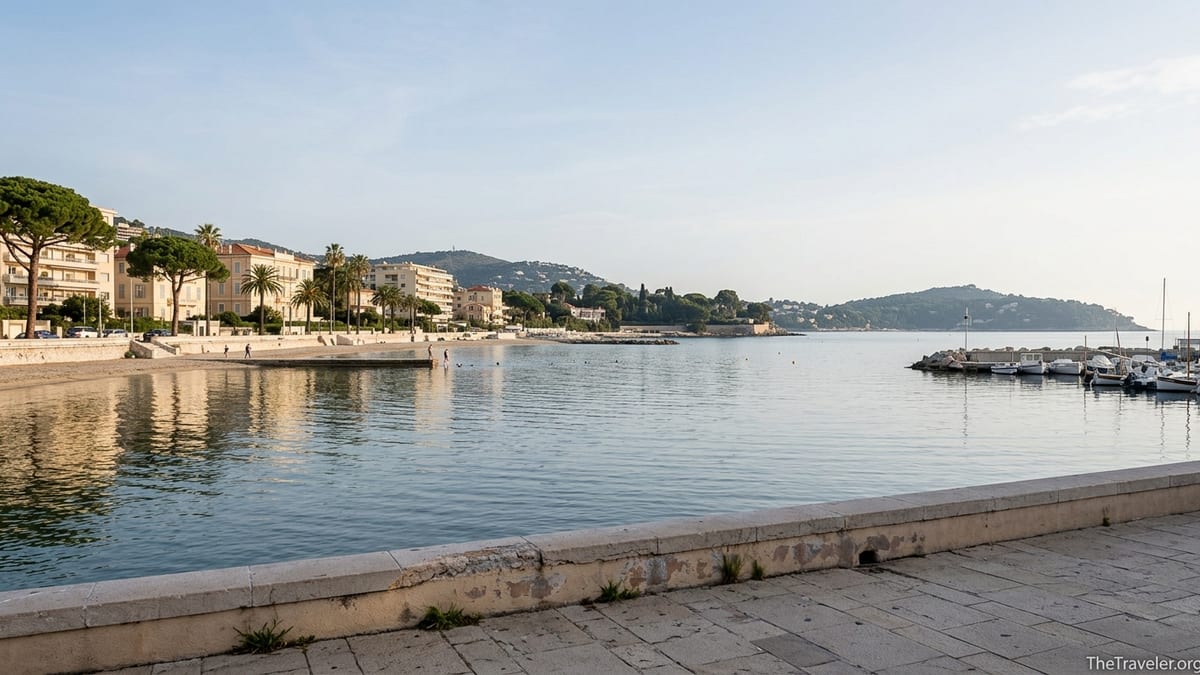
The Sheltered Corners of Petite Afrique Beach
Most visitors arrive at Plage de la Petite Afrique, take a snapshot of the palm trees against the cliffs, then rent a sun lounger from the main private beach club. If you walk a little further along the curve of the bay, the atmosphere changes. At the far eastern end, below the gardens that hide the old casino building, the crowds thin out and the beach becomes more local. Pine trees lean over the gravel, casting shade that regulars claim early with folding chairs and paperback novels. It feels a world away from the tight rows of beach beds closer to the entrance, even though you are only a few minutes’ walk from the car park and port.
Prices here are gentler than along other parts of the Riviera. Expect to pay roughly 20 to 30 euros per person for a sun lounger and umbrella at one of the smaller concessions in high season, a little less in spring and autumn. Many locals skip rentals entirely and bring simple roll-up mats from the Monoprix in town or budget beach chairs bought in Nice for under 25 euros. The beach is made of fine pebbles rather than sand, so picking up inexpensive water shoes from a supermarket or sports chain in Nice can make getting in and out of the sea more comfortable.
The real hidden charm of Petite Afrique appears early and late in the day. Around 7 a.m. in summer, swimmers from nearby apartments walk down in robes for a quiet lap across the bay, often followed by a coffee from the small kiosks near the port. In the evening, after 6 p.m., the paid loungers start to empty but the water remains warm. Families arrive with picnic baskets, and you will often see locals setting up simple apéritifs of rosé, olives and socca bought in Nice, staying until the cliffs turn deep orange at sunset.
If you are curious about the environmental side of the Riviera, Petite Afrique is also a subtle success story. Local authorities and associations have invested in regular beach cleanups, better waste sorting and water-quality monitoring, and the town promotes the site as having one of the more progressive environmental approaches on this stretch of coast. You will see clear signage about jellyfish nets in summer, restrictions on motorized water sports close to swimmers, and information boards describing marine life that children hunt for with snorkels along the rocks at the eastern edge.
Baie des Fourmis: Port des Fourmis and Its Secret Rhythm
On the other side of town, Baie des Fourmis often seems like a quick photo stop for visitors walking between Beaulieu and Saint-Jean-Cap-Ferrat. Yet if you slow down and treat Port des Fourmis as a destination rather than a viewpoint, it reveals a very different side of local life. This small marina, tucked under the headland where Villa Kerylos stands, has only a few visitor berths and mostly serves local boat owners. Fishing boats sit next to small pleasure craft, and the scene is far more modest than the superyacht-lined ports of Monaco and Antibes.
Arrive around 8 a.m. and you will find fishermen cleaning nets, hosing down their boats and chatting with neighbors over takeaway espresso from the bar across the road. Many return with small catches of Mediterranean species such as dorade and loup that are quickly sold to local restaurants or families who know to come early. Ask politely in French if any fish is for sale and you may leave with enough for a simple grilled dinner, at prices that are usually lower than the markets in Nice. Even if you do not buy anything, watching this daily choreography from the low stone wall by the slipway offers a glimpse of a Riviera that still works for a living.
Plage des Fourmis itself, curling along the bay next to the marina, is easy to overlook. From a distance it seems like yet another compact pebble beach with a small private section. In practice, the public part is wide and usually less crowded than the more famous Petite Afrique, especially on summer afternoons when day-trippers head home. Because the bay is sheltered, the sea here is often as calm as a swimming pool. Families from Nice and Monaco who know the area quietly favor this spot for children learning to swim, grateful for the gentle slope of the seabed and the protection of jellyfish nets in high season.
For a very local ritual, come in the shoulder seasons of May or late September. Around 5 p.m., when the light softens and temperatures drop, a group of residents often gathers along the waterfront path that runs past the marina. Some walk small dogs, others practice gentle stretching or tai chi, and many simply sit on the benches facing Cap Ferrat with thermos cups of tea. The mood is quiet and sociable, far from the cocktail-club soundtrack of other Riviera bays. Take a seat, leave your phone in your pocket, and you will blend into this understated rhythm.
Villa Kerylos and the Forgotten Back Streets
Almost every guidebook mentions Villa Kerylos, the early twentieth century Greek-style villa perched above Baie des Fourmis. Fewer visitors take time to wander the streets behind it, which offer a compact lesson in Beaulieu’s Belle Époque past. After visiting the villa, instead of returning straight to the seafront road, follow the small lanes that climb the hill behind the bay. Many are shaded by citrus trees and planted with bougainvillea, and you will quickly leave the coastal traffic behind.
Here, grand apartment buildings from the late nineteenth and early twentieth centuries stand next to modest terraced houses. Names such as Palais des Anglais and Bristol hint at the days when British and Russian aristocrats wintered in Beaulieu. You will notice decorative ironwork balconies, mosaic-tiled entrances and carved stone façades that are surprisingly intact compared with busier resorts. Because these streets contain mainly residential properties, they remain calm even in August. A slow wander can easily take an hour if you stop to appreciate doorways and small details.
One practical advantage of exploring this area is the number of small neighborhood shops and services that many tourists do not realize exist. Tucked on side streets behind the seafront are independent bakeries, an old-fashioned newsagent, and a greengrocer that displays seasonal produce on wooden crates along the pavement. Buying a still-warm baguette and some ripe local tomatoes here, instead of in the larger supermarkets along the main road, costs roughly the same but supports local families and often tastes fresher.
If you need a break from the sun, look out for the shaded public gardens close to the central church and town hall. These small parks are rarely mentioned on maps but offer benches under mature trees, drinking fountains, and views through gaps in the foliage down to the sea. Bring a takeaway coffee from a nearby café, sit with a guidebook or simply watch the slow pace of daily life as children walk home from school and older residents greet each other by name.
Hidden Food Moments: From Market Stalls to Hotel Terraces
Beaulieu-sur-Mer has a reputation for refined dining, anchored by addresses like La Réserve de Beaulieu, a historic luxury hotel with a restaurant terrace perched directly above the sea. Many visitors assume its bar and bistro are off-limits to non-guests or reserve it only for special-occasion dinners. In reality, stopping by for a single coffee or an early-evening drink can be an accessible way to enjoy the setting without committing to a full multi-course meal. Expect espresso on the terrace to cost more than in town, perhaps 6 to 8 euros instead of 2.50 to 3, but you are paying for panoramic views of the bay and a quiet, old-world atmosphere.
At the other end of the spectrum lies the daily food market on the central square, held in the open-air hall near the main road. It is not as large as the Cours Saleya market in Nice, which means many travelers skip it, yet it is one of the simplest ways to connect with local life. Stalls sell seasonal fruit and vegetables, Provençal herbs, olives, and cheese from nearby hills. Typical prices feel reasonable for the Riviera: cherries and apricots in early summer might be 5 to 8 euros per kilo, while a round of soft goat cheese often costs between 3 and 5 euros. Grab a bag of Niçoise olives, a wedge of tomme and some crusty bread, and you have a picnic for two that easily undercuts lunch in a seafront restaurant.
A small but enjoyable ritual is to build your own “market lunch” and take it down to one of the less-frequented benches above Port de Beaulieu. Buy tabbouleh or stuffed vegetables from the traiteur in town, pick up a chilled bottle of sparkling water from a supermarket, and carry everything in a reusable shopping bag. Seating along the port is free, the view of bobbing boats and the sea is uninterrupted, and the entire meal can cost under 12 to 15 euros per person depending on your choices. It is both budget-friendly and quietly luxurious.
For dessert or a late-afternoon pause, look for small family-run patisseries a block or two back from the seafront rather than the most obvious ice-cream stands. Many offer classic French pastries for around 3 to 5 euros each, including local favorites filled with lemon from nearby Menton. Ordering in French, even if it is just a simple “bonjour” and “s’il vous plaît,” often earns an extra smile and a more patient explanation of what is in each cake.
Quiet Paths and Viewpoints Between Sea and Hills
Beaulieu-sur-Mer is framed by steep hills that rise quickly from the sea, creating natural viewpoints that are surprisingly easy to reach. While nearby Eze attracts dedicated hikers and tour groups to its clifftop paths, Beaulieu’s gentler trails remain relatively unknown. One of the simplest walks starts at the train station: from here, follow the minor roads that wind uphill behind the town. Within fifteen minutes, you will find yourself among terraced gardens, small villas and glimpses of the sea between pines and cypress trees.
From various bends above town, you gain classic Riviera views without the crowds: white façades of Belle Époque villas, the curve of Baie des Fourmis, and the peninsula of Cap Ferrat stretching toward the horizon. Early morning or the hour before sunset are ideal, both for photos and for cooler temperatures. You do not need special hiking gear; a pair of sneakers, a refillable water bottle and light clothing are enough for these short exploratory walks. Because you stay close to residential streets, it is easy to cut the walk short and head back down if the heat becomes too much.
A lesser-known coastal stroll connects Beaulieu to the neighboring town of Villefranche-sur-Mer. Instead of taking the main road or bus, follow the waterfront east from Port des Fourmis and then pick up the coastal path where it is signposted. Parts of the route pass under the railway line, others hug low cliffs just above the water. There is no entrance fee, and many stretches are almost empty outside July and August. Carry a small towel and you can scramble down to natural rock platforms in a few places for a quick swim, always checking local safety signs and conditions first.
If you are staying several days, consider planning at least one sunrise walk. In summer, that means an early start around 6 a.m., but the reward is seeing the first light hit the façades of Beaulieu while streets are nearly empty. Stand on the small jetty at Port des Fourmis or on the promenade at Petite Afrique and you will often have the entire seafront almost to yourself, apart from joggers and a few dog walkers.
Everyday Beaulieu: Shops, Services and Simple Life
One of Beaulieu-sur-Mer’s quiet strengths is how livable it feels. Where some Riviera resorts are dominated by seasonal rentals and designer boutiques, Beaulieu still has the everyday infrastructure of a real town, used by people who live here year-round. Travelers who step beyond the seafront discover useful, human-scale services that can make a stay smoother and more interesting.
Along the main avenue near the train station you will find a cluster of practical shops: pharmacies, a small post office, local banks, and laundromats. Using these can be part of experiencing the town rather than a chore. For example, spending an hour at a self-service laundry gives you a chance to read, watch local television or chat with residents while your clothes wash and dry for roughly the price of a single cocktail on the promenade. Pharmacies are well stocked with European skincare brands and practical items such as sunblock and after-sun gel, often at lower prices than in airport shops.
Look for the smaller independent businesses that hide just off the main drag: a cobbler repairing leather sandals, a tailor who will adjust a hem overnight, florists creating bouquets for local events. These places rarely appear in tourist maps but tell you a lot about the community. Purchasing a small item or simply stopping to appreciate a flower display supports the local economy and encourages diversity on a coast that can easily tilt toward chain stores.
In the evening, many residents head not for high-profile bars but for unassuming cafés that spill a few tables onto the pavement of side streets. Prices are usually friendlier here: a glass of house rosé might be 4 to 6 euros instead of 8 to 10 on the seafront. You are more likely to hear French, Italian and the local Niçois dialect than English, and the entertainment is simply watching people wander past with their shopping bags and dogs in tow. Embracing these small, everyday moments is often what makes a stay in Beaulieu memorable long after the sea views blend together.
The Takeaway
Beaulieu-sur-Mer rewards travelers who slow down and look beyond the obvious postcard scenes. Its beaches may be only two in number, but their sheltered corners reveal distinct personalities at different times of day. The working rhythms of Port des Fourmis, the forgotten elegance of back streets behind Villa Kerylos, and the modest market lunches eaten on port benches all offer experiences that feel quietly exclusive without the price tag.
By exploring local shops, using everyday services and walking simple hillside paths, you begin to see Beaulieu less as a Riviera resort and more as a compact coastal town that happens to enjoy extraordinary light and sea views. None of these activities require elaborate planning or significant budgets; most are free, apart from the cost of a coffee, a pastry or a market picnic. Yet together they form a portrait of a place that many visitors rush past on the train, unaware of what they are missing just a few minutes’ stroll from the platform.
If you give Beaulieu-sur-Mer two or three days instead of an afternoon, you can weave these hidden gems into a gentle routine of swims, walks and simple meals. In doing so, you will share in the same understated pleasures that keep residents loyal to the town year after year, even as the more famous names of the Riviera capture the headlines.
FAQ
Q1. How many days should I spend in Beaulieu-sur-Mer to enjoy these hidden spots?
Plan on at least two full days, ideally three, so you have time for both beaches, a market morning, a villa visit and an unhurried coastal or hillside walk.
Q2. Is Beaulieu-sur-Mer very expensive compared with Nice or Monaco?
Everyday costs like coffee, bakery items and casual meals are often slightly lower than in Monaco and similar to central Nice, while high-end hotel terraces and fine dining can be comparably priced across the Riviera.
Q3. Are Petite Afrique and Baie des Fourmis suitable for children?
Yes, both beaches are popular with local families thanks to calm water and gentle slopes, though they are pebble rather than sand, so water shoes and close supervision are helpful.
Q4. Do I need a car to explore these hidden corners?
No, Beaulieu-sur-Mer is compact and walkable, and most places mentioned are within 10 to 20 minutes on foot from the train station or town center, with local buses covering nearby hills and villages.
Q5. When is the best time of year to visit for fewer crowds?
Late April to early June and mid-September to October usually offer warm weather and swimmable seas with fewer visitors than peak summer, making hidden spots feel especially peaceful.
Q6. Can I visit Villa Kerylos and still have time for a quiet beach afternoon?
Yes, a typical visit to Villa Kerylos takes one to two hours, leaving plenty of time the same day to walk down to Baie des Fourmis or Petite Afrique for a relaxed swim or sunset.
Q7. Are there budget-friendly food options beyond seafront restaurants?
Local markets, bakeries and small takeout counters offer picnic supplies and simple dishes at moderate prices, and building a market picnic for the port benches is one of the most economical and enjoyable options.
Q8. How early should I arrive for a quieter experience on the beaches?
Arriving before 9 a.m. in summer or around 10 a.m. in the shoulder seasons usually means more space, easier parking and a calmer atmosphere, especially in the local corners of Petite Afrique.
Q9. Is Beaulieu-sur-Mer a good base for exploring the wider Riviera?
Yes, frequent trains and buses connect Beaulieu with Nice, Villefranche-sur-Mer, Monaco and Menton, so you can enjoy a quieter base while making easy day trips to busier destinations.
Q10. What should I pack to make the most of these hidden gems?
Comfortable walking shoes, light clothing, a refillable water bottle, sun protection, a towel, simple swim shoes for pebble beaches and a reusable shopping bag for market visits will cover most situations.