


More news on this day
Hundreds of flights were delayed and dozens cancelled at Shenzhen Bao’an International Airport on Monday, causing widespread disruption for travelers on major regional routes as leading Chinese carriers struggled to maintain normal operations across South Korea, Japan and Southeast Asia.
Get the latest news straight to your inbox!
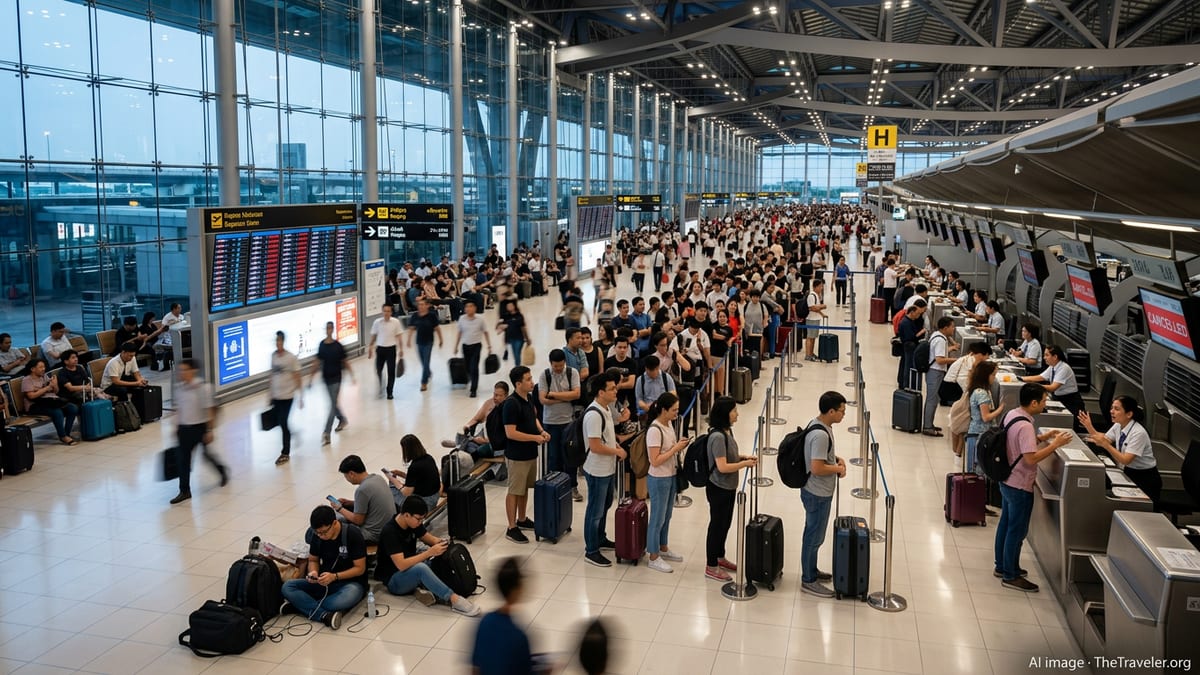
Heavy Disruptions Recorded at Major South China Hub
Operational data compiled from real-time tracking platforms and airport information screens on June 8 indicate that Shenzhen Bao’an International Airport recorded at least 602 delayed flights and 27 cancellations over the course of the day, placing severe strain on one of southern China’s busiest aviation hubs. The figures point to one of the most turbulent single-day performances at the airport so far in 2026.
Shenzhen Bao’an is a primary base for Shenzhen Airlines and China Southern Airlines, and a key focus city for Hainan Airlines, with Air China and China Eastern also operating dense schedules through the airport. Publicly available information shows that disruptions rippled through domestic and international networks, snarling connections for travelers heading to and from regional destinations such as Seoul, Busan, Tokyo, Osaka and key points in Southeast Asia.
Recent coverage from regional news outlets and aviation trackers links the latest wave of disruption to a combination of unstable summer weather across the Greater Bay Area and mounting congestion in heavily trafficked airspace around Guangdong, Shanghai and Beijing. The resulting bottlenecks translated into rolling delays that accumulated hour by hour at Shenzhen Bao’an, with knock-on effects continuing into the late evening.
The airport, which handled more than 50 million passengers annually before the pandemic, has been rebuilding its international network as demand rebounds. The volume of delays recorded on June 8 illustrates the challenge of scaling up quickly in a region where air traffic density, storm systems and tight timetables leave little margin for error.
Key Chinese Carriers Strain to Protect Regional Schedules
The latest figures suggest that Shenzhen-based Shenzhen Airlines and Guangzhou-based China Southern bore a significant share of the disruption, reflecting their status as dominant operators at the airport. Tracking data for routes such as Shenzhen to Hanoi and Shenzhen to major Korean and Japanese gateways showed departure times pushed back by several hours, in some cases into the early hours of the following day.
China Eastern, Air China and Hainan Airlines also reported irregular operations on flights feeding into Shenzhen from domestic and long-haul points. International services linking Shenzhen with cities such as Cairo, Rome and Auckland have already reported elevated average delays in recent weeks, according to flight history databases, signaling ongoing challenges in stabilizing long-range operations that connect into the South China hub.
Published coverage from aviation-focused outlets highlights how interlinked mainland China’s major hub airports have become, with technical issues or weather-related slowdowns in Shanghai or Beijing quickly cascading southward. In this context, even a short-lived slowdown at one node can leave aircraft and crew out of position, forcing carriers to reshuffle rotations and, in some cases, cancel entire sectors when recovery options are limited.
Industry analysts quoted in recent reports note that large airlines in China are still in a period of fleet and schedule adjustment, particularly as they phase in new-generation aircraft and recalibrate post-pandemic international demand. The combination of ambitious summer schedules and volatile weather has increased the risk of significant single-day shocks of the kind now being documented at Shenzhen Bao’an.
Routes to South Korea, Japan and Southeast Asia Hardest Hit
Routes linking Shenzhen with key markets in South Korea, Japan and Southeast Asia appear to have been among the most exposed to disruption during the latest wave of delays and cancellations. Flight-tracking snapshots through June show repeated hold-ups on departures to Seoul Incheon, Busan, Tokyo and Osaka, with some services operating several hours behind schedule and others being removed from the boards entirely.
Regional destinations in Vietnam, Thailand and other Southeast Asian countries, often served by Shenzhen Airlines and China Southern alongside foreign carriers, also showed irregular patterns, with midday departures slipping into late evening. This has been particularly disruptive for leisure and business travelers who rely on tight connections in Seoul, Tokyo or Bangkok to reach onward long-haul flights.
According to publicly available route maps and seasonal schedule filings, Shenzhen Bao’an has been positioning itself as a competitive alternative to Hong Kong and Guangzhou for short-haul North Asia and Southeast Asia traffic. The dense wave of delays recorded on June 8, together with recent weather-related disruptions documented in March and April, highlights the vulnerability of these time-sensitive regional corridors to operational shocks.
Travel industry observers note that such interruptions are particularly acute during school holidays and trade fair periods, when flights on Shenzhen’s regional routes tend to operate close to full capacity. Any prolonged disruption can quickly exhaust spare seats on alternative departures, leaving travelers with limited same-day options.
Passengers Face Long Queues, Missed Connections and Rebooking Headaches
Across social media and travel forums, passengers transiting Shenzhen Bao’an on June 8 and in the days around it have described crowded departure halls, extended security lines and busy service counters as they sought information on delayed or cancelled flights. While the specific experiences vary, many posts reference missed connections on onward flights within China and across the wider Asia Pacific region.
Consumer-rights organizations and flight-compensation platforms tracking the situation report a marked uptick in inquiries related to delays and cancellations on Chinese carriers in early June. Publicly available case logs show individual Shenzhen-related flights being delayed by several hours or cancelled outright, prompting passengers to seek refunds, alternative routing or compensation where local regulations or fare rules allow.
Analysts point out that the fragmented nature of ticketing in the region has complicated recovery for some travelers. Passengers who booked separate tickets for connecting flights on different airlines have reported fewer options for automatic rebooking, leaving them reliant on ad hoc solutions and, at times, new out-of-pocket purchases to complete their journeys.
Despite these challenges, aviation data indicates that most affected carriers were gradually able to work through backlogs by late evening, using spare aircraft and crew where available and consolidating lightly booked services. Nonetheless, schedules on June 9 remained fragile, with early-morning departures in some cases departing off-slot as airlines continued efforts to restore normal rotations.
Broader Questions Over Capacity, Weather Resilience and Summer Readiness
The severe disruption at Shenzhen Bao’an arrives against a wider backdrop of summer-season stress tests across China’s aviation network. Earlier in 2026, regional outlets documented weather-related delays and cancellations at Guangzhou Baiyun and other South China gateways as thunderstorms and hailstorms swept through the Greater Bay Area, underscoring how quickly adverse conditions can overwhelm even well-resourced hubs.
Analysts cited in recent aviation and business media coverage argue that growing structural pressures are also at play. Rapidly increasing passenger volumes, concentrated peak-hour scheduling and complex airspace management above some of China’s most densely populated regions are combining to stretch on-time performance. Shenzhen’s role as a fast-growing technology and manufacturing center adds further demand, particularly on short-haul corporate routes to North Asia.
In response, Chinese airlines have been adjusting their networks, trimming some long-haul and Southwest Pacific services for the coming winter while reinforcing high-yield regional connections. Public schedule filings show capacity shifts by carriers including Shenzhen Airlines, China Eastern and others, reflecting an effort to balance demand with resilience. The scale of the delays recorded on June 8 suggests that these adjustments may need to go further if carriers are to minimize operational shocks during peak periods.
With the main summer travel season in East Asia just beginning, travel specialists advise that passengers using Shenzhen Bao’an and other major Chinese hubs build additional buffer time into itineraries, especially when connecting onward to international flights. Observers also suggest monitoring flight status closely in the 24 hours before departure and being prepared with backup routing options in case of renewed disruption as weather patterns and airspace constraints continue to test the system.