


More news on this day
Severe thunderstorms over Switzerland on August 28, 2026, triggered a sudden operational crisis at Zurich Airport, with 27 Swiss flights cancelled and around 3,100 passengers facing disruption.
Get the latest news straight to your inbox!
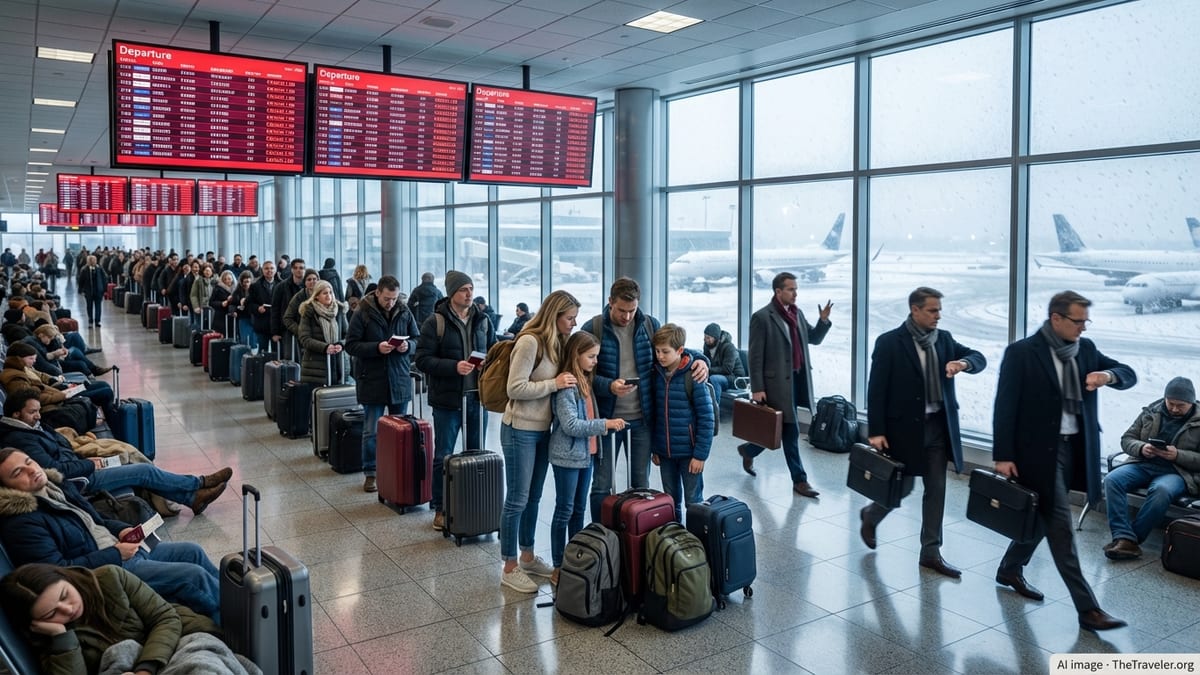
Thunderstorms Bring Zurich Operations to a Standstill
According to publicly available information, a band of intense thunderstorms moved across the Zurich region on Friday, August 28, 2026, repeatedly striking areas close to the airport. Reports indicate that the lightning activity forced a temporary halt to many ground operations, triggering a cascade of delays and cancellations.
Information published by Swiss International Air Lines shows that by midday 27 flights to and from Zurich had been cancelled, affecting about 3,100 passengers. Further cancellations remained possible as the storm cells lingered over the region and capacity at the airport remained constrained through the afternoon.
Local coverage of the disruption highlights that some flights still able to operate suffered delays of up to three hours. Ground handling capacity was sharply reduced while lightning was in the vicinity, reducing the number of takeoffs and landings the airport could safely accommodate and creating bottlenecks throughout the schedule.
The disruption came during a period of high summer demand, adding pressure to a system already operating near its limits. Zurich is one of Europe’s key hubs for connecting traffic, and even a short interruption in ground handling can create ripple effects across the network as aircraft and crews fall out of position.
Why Lightning Forces a Ground Stop
Publicly available guidance from Zurich Airport and industry sources indicates that lightning near airport infrastructure represents a direct safety risk to staff working around aircraft and metal equipment. When strikes are detected in the immediate vicinity, ground handling, refueling and many ramp activities must pause until conditions improve.
During such stops, workers are required to keep a safe distance from aircraft, jet bridges, fuel trucks and other metallic structures. Without staff on the apron, airlines cannot board or disembark passengers, load or unload baggage and cargo, or refuel aircraft. Aircraft may be ready to depart or arrive from an air traffic control perspective, but they cannot be processed on the ground.
Operational updates published on the day of the storm describe how this safety protocol brought much of Zurich’s ground operation close to a standstill at times. As aircraft waited for stands and baggage handling, queues built up both in the air and on the taxiways, extending delays even after lightning activity temporarily eased.
These procedures are standard across the aviation industry and are designed to prevent injuries and equipment damage. However, the Zurich episode illustrates how quickly storm-related restrictions can escalate into a broader operational crisis when they occur during peak travel periods.
Passenger Impact Across Europe’s Network
Reports from regional and international outlets indicate that the disruption at Zurich was felt well beyond Switzerland. As a major hub for Swiss International Air Lines, cancellations and long delays in Zurich affected connecting passengers bound for destinations across Europe, North America and beyond.
Travel reports and incident trackers describe passengers facing missed connections, overnight stays, and rebookings onto later flights or alternative routings. While some travellers were re-accommodated on remaining services once operations resumed, aircraft and crew imbalances meant that schedules stayed fragile through the rest of the day.
Additional media coverage notes that delays of up to three hours on flights that did operate contributed to congestion at gates and baggage claim areas. With some aircraft arriving out of slot and others cancelled entirely, airport processes such as security screening, boarding and baggage delivery faced irregular surges and quiet periods rather than a steady flow.
The concentration of cancellations among Swiss-operated services reflected the airline’s hub role at Zurich. However, knock-on effects could also be seen in connections involving other European and intercontinental carriers that rely on smooth operations at the airport for timely transfers.
Weather Volatility and Zurich’s Preparedness
Zurich Airport’s recent climate adaptation documents emphasise that thunderstorm activity and intense rainfall events are expected to become more frequent and disruptive in coming years. The airport’s climate program, updated in 2026, highlights thunderstorms and lightning as a significant operational threat due to their ability to halt handling and refueling, reduce capacity and trigger off-peak disruptions.
The August 28 storm closely matches these outlined risks. Handling stops, capacity reductions on the runway system and a build-up of delayed flights all appeared within a few hours. Information from earlier airport reports shows that Zurich has invested in planning tools, such as an integrated operations plan, to coordinate airlines and airport units during irregular operations.
Nonetheless, the event underlines how even advanced planning cannot fully offset the impact of rapid-onset convective weather. When storms sit close enough to an airport to trigger repeated lightning alerts, recovery depends on both meteorological developments and the ability of ground teams to work through backlogs once conditions allow a safe restart.
Publicly available data on Zurich’s recent traffic performance indicates that, despite overall improvements in punctuality during the 2026 summer season, weather remains a major driver of variability. The scale of the August 28 disruption suggests that extreme events can still overwhelm even a generally robust schedule.
What Travelers Can Expect After the Storm
Travel information services and airline updates issued around the time of the storm consistently advised passengers to monitor their flight status and allow extra time at the airport. In a situation where dozens of flights are cancelled or delayed, customer service desks and call centres face heavy demand, and automated rebooking tools often become the quickest route to a new itinerary.
Passenger experiences shared on travel platforms following the disruption describe long waits for rebooking assistance, limited same-day alternatives and uncertainty about baggage delivery. With many aircraft and crews out of position, airlines may need several rotations to restore a normal pattern of service.
Publicly available guidance for similar events notes that while weather-related cancellations are regarded as force majeure under many regulations, carriers generally still provide basic care such as meals and accommodation when overnight stays are required. However, the availability of hotel rooms near major hubs can become constrained when many travellers are stranded at once.
For travellers planning to transit through Zurich during the late-summer storm season, the August 28 episode underlines the value of leaving longer connection times, keeping travel documentation and essential items in cabin baggage, and ensuring that airline apps or notifications are enabled. While operational resilience has improved in recent years, sudden thunderstorms can still turn a routine connection at a major European hub into a lengthy and unpredictable journey.
SWISS newsbrief: Flight operations during severe weather (28 Aug 2026)
Anadolu Agency: 27 Swiss flights canceled at Zurich Airport amid severe thunderstorms
Travelnews: Gewitter bremsen Swiss-Flüge aus
Swiss Observer: Storm disrupts Zurich Airport as dozens of flights are cancelled
Zurich Airport: Climate Program and adaptation to thunderstorms (2026)