


More news on this day
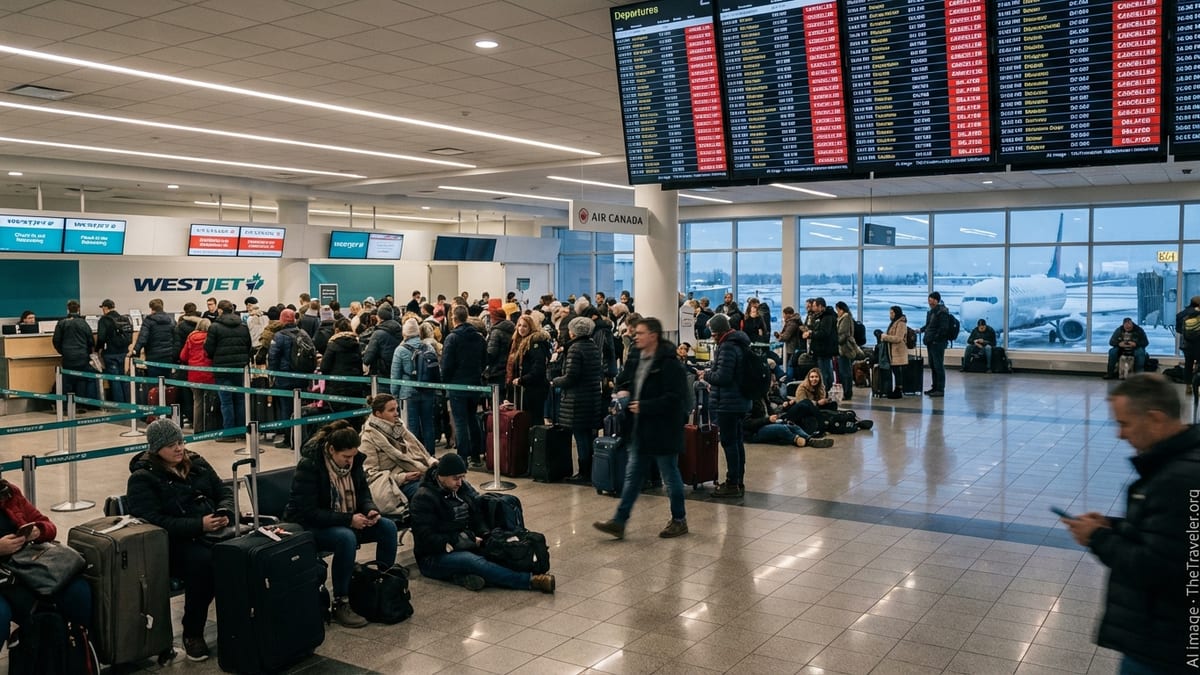
Severe weather systems sweeping across parts of Canada have triggered more than 600 flight delays and at least 130 cancellations at major airports, disrupting peak travel plans and leaving thousands of passengers facing missed connections, rebookings and overnight waits in terminal buildings.
Get the latest news straight to your inbox!
Storms Batter Key Canadian Hubs
Publicly available flight tracking data and aviation industry reports indicate that the latest round of disruptions is concentrated at Toronto Pearson, Montréal Trudeau, Vancouver International, Ottawa International and Québec City Jean Lesage airports. A combination of intense thunderstorms, heavy rain and low cloud ceilings reduced arrival and departure rates, forcing airlines to trim schedules and hold aircraft on the ground.
Across these five hubs, figures compiled from airport and tracker boards point to roughly 601 delayed departures and arrivals and about 131 outright cancellations over the course of the day. While the totals fluctuate as airlines adjust operations, the numbers confirm a sharp deterioration in on time performance within a relatively short window, turning localized storms into a nationwide operational challenge.
Operational constraints have been most visible at Toronto and Montréal, where dense traffic and complex connection patterns leave little slack when weather restricts runway use. Vancouver, Ottawa and Québec, although smaller by volume, have also reported clusters of delayed departures as storms move through and aircraft arriving late from other cities miss their scheduled slots.
Weather related airport slowdowns can have a cascading impact, as aircraft and crews that start the day on time quickly become out of position when early flights are delayed or scrubbed. In this latest episode, afternoon and evening services have been particularly vulnerable as airlines work to absorb the knock on effects of morning and midday storms.
Passengers Face Long Queues and Missed Connections
For travelers, the statistics translate into crowded terminals and hours spent in line at customer service desks. Travel industry coverage describes scenes of departure boards dominated by yellow and red status symbols, with many flights showing rolling delay estimates that extend incrementally as weather and air traffic control restrictions evolve.
Domestic passengers heading to or from regional centers have been among the hardest hit. When short feeder legs into hubs like Toronto or Montréal are delayed or canceled, travelers can miss onward connections to Western Canada, the Atlantic provinces or international destinations, leading in some cases to the collapse of entire multi segment itineraries.
Families traveling with children and vacationers at the start of holidays appear to be bearing a significant share of the disruption, as many journeys are scheduled around school breaks and long weekends. Public reports highlight travelers sleeping in terminal seating, scrambling for last minute hotel rooms near airports and seeking rebooking options that bypass the most heavily affected hubs.
Industry analyses note that even when storms have passed, recovery can be slow. Aircraft and crews must be brought back into position, maintenance windows rescheduled and airport resources rebalanced, which may prolong irregular operations into the following day, particularly on heavily used domestic routes.
Airlines Work to Reset Schedules
Based on airline operation trackers and media summaries, national and regional carriers including Air Canada, WestJet, Porter Airlines, Flair and smaller feeder operators have all been visible on delay and cancellation boards. Large network airlines, which rely on tight connection banks at major hubs, are especially exposed when weather compresses runway capacity and ground operations.
Published updates from aviation data services show that carriers have responded by consolidating lightly booked services, prioritizing flights with high numbers of connecting passengers and, in some cases, deploying larger aircraft to move more travelers once weather restrictions ease. Such measures can limit the total number of stranded passengers but also mean that some routes see longer gaps between departures.
Industry commentary suggests that airlines are attempting to balance safety and regulatory requirements with the need to restore reliable schedules before the next wave of summer demand. However, with severe weather episodes occurring more frequently across North America, analysts note that Canadian carriers are under mounting pressure to improve contingency planning and communication.
Observers also point out that, while many disruptions are attributed to weather, operational vulnerabilities such as tight turn times, limited spare aircraft and crew scheduling constraints can magnify the impact of storms. This has become a focal point in broader discussions about the resilience of the country’s air transport network.
Understanding Passenger Rights Under Canadian Rules
The turbulence for travelers is not limited to the airport experience. Confusion over what assistance airlines must provide in cases of weather related disruption remains common, even as regulators and consumer advocates attempt to clarify the rules.
Canada’s Air Passenger Protection Regulations set out minimum standards of treatment and, in certain circumstances, financial compensation for flight delays and cancellations. Public guidance from regulatory bodies explains that when disruptions are categorized as caused by weather or other events outside an airline’s control, compensation is generally not owed, but carriers are still expected to offer rebooking or refunds.
Travel rights organizations note that passengers facing extended waits should document their expenses and keep boarding passes and confirmation emails. While weather related events typically fall outside mandatory compensation, some travelers may be able to claim costs through credit card insurance or separate travel insurance policies, particularly when delays extend overnight.
Consumer advocates also encourage travelers to carefully review airline communications about the stated cause of a disruption, as this can influence entitlements. In cases where operational issues or staffing constraints play a role alongside weather, determinations about responsibility and available remedies may become more complex.
How Travelers Can Navigate Ongoing Disruptions
With forecasts indicating the possibility of further unsettled conditions in parts of the country, travel experts recommend that passengers build more flexibility into their plans during storm prone periods. Booking earlier departures in the day, allowing longer connection times and considering nonstop routes where possible can reduce exposure to cascading delays.
Publicly available advice from airports and airlines stresses the importance of relying on official digital channels for real time updates rather than waiting for gate announcements alone. Mobile apps, text alerts and online rebooking tools can, in some cases, allow travelers to secure alternative itineraries before in person queues build.
Analysts also emphasize the value of basic preparation, such as packing essential medications and a change of clothes in carry on baggage, bringing portable chargers and budgeting for potential out of pocket costs for meals and accommodation if travel plans unravel. For those with tightly timed commitments, contingency plans such as flexible hotel bookings or backup ground transport can provide an additional buffer.
As severe weather continues to intersect with dense summer traffic across Canadian skies, the latest wave of more than 600 flight delays and over 130 cancellations underscores a broader reality for travelers: even on routine domestic routes, journeys may increasingly require patience, flexibility and a close eye on the forecast.