


More news on this day
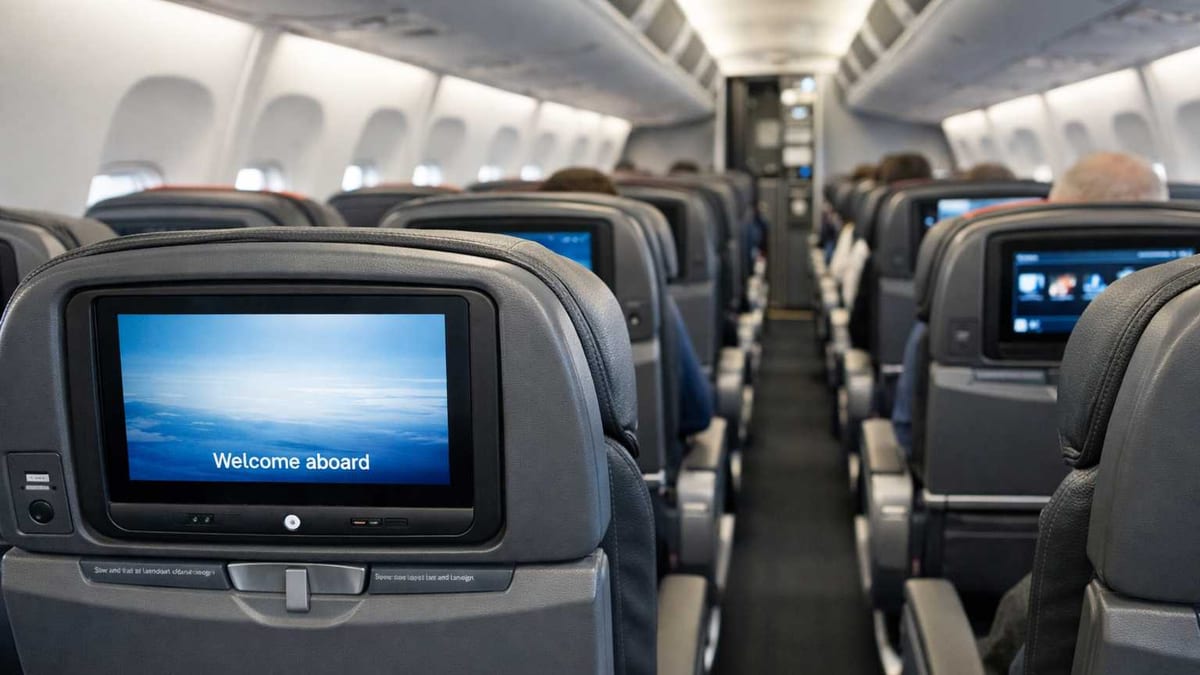
American Airlines is reversing a yearslong strategy of stripping seat-back entertainment from domestic jets, announcing plans to install modern screens across its next generation of narrowbody aircraft and future retrofits in a bid to elevate the onboard experience and better match rivals.
Get the latest news straight to your inbox!
A Strategic Turn Away From the BYOD-Only Era
The move marks a significant pivot from American’s previous emphasis on a bring-your-own-device model, which prioritized streaming entertainment to passengers’ phones and tablets over integrated in-seat systems. Over the past decade, the carrier removed most seat-back screens from its domestic mainline fleet, positioning personal devices and onboard Wi-Fi as the core of its entertainment strategy.
Publicly available information and recent industry coverage indicate that the airline has now committed to putting new-generation seat-back systems on upcoming Boeing and Airbus narrowbody deliveries, with installations expected to begin later this decade. That plan is described as part of a broader, multi-year cabin renewal effort rather than a one-off upgrade.
The decision aligns American more closely with competitors that never abandoned in-seat screens on domestic routes. Delta Air Lines and United Airlines have continued to promote embedded entertainment as a key differentiator, particularly on longer narrowbody flights where passengers expect a more premium product.
Analysts note that the shift reflects evolving expectations from travelers who increasingly want to use their phones and laptops for work or messaging while having a separate screen for entertainment, rather than dedicating their own device for the entire flight.
Where and When the New Screens Will Appear
According to recent coverage of the plan, American intends to equip new single-aisle aircraft delivered from 2028 with seat-back displays, while also incorporating the technology into selected cabin overhauls. The commitment applies to future Boeing and Airbus narrowbody jets, complementing seat-back systems that already feature on the airline’s long-haul widebodies and forthcoming A321XLR aircraft.
The rollout is expected to be gradual. Fleet data and reporting on American’s current retrofit program show that many existing Airbus A319 and A320 aircraft are already in the process of receiving refreshed interiors that do not yet include seat-back screens. Those upgrades instead focus on new seating, larger overhead bins, power outlets, and improved lighting, illustrating that the entertainment overhaul will follow a phased approach rather than arrive across the fleet overnight.
Industry observers point out that this timeline means passengers will continue to see a mix of cabins for several years. Some narrowbodies will offer only streaming to personal devices, others will feature newer premium seats without screens, and future frames and retrofits will gradually introduce the latest displays as they enter service.
For now, American is framing the return of seat-back entertainment as part of a “next-generation” onboard platform that will evolve as hardware is installed and content partnerships are finalized, rather than a narrow, one-off technology refresh.
What the New In-Seat Systems Will Offer
Details published in recent reports indicate that the airline is planning large-format 4K-capable displays with upgraded connectivity. The systems are expected to include USB-C charging ports at each seat and support for passengers’ own headphones, reflecting growing demand for seamless use of wireless and premium audio accessories.
American has previously highlighted personalization as a focus for its next wave of in-flight entertainment, including tailored content recommendations, more detailed moving maps, and real-time flight information. The new narrowbody screens are expected to inherit many of those capabilities, aligning with features already announced for the carrier’s latest long-haul cabins.
On the connectivity side, the entertainment refresh is being developed alongside planned improvements to onboard Wi-Fi. Public information about the airline’s network strategy shows that American has been evaluating higher-capacity satellite providers and new antennas, which could support richer streaming libraries, live television options, and interactive services integrated directly into seat-back interfaces.
Travel industry analysts say this combination of improved screens and more robust connectivity is intended to close the perceived product gap with competitors that already market high-resolution displays, Bluetooth audio support, and broad content catalogs as standard on most mainline aircraft.
Competitive Pressures and Customer Expectations
American’s decision comes amid intense competition in the North American market, where in-flight experience plays a growing role in airline choice for frequent travelers. Public commentary across aviation forums and travel publications has frequently contrasted American’s largely screenless domestic cabins with the more entertainment-rich interiors offered by Delta and United.
Reports indicate that corporate travel buyers and loyalty members have increasingly weighed cabin amenities, including entertainment and power options, when allocating business. For an airline that relies heavily on premium transcontinental and hub-to-hub flying, aligning the domestic narrowbody product with long-haul standards is seen as a way to protect high-yield traffic and strengthen the AAdvantage ecosystem.
At the same time, travelers are bringing more connected devices on board, often juggling work, messaging, and entertainment during a single flight. Industry analysts suggest that the ability to keep phones and laptops free for tasks other than video playback is a practical advantage of seat-back systems that simple streaming portals cannot fully replicate.
The pivot also signals a broader recognition that passenger perceptions of value and comfort have shifted over the last decade. While removing screens once appeared to reduce costs and complexity, the competitive environment now rewards airlines that visibly invest in the cabin, even on shorter domestic segments.
Implications for American’s Broader Cabin Strategy
The return of seat-back screens is only one element of a wider refresh across American’s narrowbody fleet. Publicly available fleet and product updates describe plans to increase the number of first class and extra-legroom Main Cabin Extra seats, rework storage space, and introduce updated interior styling to create a more cohesive look between domestic and international aircraft.
As these changes roll out, American will need to manage a complex retrofit program that touches nearly every part of the cabin, from seat counts to lighting and connectivity. Industry watchers say the challenge will be maintaining operational reliability and consistent service while aircraft cycle through modification lines, a process that typically takes years for a fleet of this size.
For travelers, the practical outcome will be a gradually improving but highly variable onboard experience, with some aircraft reflecting legacy design decisions and others showcasing the airline’s new direction. Over time, the presence of modern seat-back screens on narrowbodies is expected to become a visible indicator of American’s renewed push toward a more premium offering.
If the rollout proceeds as outlined in current reporting, the airline’s domestic cabins by the end of the decade could look markedly different from today’s mix, with in-seat entertainment once again playing a central role in how American presents itself to customers in the highly contested U.S. market.