


More news on this day
Japan’s competition authorities have cleared a closely watched cooperation agreement that will allow two rival domestic airlines to coordinate flight schedules on selected routes, a move framed as a way to protect connectivity but one that is already stirring debate over what it means for fares, competition and the country’s resurgent tourism industry.
Get the latest news straight to your inbox!
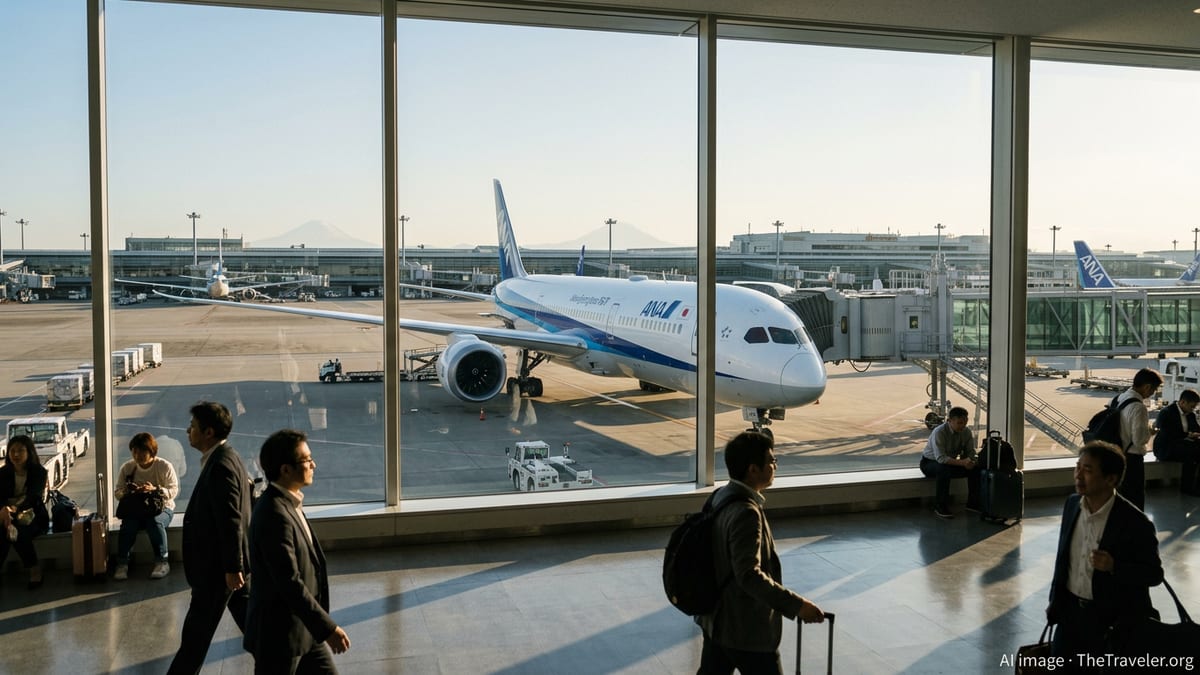
Regulators Back Limited Coordination Between Competitors
According to recent Japanese antitrust filings and local media coverage, the new framework gives a pair of competing airlines permission to align departures and arrivals on overlapping routes, share capacity planning and adjust frequencies in tandem. The authorization is described as limited in scope, tied to specific city pairs and time periods, and subject to periodic review.
Japan’s Fair Trade Commission and the Ministry of Land, Infrastructure, Transport and Tourism have in recent years taken a case by case approach to airline tie ups, weighing the benefits of joint networks against the risk of reduced competition. The latest decision extends that approach to two carriers that have historically been positioned as direct rivals on trunk routes, marking a notable evolution in policy.
Publicly available information indicates that regulators focused on whether the arrangement would safeguard service on routes where demand has been volatile since the pandemic, especially outside the Tokyo Osaka corridor. Authorities have signaled that antitrust enforcement will continue to apply if coordinated behavior leads to unjustified fare increases or if new entrants are blocked from accessing key slots.
The agreement stops short of a full revenue sharing joint venture, but it moves beyond basic code sharing and interline deals by explicitly allowing schedule coordination, a form of cooperation that competition agencies traditionally treat with caution.
Travelers Could See Smoother Connections and Fewer Gaps
For travelers, the most immediate impact is likely to be on timing rather than price. By lining up departures more deliberately, the two airlines aim to reduce long connection gaps, eliminate near duplicate departures minutes apart, and create more evenly spaced options across the day.
On domestic routes, especially those feeding Hokkaido, Kyushu and regional airports in Tohoku and Shikoku, schedule coordination may translate into better morning and evening connections from secondary cities into the main Tokyo hubs. Industry analysts note that Japan’s complex mix of shinkansen rail and air options means that poorly timed flights can quickly lose out to high speed trains; more thoughtful scheduling could help keep air routes viable.
Internationally, the move is expected to be most visible on North America and Southeast Asia connections, where Japanese carriers already work closely with foreign partners under antitrust immunized joint ventures. Aligning domestic feeder schedules with long haul departures could make it easier for visitors to connect beyond Tokyo to regional destinations, a priority as Japan targets more tourism outside the usual hotspots.
However, some consumer advocates caution that fewer head to head departures could reduce “real time” competition on timing, where rival airlines previously used departure minutes as a way to differentiate their offers. The balance between more orderly timetables and the loss of schedule based rivalry will be closely watched.
Competition Concerns Center On Fares and Market Entry
While regulators emphasize the potential network benefits, competition specialists are scrutinizing what the change might mean for fares. In many countries, authorities have treated coordination on schedules, capacity and pricing among rivals as behavior that can weaken competitive pressure, especially on routes with limited alternatives.
Japan’s aviation market is dominated by two full service groups and a growing cluster of low cost carriers. The newly approved cooperation applies to a subset of routes where the two major airlines compete most intensely, which is why antitrust scholars see it as a landmark test of how far coordination can go without eroding consumer welfare.
Published analyses indicate that regulators have attached conditions, including data reporting on average fares, load factors and capacity levels. This is intended to help officials detect whether the airlines use their new flexibility to quietly trim supply in ways that lift prices, or whether they maintain capacity while simply smoothing utilization.
Another focal point is market access. Slots at Tokyo’s main airports remain tightly constrained, and new entrants including low cost carriers rely on policy support to secure access at viable times of day. If incumbent rivals now coordinating schedules make it harder for newcomers to obtain workable slots, critics argue that long term competition could be weakened even if short term service levels look healthy.
Tourism Strategy and Regional Connectivity in the Spotlight
The timing of the decision coincides with Japan’s renewed push to spread visitor demand beyond Tokyo, Kyoto and Osaka. National tourism planners have been encouraging airlines, rail operators and travel agencies to develop so called multi dimensional itineraries that combine flights with shinkansen and regional transport to draw travelers into smaller cities and rural areas.
Recent initiatives linking carriers with rail companies and major travel agencies show how transportation providers in Japan are experimenting with integrated products that stitch together land and air segments in a single package. Schedule coordination between rival airlines could make these products more attractive, by ensuring reliable same day connections and reducing the risk of missed links between domestic and international flights.
Regional governments, many of which subsidize routes or airport operations, are watching closely to see whether the new arrangement leads to more stable year round service. In parts of northern and western Japan where demographic decline has made standalone routes harder to sustain, aligned timetables could support connectivity that might otherwise face seasonal cuts.
At the same time, local business groups remain sensitive to any sign that coordination might be used to justify trimming early morning and late night flights that are important for day trips and short business visits. For tourism to grow beyond major gateways, observers note that convenience for domestic travelers is as critical as appeal to inbound visitors.
What International Travelers Should Expect Next
For international visitors planning trips in 2026 and 2027, the practical guidance is to watch not just prices, but also connection quality when comparing options through Japan. Online booking engines may begin to show fewer awkward layovers and more coherent banks of arrivals and departures, particularly at Tokyo’s Haneda and Narita airports.
Travel planners suggest that schedule coordination could prove beneficial on itineraries that link long haul night flights with early morning domestic departures, such as trips onward to Sapporo, Fukuoka, Okinawa or regional hubs like Sendai and Hakodate. If rival carriers are able to avoid overlapping flights and instead alternate departure times, travelers might enjoy more flexibility without an increase in connections.
In the medium term, analysts will be tracking whether the arrangement becomes a template for similar deals on other routes or among additional carrier pairs. If regulators judge that coordination delivers network and tourism benefits without hurting consumers, the precedent could encourage airlines elsewhere in Asia to seek comparable approvals.
For now, the move underscores how aviation regulators are trying to balance classic competition concerns with the realities of rebuilding networks after several years of disruption. Japan is betting that carefully monitored cooperation between rivals can support connectivity, regional development and tourism growth, while still preserving enough rivalry to keep fares and service levels in check.