


More news on this day
Travelers across the United States faced fresh disruptions as San Francisco International Airport logged 189 delayed departures and five canceled flights in a single day, a concentration of setbacks that rippled across major hubs including Boston, Dallas and Phoenix and affected operations for SkyWest, United, Alaska and several other carriers.
Get the latest news straight to your inbox!
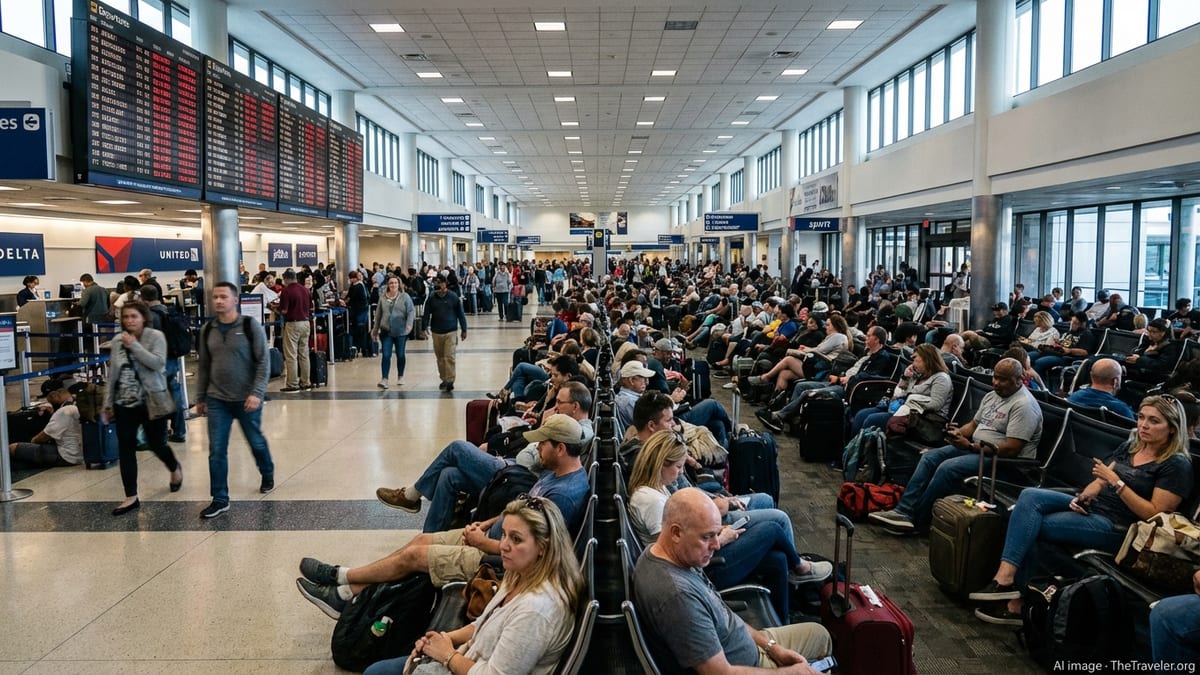
Weather, Congestion and Airspace Limits Fuel SFO Disruptions
Publicly available flight-tracking data and airport status reports indicate that San Francisco International experienced a significant spike in delays alongside a smaller number of outright cancellations, with 189 departures running late and five scrubbed from the schedule. The pattern fits with broader strain on the airport’s operations, which already face tight runway capacity and frequent flow restrictions when coastal weather moves in.
Federal airspace status information lists San Francisco under repeated ground delay and ground stop programs in recent weeks, reflecting a combination of low clouds, runway configuration limits and high traffic volume during peak banks. Those programs slow the rate at which flights can depart and arrive, forcing airlines to push back departure times even when aircraft and crews are available at the gate.
Operational data published by the airport and city show that scheduled capacity at San Francisco has been trending higher this fiscal year, with total departing seats projected to grow faster than the national average. That growth, combined with the airport’s susceptibility to visibility restrictions, has left airlines with less flexibility to absorb even modest disruptions without knock-on delays.
Industry performance summaries from the US Department of Transportation describe how so-called national aviation system delays, tied to congestion and routine weather rather than extreme storms, now account for a sizable share of late arrivals for carriers including SkyWest and United. When those bottlenecks converge at a complex airfield such as San Francisco, schedule reliability can deteriorate quickly across dozens of routes.
SkyWest, United and Alaska Among Carriers Feeling the Strain
The latest wave of delays at San Francisco has had an outsized impact on regional and network carriers that rely on the airport as a major connecting point. SkyWest, which operates flights marketed by United, Alaska and other airlines, continues to play a central role in shuttling passengers from smaller cities into San Francisco for onward connections. When the hub slows, these short-haul segments are often the first to face rolling delays or cancellations.
Historical performance data compiled by transportation regulators already show that SkyWest, while maintaining a relatively strong on-time record overall, regularly contends with cancellations linked to both weather and broader system constraints. The concentration of late departures at San Francisco in the current disruption highlights how sensitive these feeder operations are to even minor changes in available runway capacity and arrival spacing.
United, which operates a major hub at San Francisco with a dense mix of domestic and international routes, has also been affected as departure banks bunch up and aircraft fall out of rotation. Some long-haul flights, such as transpacific services, can depart close to schedule while shorter domestic legs face extended holds, leaving passengers with limited rebooking options once they miss onward connections.
Alaska Airlines, which has steadily expanded its presence in the Bay Area and relies in part on SkyWest-operated regional flights, appears in multiple delay and cancellation tallies tied to San Francisco’s congestion. The disruptions underscore how intertwined mainline and regional operations have become at large coastal hubs, where a single set of weather restrictions can reverberate across several brands sharing gates, crews and runway slots.
Ripple Effects Hit Boston, Dallas, Phoenix and Other Key Routes
While the operational flashpoint was centered at San Francisco, the effects quickly spread across the domestic network. Flight-tracking data show knock-on delays on routes linking San Francisco with major hubs such as Boston Logan, Dallas Fort Worth and Phoenix Sky Harbor, as aircraft and crews arriving late from California cascaded into subsequent departures.
On the San Francisco to Phoenix corridor, a mix of United, American and Southwest flights formed part of the disruption pattern, with some mid-morning and afternoon departures operating behind schedule as they waited for inbound aircraft from the West Coast hub. Similar timing mismatches emerged on San Francisco connections to Boston and Dallas, where late-arriving aircraft compressed already tight turnaround windows.
These ripple effects were not confined to large hub airports. Smaller regional fields with limited daily service into San Francisco also experienced interruptions as flights destined for the Bay Area were held, rerouted or canceled outright. Passengers in secondary markets often faced fewer same-day alternatives, extending the practical impact of the five cancellations recorded at the hub.
Aviation analysts note that this kind of systemwide slowdown reflects the high connectivity of the modern route network. When a single hub such as San Francisco experiences concentrated delays on a busy travel day, the subsequent misalignment of aircraft, crews and passenger flows can reach far beyond the immediate region, touching cities that may be enjoying clear skies and normal local conditions.
Travelers Urged to Build in Extra Time and Flexibility
The latest disruption at San Francisco adds to a season in which travelers have increasingly been encouraged by airlines, airport operators and consumer advocates to build more buffer time into their plans. With congestion at major hubs remaining elevated and air traffic control programs more common along the West Coast, even routine low clouds can translate into hours of cumulative delay across dozens of flights.
Public guidance from the airport stresses the importance of checking flight status frequently, particularly for passengers making tight connections through San Francisco. Recommendations also emphasize arriving early for security screening and gate check-in, as surges in delayed departures can create crowding at checkpoints and boarding areas when several flights attempt to depart in quick succession after a ground hold is lifted.
Consumer-rights information from federal agencies highlights that passengers affected by cancellations and long delays may have varying levels of recourse depending on the airline and cause of disruption. Weather-related constraints and airspace programs are typically categorized differently from issues such as crew shortages or mechanical problems, which can influence options for rebooking, accommodation or refunds.
For now, the situation at San Francisco illustrates how a relatively small number of cancellations, when combined with a much larger volume of delays, can still create a challenging travel environment across the country. With traffic levels at or above pre-pandemic norms and little slack in the system, even a single day of heavy congestion at a key coastal hub can reshape travel plans for thousands of people nationwide.