


For many parents, the most stressful part of planning an international family trip is wondering what happens if something goes wrong. A child spikes a fever in Rome, a connecting flight to Tokyo is canceled, or a grandparent back home lands in the hospital. Berkshire Hathaway Travel Protection, backed by Warren Buffett’s Berkshire Hathaway group, is one of the most visible names in U.S. travel insurance. But is it the right choice for families heading overseas in 2026? This guide breaks down how Berkshire Hathaway’s travel plans work in real life, what they tend to cover well, where they fall short, and when families might want to look elsewhere.
Get the latest updates straight to your inbox!
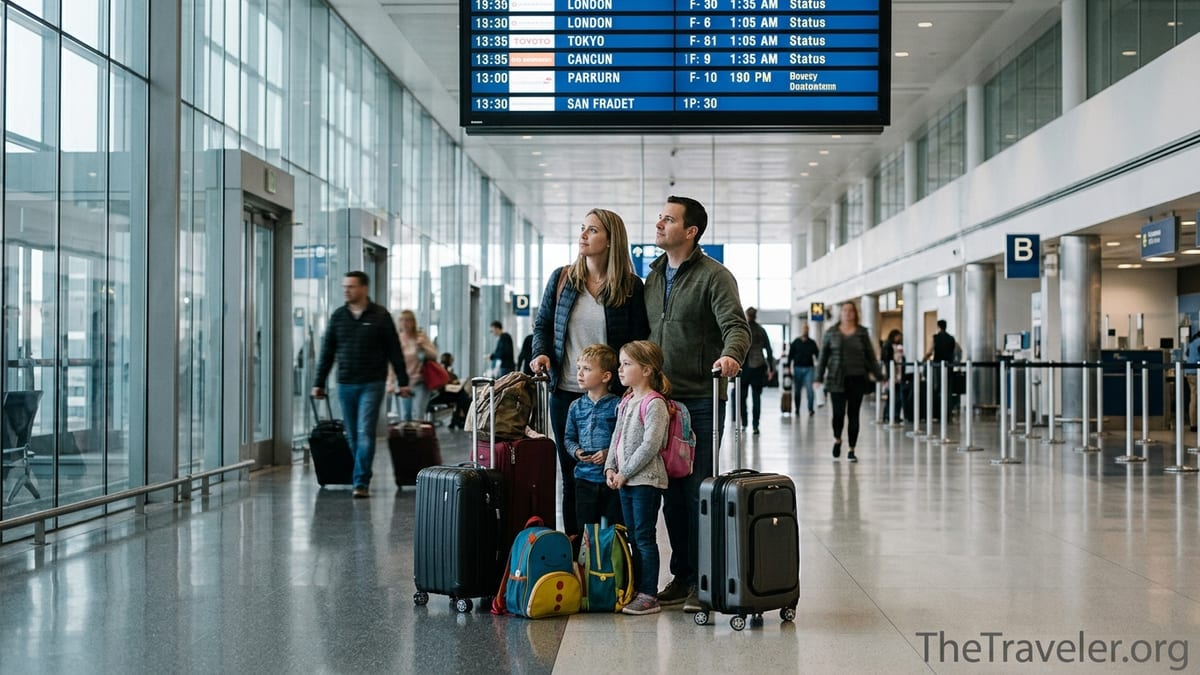
How Berkshire Hathaway Travel Protection Works for Families
Berkshire Hathaway Travel Protection, often shortened to BHTP, sells several travel insurance plans that U.S. residents can use for both domestic and international trips. The most relevant options for families going abroad are its comprehensive trip insurance products, especially the ExactCare line and the higher end LuxuryCare plan. These typically combine trip cancellation and interruption, emergency medical coverage, medical evacuation, baggage protection, and travel delay benefits in a single package, along with 24/7 assistance services.
In practice, a family of four from Colorado flying to London and Paris might buy an ExactCare policy that covers their nonrefundable flights, prepaid apartment rental, and a fully paid guided tour. If a covered event, such as a serious illness or injury, forced them to cancel, the plan could reimburse the nonrefundable costs up to the insured trip value. During the trip, if a child needed urgent care after a bike accident, the medical and evacuation benefits would help pay for treatment and any medically necessary transport.
Unlike flight-only products, Berkshire Hathaway’s comprehensive plans are designed to protect the entire trip, not just air travel. They are also primary medical coverage on several plans, which means the travel policy can pay first for eligible medical expenses abroad instead of making families apply through their domestic health insurance and wait for coordination between insurers. That can be crucial when you are dealing with a hospital in Bangkok or a clinic in rural Costa Rica that wants proof of payment before treatment.
It is important to understand that travel insurance with Berkshire Hathaway is highly conditional. Everything revolves around “covered reasons,” policy limits, and exclusions set out in the detailed state specific documents. Families should not assume that any mishap or change of heart will be reimbursed. For example, fear of travel or a general decision not to go, even due to changing headlines, is typically not covered unless a family has purchased a separate Cancel For Any Reason upgrade, which has its own rules and lower reimbursement limits.
Key Features That Appeal to Traveling Families
One of the strongest selling points of Berkshire Hathaway’s ExactCare plan for families is the combination of trip protection with relatively robust emergency medical coverage. Marketing materials and independent comparison sites consistently highlight up to about 50,000 dollars in emergency medical benefits and around 500,000 dollars in medical evacuation coverage per person on many ExactCare policies, though exact amounts can vary by state and plan version. That level is often sufficient for routine overseas emergencies for most family trips, such as a broken arm in Spain or an appendectomy in Thailand.
Another feature families often appreciate is what some brokers describe as “family friendly pricing.” On certain ExactCare offerings, children traveling with insured adults may be covered at no additional charge or at a heavily discounted rate, up to a set number of children and under a certain age, typically under 18. For example, a New Jersey couple buying an ExactCare policy for a 10 day trip to Mexico might pay a premium based largely on the parents’ ages and trip cost, and see their two children included automatically at no extra premium. This can make comprehensive coverage more affordable than buying separate standalone policies for each traveler.
Berkshire Hathaway has also built a reputation around relatively fast and tech forward claims handling. Its “pic and click” claims tools allow travelers to upload receipts, boarding passes, and other documents from a phone, and in some cases receive payment quickly via electronic transfer. Parents juggling school holidays and work schedules often have little patience for slow reimbursement when a trip derails, so this focus on speed is not trivial. Online reviews and media coverage from outlets like NerdWallet suggest that, in many scenarios, Berkshire Hathaway’s claims process compares favorably with some competitors for straightforward claims, though individual experiences vary widely.
Finally, for certain types of trips, Berkshire Hathaway offers specialized products such as WaveCare for cruises or AirCare and ExactCare Extra for flight heavy itineraries. A family booked on a Caribbean cruise might consider WaveCare because it is tailored to cruise disruptions and includes higher evacuation limits, while parents flying with kids on a complex multi stop itinerary could look at a plan that includes fixed “inconvenience” payments for long tarmac delays or missed connections. These niche products can add value when a family’s itinerary matches the product design.
Coverage Gaps and Limitations Families Need to Understand
Despite the strengths, Berkshire Hathaway’s travel policies are not all inclusive safety nets, and families should understand the limitations before buying. One of the biggest issues is the list of excluded reasons for trip cancellation and interruption. Like most insurers, Berkshire Hathaway typically does not cover cancellations due to general fear of travel, changes in government advisories, or pandemics and epidemics, unless very specific conditions are met. During the height of the COVID 19 pandemic, many travelers discovered that standard travel insurance did not refund trips canceled due to broad travel restrictions or worry about exposure, and similar limitations can persist in today’s policies.
The amount of medical coverage, while decent on several plans, may not be enough for every situation. For instance, 50,000 dollars of emergency medical coverage could be quickly exhausted by a serious intensive care stay in countries like Japan or Canada where private hospitals bill non residents at full cost. Medical evacuation limits, often around 500,000 dollars on mid tier plans and up to about 1 million dollars on some luxury products, may be more reassuring, but families planning remote trekking in the Himalayas or long stays in expensive destinations may still want to compare higher medical limits from rival insurers.
Another nuance is that Berkshire Hathaway’s best medical and trip interruption benefits often depend on buying the policy shortly after making the first trip payment. Many plans only waive the pre existing medical condition exclusion or provide protection against a travel supplier’s financial default if the policy is purchased within about 15 days of the initial deposit. That means a family that waits several months after booking a Galápagos cruise to purchase insurance may find that an illness related to a parent’s existing heart condition or the bankruptcy of the tour company is not covered.
Finally, some of Berkshire Hathaway’s upsell options can be less generous than those of competitors. For example, comparison research by consumer outlets indicates that Cancel For Any Reason upgrades on certain Berkshire Hathaway policies may reimburse only around 50 percent of trip costs, while other insurers’ similar upgrades can reimburse about 75 percent, provided specific rules are met. Families who want the broadest possible flexibility may find more comprehensive Cancel For Any Reason terms elsewhere, albeit often at a higher premium.
Real World Cost Examples for Family International Trips
To understand whether Berkshire Hathaway offers good value for families, it helps to look at real world sample quotes and independent comparisons. In one widely cited benchmark scenario analyzed by a major personal finance outlet in spring 2026, a 45 year old traveler from Illinois buying coverage for a seven day, 2,000 dollar trip to Mexico found that Berkshire Hathaway’s entry level ExactCare Value plan cost roughly 52 dollars, while the more comprehensive LuxuryCare option cost around 112 dollars. For a family of four on a similar trip, premiums would scale upward with the total trip cost and the number of insured travelers, but family pricing features can temper the increase when children are added.
On comparison platforms that specialize in travel insurance, ExactCare is often described as a mid tier plan. For example, one independent broker promotes a 15 day international trip for a 20 year old with premiums starting in the mid 30 dollar range, while highlighting that the same plan provides primary medical coverage and a balanced mix of benefits. For a real family scenario, consider two parents in their late 30s traveling with an 8 year old and a 12 year old on a 6,000 dollar, 12 day trip to Italy in June. On an aggregator, they might see Berkshire Hathaway ExactCare priced competitively alongside plans from Travel Insured International and Allianz, with the Berkshire option sometimes standing out because the children are covered at little or no additional premium.
It is also telling that independent rating sites often give Berkshire Hathaway strong overall scores for value. NerdWallet, for instance, recently assigned the company one of its top ratings among travel insurers and highlighted that Berkshire’s higher end LuxuryCare plan, while not the cheapest, delivers a large package of protections, including 100,000 dollars in medical coverage and up to about 1 million dollars in evacuation benefits. That said, those higher priced policies may be more than some families need for short trips to countries where healthcare is affordable and accessible.
Families should remember that premiums are highly sensitive to destination, traveler ages, and total trip cost. A 10,000 dollar two week family safari in Kenya with grandparents in their 70s will draw a much higher quote than a 3,000 dollar spring break trip for a young family to Cancun. Berkshire Hathaway will usually be competitive in many common scenarios, but families should still compare at least three or four plans on a comparison site, looking not only at premium but at medical limits, cancellation rules, and child pricing.
How Berkshire Hathaway Compares With Other Family Friendly Insurers
When parents shop for international travel insurance, Berkshire Hathaway often appears on shortlists alongside companies like Travel Insured International, Allianz Global Assistance, AXA Assistance, and smaller niche players such as Tin Leg or Seven Corners. For family travel specifically, some comparison platforms list Berkshire Hathaway’s ExactCare as one of the better domestic trip options, primarily because of its “kids free” structure, integrated missed connection coverage, and primary medical benefits. However, for complex international trips, other insurers occasionally edge out Berkshire on specific features.
For example, a family planning a multi country backpacking trip through Southeast Asia with several internal flights might lean toward an insurer that includes higher medical limits or more detailed coverage for adventure sports. Some competitors explicitly bundle sports like scuba diving or zip lining into standard benefits, while Berkshire Hathaway’s coverage for high risk activities may be more limited or require careful reading of the fine print. Similarly, parents who are especially concerned about being flown home to a hospital of their choice after a serious injury may prefer insurers whose evacuation benefit explicitly includes “hospital of choice,” a feature that Berkshire Hathaway’s policies may not always provide.
On the other hand, Berkshire Hathaway performs well for families focused on air travel disruptions and cruise vacations. Its flight centric plans with fixed inconvenience payments can be more generous than the basic trip delay benefits on some rivals, especially when a family of five is stuck overnight due to a missed connection. For cruise travelers, the WaveCare plan is tailored to ship specific mishaps, such as missed port departures or missed shore excursions, which may not be as well addressed by a generic comprehensive policy from another brand.
Customer service reputation is another differentiator. While any insurer will have both glowing and negative reviews, Berkshire Hathaway’s travel arm generally receives positive marks on claim resolution speed from a subset of travelers and professional reviewers. Some users report smooth reimbursement for medical visits in Europe or partial refunds for interrupted trips, while others share frustrations when claims tied to broad pandemic disruptions or misunderstood exclusions are denied. This mixed but generally solid record is similar to what families can expect from other major insurers, underscoring the importance of reading policies closely.
Who Berkshire Hathaway Travel Insurance Is Best For
Berkshire Hathaway’s travel plans tend to be a strong fit for U.S. based families planning conventional leisure trips abroad, especially when those trips involve air travel to popular destinations and relatively standard activities. Think of a California family flying to London and Paris over spring break, a Midwestern family heading to Cancun or Punta Cana for a resort week, or parents and kids taking a Mediterranean cruise out of Barcelona. In these scenarios, ExactCare or WaveCare can provide a solid combination of medical coverage, cancellation protection, and travel delay benefits at competitive prices, all from a brand many travelers recognize.
Families who value technology and quick claim payments may also find Berkshire Hathaway appealing. The company’s emphasis on mobile friendly tools, 24 hour assistance, and streamlined processing can make a noticeable difference when a family is dealing with a lost bag in Amsterdam or an overnight delay in Atlanta on the way home. Parents juggling work, school, and extracurricular activities often have little appetite for snail mail forms and weeks long waits for checks.
In addition, Berkshire Hathaway is well suited to parents who are early and organized planners. Because the strongest protections for pre existing medical conditions and supplier financial default often require purchasing the policy within a small window after the first deposit, families that book trips many months in advance and quickly add insurance can extract the most value. For example, if a family puts down a substantial deposit on an Antarctic expedition cruise 18 months ahead and adds a Berkshire Hathaway policy within two weeks, they are more likely to have coverage if a known condition worsens or if the tour operator collapses.
By contrast, the company is a less obvious fit for families planning high risk adventures or wanting very flexible cancellation privileges. Parents organizing a two month backpacking route involving high altitude trekking, off piste skiing, or technical diving may be better served by specialty insurers that focus on adventure tourism and offer higher medical limits plus broader sports coverage. Similarly, families who can only commit to a trip if work or school schedules remain open may prefer insurers whose Cancel For Any Reason upgrades reimburse a higher percentage of trip costs, even if the premiums are steeper.
Practical Tips for Families Considering Berkshire Hathaway
For families who are leaning toward Berkshire Hathaway Travel Protection, a few practical steps can help ensure they buy the right plan and avoid surprises. First, decide how much of the trip you truly need to insure. BHTP policies generally work best when you cover nonrefundable, prepaid pieces such as flights, cruises, rail passes, and prepaid hotels or tours. A family visiting Japan might insure their nonrefundable flights, a prebooked Kyoto ryokan, and tickets on the Shinkansen, but skip day trips and restaurant costs that can be canceled or adjusted without penalty.
Next, buy early if you are worried about existing health conditions in your family or among close relatives back home. Since many Berkshire Hathaway plans only waive pre existing condition exclusions if the policy is purchased shortly after the first payment, parents whose child has asthma, a grandparent with heart disease, or a partner with diabetes should seriously consider purchasing insurance within that initial window. That way, if a doctor advises canceling the trip due to a flare up or hospitalization, the chances of trip cancellation coverage applying are higher.
Families should also take time to compare Berkshire Hathaway’s benefits against those built into their credit cards and employer benefits. For example, a family that pays for a trip with a premium travel rewards card might already have limited trip cancellation and lost luggage benefits. In that case, a Berkshire Hathaway policy becomes an additional layer of protection, particularly for medical and evacuation coverage, which are often weak or absent in card benefits. It may be worth choosing a slightly lower trip cost to insure with BHTP if the credit card already covers some portion, focusing Berkshire’s coverage where it adds the most value.
Finally, read the policy wording for activities and exclusions that matter to your family. If your teenagers plan to go parasailing in the Dominican Republic or your 10 year old is excited about horse riding in Iceland, look closely at how those activities are defined. If the language seems unclear or restrictive, consider calling Berkshire Hathaway’s customer service or comparing policies from competitors that clearly list those activities as covered. The time you spend before departure can save significant frustration if an accident happens while doing something your kids were most excited about.
The Takeaway
For many U.S. families planning international trips in 2026, Berkshire Hathaway Travel Protection offers a credible, often cost effective option for safeguarding vacation investments and providing a safety net for overseas medical needs. Its ExactCare family oriented structure, primary medical coverage, competitive evacuation limits, and tech forward claims process make it particularly attractive for conventional leisure trips to popular destinations, cruises, and flight heavy itineraries. The brand’s visibility and connection to Berkshire Hathaway can also offer psychological reassurance to parents who prefer established names.
At the same time, Berkshire Hathaway is not automatically the best fit for every family or every trip. Coverage gaps around pandemics, evolving travel advisories, and adventure activities mean parents must scrutinize policy documents and think carefully about their specific concerns. Families seeking the broadest possible cancellation flexibility or unusually high medical limits may find superior options elsewhere, even if the premiums are higher. The insurance that looks cheapest on paper may not be the best choice if it fails to respond in the scenario that worries you most.
The most practical approach is for families to treat Berkshire Hathaway as one strong contender among several. Use an independent comparison tool, plug in your exact trip details, and line up Berkshire’s plans next to two or three competitors. Focus on medical and evacuation limits, rules for pre existing conditions, child pricing, and any special activities you plan. If, after that comparison, Berkshire Hathaway still stands out on both coverage and cost, then it is likely a good match for your international family trip.
FAQ
Q1. Is Berkshire Hathaway travel insurance good for families traveling overseas for the first time? For many first time international family trips to common destinations like Europe, Mexico, or the Caribbean, Berkshire Hathaway’s ExactCare plan can be a solid option because it bundles trip cancellation, primary medical coverage, and medical evacuation at a mid range price, often with favorable pricing for children traveling with their parents.
Q2. Does Berkshire Hathaway travel insurance cover my children for free? Some Berkshire Hathaway plans, especially in the ExactCare family, are marketed with “kids covered for free” or discounted child pricing when they travel with insured adults, but the exact rules and age limits vary, so parents should confirm during the quote process how many children and what ages qualify at no additional or reduced premium.
Q3. How much medical coverage do Berkshire Hathaway plans usually provide for international trips? Many mid tier Berkshire Hathaway plans aimed at leisure travelers provide emergency medical coverage in the general range of 50,000 dollars per person, with medical evacuation benefits that can reach several hundred thousand dollars or more, though exact limits depend on the specific plan and state, so families should verify the numbers on their quote.
Q4. Will Berkshire Hathaway reimburse my trip if I cancel because I am worried about world events or disease outbreaks? In most cases, standard Berkshire Hathaway policies do not cover cancellations based solely on fear of travel, changing news headlines, or general concerns about disease outbreaks; families who want protection for such scenarios usually need to consider a Cancel For Any Reason upgrade or accept that this type of decision will be at their own financial risk.
Q5. How does Berkshire Hathaway handle pre existing medical conditions for family members? Berkshire Hathaway typically excludes pre existing medical conditions unless travelers meet certain requirements, commonly including purchasing the policy within a short period, often about 15 days, after the initial trip deposit and insuring the full nonrefundable trip cost, so families with ongoing health issues should buy early and review the waiver conditions carefully.
Q6. Are adventure sports like skiing or scuba diving covered under Berkshire Hathaway travel insurance? Coverage for adventure activities can be limited or subject to specific conditions in Berkshire Hathaway’s policies, and while some recreational activities may be included, higher risk pursuits such as certain types of diving, off piste skiing, or mountaineering may be excluded or restricted, making it essential for families to check the policy wording if those activities are on the itinerary.
Q7. How does Berkshire Hathaway compare on price with other family travel insurance providers? In many sample quotes, Berkshire Hathaway’s mid tier plans are competitively priced against similar products from insurers like Allianz or Travel Insured International, especially once child pricing is factored in, but actual costs vary significantly by destination, ages, and trip value, so parents should always compare several quotes for their specific trip.
Q8. Does Berkshire Hathaway offer specialized coverage for cruises with kids? Yes, Berkshire Hathaway sells a cruise focused WaveCare plan that is designed for cruise vacations and includes benefits tailored to ship related disruptions along with strong medical and evacuation coverage, which can be appealing for families booking Caribbean, Alaska, or European cruises with children.
Q9. How easy is it to file a claim with Berkshire Hathaway if something goes wrong on our trip? Berkshire Hathaway emphasizes a technology driven claims process that allows families to submit documentation and track claims through mobile friendly tools, and many travelers report relatively fast and straightforward reimbursements for clear cut claims, though as with any insurer, more complex or borderline claims can take longer and may face closer scrutiny.
Q10. When should our family buy Berkshire Hathaway travel insurance for the best protection? The most effective time for families to purchase Berkshire Hathaway travel insurance is usually within a short window after making the first trip payment, often about 15 days, because buying early can unlock valuable features such as waivers for pre existing medical conditions and protection against certain types of travel supplier financial default.