


For many U.S. families planning Europe trips, the Air France KLM World Elite Mastercard has become a tempting option. Co-branded with Air France and KLM and tied into the Flying Blue loyalty program, it promises bonus miles, priority perks and savings on flights to Paris, Amsterdam and beyond. But does it genuinely make family travel cheaper and smoother, or is a flexible bank travel card still the better bet? This guide breaks down how the card works in the real world for parents juggling school holidays, checked bags and tight budgets.
Get the latest updates straight to your inbox!
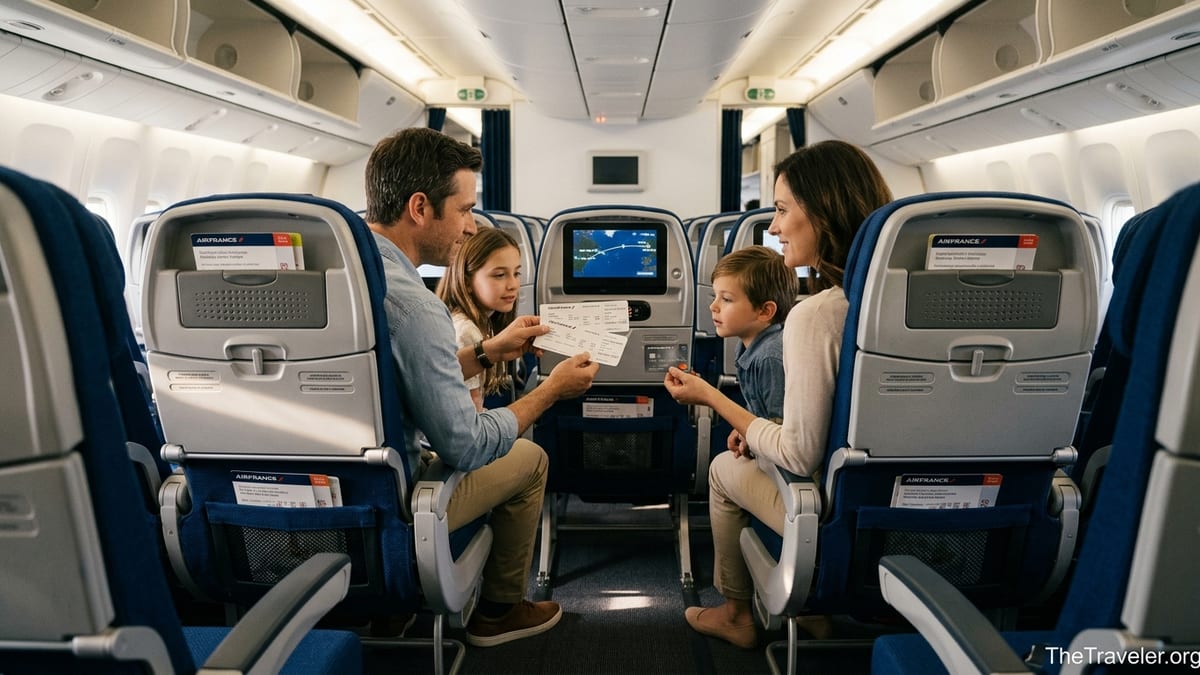
How the Air France KLM World Elite Mastercard Works Today
The Air France KLM World Elite Mastercard, issued in the U.S. by Bank of America, is designed primarily for travelers who fly Air France, KLM or other SkyTeam partners such as Delta with some regularity. Recent reviews describe it as a mid-tier airline card: it typically comes with a welcome bonus of Flying Blue miles after meeting a minimum spend, bonus miles on Air France and KLM purchases, and no foreign transaction fees on overseas spending. While the exact bonus and spending thresholds change with promotions, the overall positioning of the card has been stable through 2025 and into 2026.
For families, the key appeal is direct integration with Flying Blue, the joint frequent flyer program of Air France and KLM. Flying Blue awards miles based on how much you spend on tickets rather than purely the distance you fly. On Air France and KLM marketed flights, members earn miles per euro spent on the base fare and eligible extras such as seat selection or checked baggage, with higher-elite members earning more miles per euro. This means a family booking a summer trip to Europe can earn a large chunk of miles in one transaction and then further boost that total by charging the trip to the co-branded card.
The card’s annual fee typically sits in the same band as other airline co-brands aimed at regular but not ultra-frequent travelers. In practice, that means families need to evaluate whether their expected travel and everyday Flying Blue redemptions will offset that yearly cost through welcome bonuses, fee waivers, and savings on checked bags or seat upgrades. Understanding the program’s earning rules and promotions is crucial before deciding that this is the right anchor card for your Europe strategy.
An important practical detail: this product is tightly tied to Air France and KLM. If you are based near one of their U.S. gateways such as New York JFK, Boston, Atlanta, Chicago, Houston, Los Angeles or San Francisco, you will find nonstop or one-stop itineraries to many European destinations. Families that live near non-hub regional airports and mostly see domestic itineraries on other carriers may find it harder to justify a card tied so specifically to Flying Blue.
Flying Blue: Why the Loyalty Program Matters for Families
Flying Blue is the backbone of the Air France KLM World Elite Mastercard’s value. On flights marketed by Air France and KLM, members earn up to 9 miles per euro spent depending on their status tier, with base-level Explorer members earning fewer miles and elites progressively more. Importantly, Flying Blue miles can be redeemed not only for Air France and KLM flights, but also for travel on SkyTeam partners such as Delta and other affiliated carriers. For a U.S. family, that might mean using Delta for the domestic leg from, say, Minneapolis to New York, then connecting to Air France for the overnight hop to Paris on a single award booking.
For a real-world example, consider a family of four flying economy from Atlanta to Paris in July. Round-trip cash fares on Air France might run around 1,200 dollars per adult and 900 dollars per child when booked several months in advance, excluding some taxes. If the main ticket cost converts to approximately 4,000 euros, a base-level Flying Blue member could earn miles on that entire amount. Paying for the trip with the World Elite Mastercard then generates additional miles from the card’s travel bonus category on top. Those combined earnings can be enough to cover at least one one-way economy ticket within Europe or meaningfully reduce the cost of a future long-haul flight.
Flying Blue’s dynamics particularly reward families that can be flexible. The program runs monthly Promo Rewards that discount selected routes, sometimes offering economy flights between North America and Europe starting under 20,000 miles one way during off-peak periods. Parents who are willing to plan around these offers might book, for example, a Montreal to Paris or New York to Amsterdam economy Promo Reward and then use a mix of cash and miles for positioning flights. The co-branded Mastercard’s welcome bonus alone can sometimes fund one or more of those heavily discounted one-way tickets when used strategically.
Another feature to understand is the way Flying Blue handles miles validity. Recent program guidance indicates that members with any earning or redemption activity will extend the life of their miles for a period of time, and higher-tier elites enjoy even more generous validity protections. For a family, this translates into less pressure to redeem miles immediately. Simply using the World Elite Mastercard periodically, even for everyday purchases or a hotel stay, can help keep miles active until the next major school-holiday trip.
Real-World Long-Haul Scenarios: When the Card Shines
Where the Air France KLM World Elite Mastercard can really justify its place in a family’s wallet is on repeat or high-value long-haul trips. Take a family living near New York City that visits relatives in Italy every other summer. A typical itinerary might be New York JFK to Rome via Paris with Air France, or via Amsterdam with KLM. Economy fares on these routes in peak summer often run between 1,000 and 1,400 dollars per person, and premium economy can be significantly higher. By concentrating their spending and flying on Air France or KLM and using the co-branded card, this family can quickly accumulate a meaningful Flying Blue balance.
For instance, imagine they book four round-trip premium economy tickets to Rome at roughly 1,800 dollars each. That translates to a sizeable euro-denominated spend qualifying for miles per euro. The card then adds bonus miles on airfare purchases and possibly a welcome bonus if it is a new account. Over the course of two such trips, they may accumulate enough for a business-class one-way for one parent and child on a later trip during a Promo Reward period, turning an otherwise unaffordable splurge into a special experience for a milestone birthday or graduation.
The card’s lack of foreign transaction fees can also translate into real cash savings on the ground in Europe. Many general-purpose cash-back cards still charge around 3 percent on foreign purchases. On a two-week family trip where you spend 3,000 dollars on hotels, restaurants, trains and museum tickets, those fees alone could add 90 dollars to your bill. Using the Air France KLM World Elite Mastercard to pay for a hotel in Amsterdam, a rental car in Provence or theme park tickets outside Paris means avoiding that extra surcharge while continuing to earn Flying Blue miles on every transaction.
Families who tend to book checked bags and advance seat assignments may also get extra leverage from the card if it comes with perks like a discount on seat selection or a free checked bag on Air France and KLM-operated flights. A family of four paying 60 dollars each way per bag would otherwise spend nearly 500 dollars on baggage for a single round-trip. Even a partial discount or baggage allowance tied to cardholder status can significantly reduce the true cost of long-haul family travel.
Comparing the Card to Flexible Travel Rewards Options
To decide if the Air France KLM World Elite Mastercard is a smart choice, parents should compare it to flexible bank travel cards that earn transferable points. Programs such as American Express Membership Rewards, Chase Ultimate Rewards, Capital One Miles, Citi ThankYou Points and Bilt Rewards already partner with Flying Blue, allowing cardholders to move points into their Flying Blue account when a good award opportunity appears. For a family that flies lots of different airlines, a flexible card might be more versatile than a single airline co-brand.
For example, a family in Chicago might carry a general travel card that earns 2 points per dollar on most purchases and 3 points on travel, then transfer those points to Flying Blue when they spot a Promo Reward from Chicago to Paris or Amsterdam. If Air France and KLM award space is not available on their travel dates, they can instead use those points with other partner airlines or even as a statement credit. The Air France KLM Mastercard, by contrast, is at its best when you are committed to Flying Blue redemptions and have relatively predictable Europe travel patterns.
Where the co-branded card can pull ahead is in its ability to stack benefits: it generates Flying Blue miles directly from spending, sometimes provides status-boosting features, and aligns its bonus categories specifically with Air France and KLM purchases. That synergy can accelerate progress toward a high-value redemption. Consider a family based in Boston that takes one Europe trip each year and also uses the card extensively for grocery and gas spending. Over twelve months, they might collect enough miles for one or two intra-Europe flights, which can be particularly expensive when bought with cash during busy August travel periods.
On the other hand, if your family usually flies from the U.S. West Coast to Asia, the Middle East or Latin America rather than to Europe, then Flying Blue might not always present the best routing or pricing. In that scenario, a card tied to another alliance, or a truly flexible bank program that can feed miles into multiple airlines, will likely deliver better long-term value. It is worth mapping your likely trips over the next three to five years before committing to an airline-specific card with an annual fee.
Europe Trips With Kids: Practical Pros and Cons
When you are traveling with children, practicality matters just as much as pure points math. One concrete advantage of focusing on Air France and KLM for Europe trips is access to major hubs with strong onward networks. Paris Charles de Gaulle and Amsterdam Schiphol both offer frequent connections to popular family destinations such as Barcelona, Rome, Athens and Lisbon, as well as smaller cities like Nice, Florence or Bilbao. When redeemed through Flying Blue, these connections can sometimes be priced attractively, especially during Promo Reward windows.
A family flying from New York to Barcelona might route via Paris, spending a night near the airport hotel to break up the journey for younger kids. In that case, Flying Blue miles from prior trips, earned with help from the World Elite Mastercard, can cover the intra-Europe leg or at least reduce its cost. That flexibility is particularly useful when direct U.S. to Spain flights become expensive during school holidays. Similarly, families considering a Northern European summer might fly into Amsterdam and then redeem miles or pay modest cash fares on KLM or partner airlines to reach Copenhagen, Stockholm or Helsinki.
On the downside, Flying Blue pricing can be dynamic and sometimes unpredictable. Award costs on peak summer dates may climb significantly, making it harder to find four or more seats on a single flight at the lowest mileage levels. This is where a co-branded card with a healthy miles balance is helpful but not a magic solution. Parents often need to be flexible on departure days, accept split cabins or consider flying out of alternate airports such as Montreal, Boston or Washington if award space from their home city is tight.
Another consideration is schedule reliability and connection times. Amsterdam Schiphol and Paris Charles de Gaulle can become congested during peak travel periods, and missed connections are always more stressful with children. Families using the Air France KLM World Elite Mastercard should not assume that holding the card guarantees smoother operations. Instead, they should use the savings and perks from the card to book slightly longer layovers, pay for fast-track security when available, or afford overnight airport hotels when it makes the journey more manageable.
Who Should Skip This Card and What to Use Instead
Despite its strengths, the Air France KLM World Elite Mastercard is not the right fit for every family. If you fly to Europe only once every five or six years, a bank card that earns flexible points with robust travel protections will almost always be a better first choice. Those points can be transferred to Flying Blue when it happens to offer good value, but you are not locked into one program. Cards that provide primary rental car coverage, strong trip delay insurance and comprehensive lost baggage protection may also appeal more to parents than an airline-focused card that prioritizes earning miles over broad travel protections.
Families already heavily invested in another airline ecosystem may also find limited incremental value here. For instance, if you hold a co-branded card with another SkyTeam carrier such as Delta that already offers free checked bags on transatlantic flights, priority boarding and companion certificates, splitting your spending between both cards could dilute your progress toward any single meaningful reward. In that situation, using your existing card and transferring bank points into Flying Blue on an as-needed basis could be more efficient.
It is also wise to consider credit card approval odds and ongoing management. The Air France KLM World Elite Mastercard is a World Elite-tier product, which usually implies certain income or credit requirements. Parents who are in the middle of a mortgage application or planning other major financing may prefer to delay a new airline card application, instead continuing to accumulate miles via flights and flexible point transfers. The incremental benefits of one more co-branded card might not outweigh the short-term impact of yet another hard inquiry on your credit report.
Lastly, families who mostly travel within North America for school sports, college visits or domestic road trips may not see enough Europe-bound flying to justify an airline-specific European card. In those cases, a no-annual-fee travel card with modest rewards and strong purchase protections, or a premium general travel card with lounge access for occasional long-haul trips, will be more straightforward and broadly useful than a Flying Blue-centric strategy.
The Takeaway
For U.S. families who regularly cross the Atlantic and are happy to route through Paris or Amsterdam, the Air France KLM World Elite Mastercard can be a powerful tool. It pairs tightly with the Flying Blue program, accelerates mile earning on long-haul tickets and Europe ground spending, and avoids common pain points like foreign transaction fees. In combination with Flying Blue Promo Rewards and fairly generous earning rules on paid tickets, it can significantly lower the out-of-pocket cost of annual or biennial Europe vacations.
However, the card makes the most sense when your travel habits line up with its strengths. That usually means proximity to an Air France or KLM gateway, a willingness to plan around Flying Blue award availability and promotions, and a multi-year view of how your family will use its miles. If your plans are less Europe-focused or you prefer maximum flexibility, starting with a bank travel card that transfers to Flying Blue and other partners will likely give you more options.
Ultimately, the choice is not always either-or. Many travel-savvy families use a flexible points card for the bulk of their spending and add the Air France KLM World Elite Mastercard when a strong welcome bonus or targeted offer appears. If your kids love strolling along the Seine, biking through Dutch canals or exploring castles along the Rhine, and you foresee multiple trips over the next decade, folding this card into your wallet can be a sensible, measured way to make those long-haul flights more affordable and more comfortable.
FAQ
Q1. Is the Air France KLM World Elite Mastercard worth it for a family’s first trip to Europe?
The card can help, but for a single one-off trip, a flexible bank travel card that earns transferable points is often more useful. The World Elite Mastercard becomes more compelling if you expect to return to Europe within a few years and want to keep building Flying Blue miles for future vacations.
Q2. How many Flying Blue miles does a typical U.S. family trip to Europe earn?
Earnings depend on ticket price, cabin, status and exchange rates, but a family of four booking economy round-trips that cost a few thousand dollars in base fares can often earn enough miles for at least one intra-Europe one-way flight, especially if they also pay with the Air France KLM World Elite Mastercard.
Q3. Can I use Flying Blue miles earned with the card on Delta flights within the United States?
Yes, Flying Blue miles can be redeemed on many SkyTeam partners, including Delta. Availability varies by route and date, so you may find better value using miles on transatlantic or Europe segments, but domestic Delta awards are an option for positioning flights or separate domestic trips.
Q4. Do families get free checked bags with the Air France KLM World Elite Mastercard?
Some co-branded airline cards include checked bag benefits, but exact terms can change, so you should confirm current baggage perks at the time you apply. Even when not fully free, the card can sometimes reduce fees or combine with Flying Blue status to make checked baggage more affordable.
Q5. Is it better to put everyday spending or just flights on the Air France KLM card?
If your primary goal is building a Flying Blue balance and the card offers solid earning rates on everyday categories, it can make sense to use it widely. However, if another card in your wallet earns higher rewards on groceries, gas or dining, you might restrict the Air France KLM card to Air France, KLM and partner travel purchases.
Q6. How far in advance should families book Flying Blue awards for summer Europe trips?
For peak school-holiday periods, many parents aim to start checking award space 9 to 11 months before departure. Availability for four or more seats at attractive mileage levels can disappear quickly, so holding a strong miles balance from the card before that window opens is a practical advantage.
Q7. Can I combine Flying Blue miles from the card with miles earned from other credit card programs?
You cannot pool miles from other airline programs directly into Flying Blue, but you can transfer points from certain bank programs into Flying Blue and then add those to the miles you earn from flying and from the Air France KLM World Elite Mastercard. This is a common strategy for families planning large redemptions.
Q8. What happens to my Flying Blue miles if we do not travel for a few years?
Flying Blue miles remain valid as long as you have qualifying earning or redemption activity within the program’s validity window. Using the Air France KLM World Elite Mastercard periodically, even for non-travel purchases, can help keep your miles active until your next big family trip.
Q9. Is the Air France KLM World Elite Mastercard good for families who mostly fly economy?
Yes, economy travelers can still benefit, especially if they travel regularly and use Promo Rewards or off-peak dates. The card’s value does not depend on always flying business class; it comes from consistent use, smart redemptions and avoiding fees like foreign transaction surcharges.
Q10. Should both parents apply for the card or just one?
In many cases, it is simpler and more effective for one parent to hold the card and add the other as an authorized user, consolidating miles in a single Flying Blue account. However, if a second welcome bonus and separate status-earning opportunities align with your travel volume, a staged second application might make sense later.