


On paper, the Air France KLM World Elite Mastercard looks simple enough: pay an annual fee, earn Flying Blue miles on your everyday spending, and redeem them for trips to Paris, Amsterdam and beyond. In reality, the way this card earns, protects and amplifies your miles is far more nuanced. From quiet mileage multipliers to the way Experience Points nudge you toward elite status, there are several quirks that most marketing blurbs never mention but that matter a great deal once you start planning real trips.
Get the latest updates straight to your inbox!
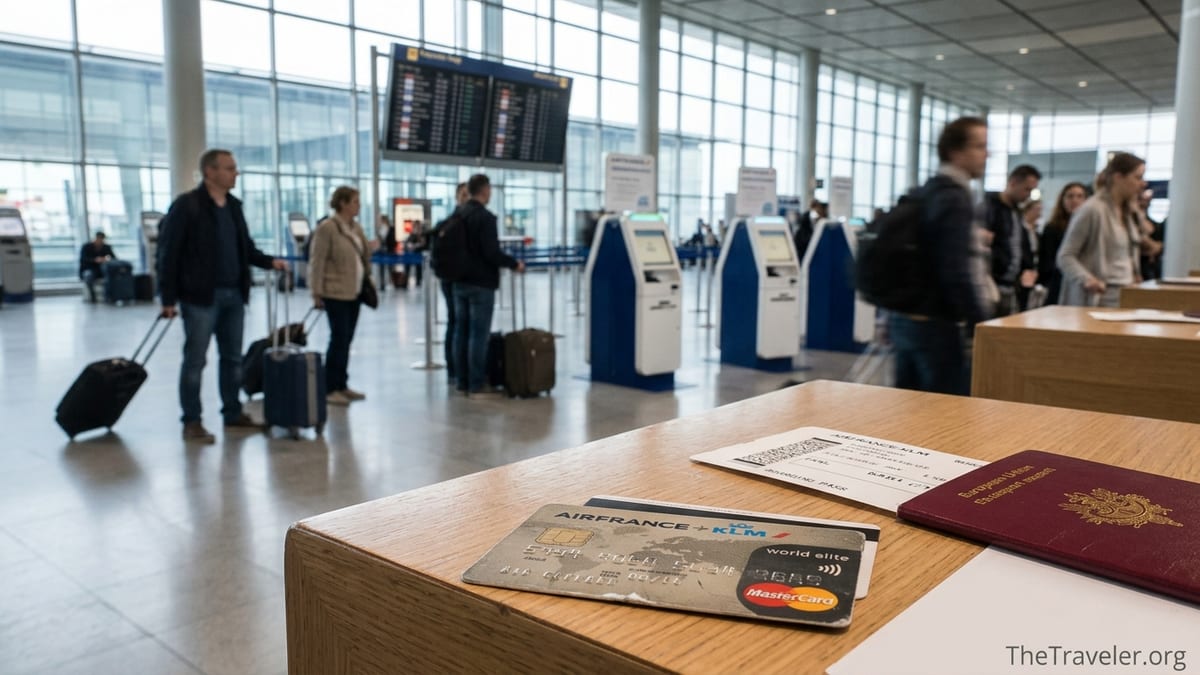
The Two Different “World Elite” Cards Nobody Distinguishes
The first thing few travelers realize is that there are actually two major Air France KLM credit cards carrying the World Elite label, and they behave quite differently. In the United States, Bank of America issues the Air France KLM World Elite Mastercard, which earns Flying Blue miles directly and charges an annual fee around the eighty to ninety dollar mark. In Canada, Brim Financial issues a separate Air France KLM World Elite Mastercard that also earns Flying Blue miles but uses Canadian dollars, different bonus categories and its own fee structure. Both cards feed the same Flying Blue account, yet the details that determine how many miles you actually collect each year depend heavily on which version you hold.
For a New York-based traveler flying to Europe a couple of times a year on Air France or KLM, the Bank of America version is usually the one in play. For a Montreal or Toronto traveler booking the same routes, it will likely be the Brim card in Canadian dollars. Confusion sets in when people read about benefits like extra miles per euro on Air France and KLM tickets or annual Experience Point bonuses without realizing that U.S. and Canadian cardholders often see similar perks delivered in slightly different ways. Before you apply, it is worth checking that any tip or trick you are reading actually refers to the version of the card that is available where you live.
This distinction also matters if you move countries. A U.S. cardholder who relocates to Vancouver cannot simply transfer their Bank of America account to Canada. They would need to apply for the Canadian Brim card, close or keep the U.S. card separately, and link the new card to the same Flying Blue number. The miles pool together at the program level, but the banking relationships are completely separate behind the scenes.
The Real Earning Engine: Layered Miles on Air France and KLM Flights
What almost no one explains clearly is how many separate mileage streams can stack when you buy a paid ticket on Air France or KLM. Flying Blue itself awards miles based on the cash price of your ticket in euros, with base members earning roughly four miles per euro of eligible fare and taxes excluded, and elites earning more. On top of that, the U.S. Air France KLM World Elite Mastercard typically awards three miles per dollar spent on Air France, KLM and other SkyTeam airlines, while Canadian Brim cardholders can receive an additional five miles per euro on Air France and KLM tickets just for having the card linked to their Flying Blue account.
Consider a traveler in Boston purchasing a 900 dollar economy ticket on Air France to Paris using the Bank of America card. At a rough exchange rate, Flying Blue might treat that as approximately 830 euros of eligible spend and award around 3,300 Flying Blue miles to an entry-level member. The credit card then layers another 2,700 miles from the airline charge itself at three miles per dollar. In practice, one Boston to Paris round trip can generate more than 6,000 miles without a single sign up bonus in play, and often more if you hold any level of Flying Blue elite status.
In Canada, the math can be even more surprising. Suppose a Toronto traveler books a 1,200 Canadian dollar KLM ticket to Amsterdam. Flying Blue still awards miles based on the euro value of the ticket, while the Brim-issued World Elite card earns one or two miles per Canadian dollar spent depending on the purchase category. On top of that, the separate +5 miles per euro accelerator for Air France and KLM tickets credited to the same Flying Blue account can add thousands of extra miles, even if the actual ticket is paid with a different card. For frequent transatlantic flyers, these layered earnings are often what quietly power business class redemptions after a couple of work trips.
The key detail most brochures gloss over is that some of these extra mileage streams are tied not to how you pay, but to having the card at all. For example, the acceleration on Air France and KLM tickets for the Canadian card is triggered by your Flying Blue number, so you can earn the bonus miles even if your employer pays with its own corporate card. This matters if you travel often for work but do not control which credit card is used for the booking.
The XP Game: How Status Boosts Really Work
The other hidden engine in this card is not miles, but Experience Points, or XP, which Flying Blue uses to decide whether you are Explorer, Silver, Gold or Platinum. The U.S. Air France KLM World Elite Mastercard typically offers a one-time XP grant once you open the account and hit the minimum spending requirement, and then a smaller XP boost each year on your anniversary. As of mid 2026, Bank of America advertises 100 XP as part of the welcome package when you spend a couple of thousand dollars within the first three months, plus a recurring 20 XP every year, with the possibility of higher XP when you meet higher annual spending thresholds.
To see why this matters, remember that Silver status currently requires 100 XP in a qualification year, Gold needs 180 XP and Platinum requires 300 XP. A new cardholder in Chicago who meets the spending requirement on the U.S. card can essentially leap from entry-level Explorer to Silver without stepping on a plane if the 100 XP posts as promised. That means free checked baggage on many fares, priority check in and boarding, and preferred seating options before you have completed your first transatlantic trip with the card.
The annual XP trickle is equally important if you already fly regularly. Imagine a New Jersey traveler who earns 140 XP a year from four or five Europe trips in economy and premium economy. On their own, those flights might leave them short of Gold each year. However, with 20 XP from the card on every anniversary, plus possible bonus XP for hitting a 15,000 or 25,000 dollar annual spend threshold on the Bank of America card, the traveler can bridge the gap to Gold. That unlocks lounge access on international SkyTeam flights and extra baggage even when flying on discounted economy tickets.
In Canada, the XP design is slightly different but the effect is similar. The Brim-issued World Elite Mastercard provides an annual XP boost, often quoted as 30 XP per calendar year, with an additional one time XP welcome bonus for new cardholders. For a Vancouver based traveler who only flies to Europe once a year, those 30 XP can be the difference between never earning status and quietly enjoying Silver level perks every second year, which in turn can make one or two big trips feel significantly smoother.
Where Everyday Spending Helps, and Where It Does Not
The card is marketed as an everyday spending tool, yet not all purchases are equally powerful for building trips. The Bank of America version currently offers three miles per dollar on airline purchases with Air France, KLM and SkyTeam airlines, three miles per dollar on dining, and one and a half miles per dollar on all other purchases. That means a family in Atlanta who spends 800 dollars a month dining out and on takeout could generate roughly 28,800 Flying Blue miles over a year from dining alone, which is close to saver-level one way economy pricing between the eastern United States and Europe during some Flying Blue promotions.
On the other hand, large one time expenses that fall into “other purchases,” such as a 4,000 dollar home appliance purchase at a big box store, only earn at one and a half miles per dollar. That purchase would yield around 6,000 miles on the Bank of America card, which sounds impressive until you compare it to the 12,000 miles you would earn by routing that same 4,000 dollars through a dining-heavy month, or by splitting it toward higher earning cards and then transferring flexible points to Flying Blue during a transfer bonus promotion. For travelers with multiple cards, the World Elite card often shines when focused on dining and Air France, KLM or SkyTeam tickets rather than used for every single purchase.
In Canada, the everyday spending categories are structured differently. Brim’s Air France KLM World Elite Mastercard emphasizes two miles per dollar on food and drink purchases, including restaurants, bars and grocery stores, and one mile per dollar on most other spending. Canadian cardholders also have access to special merchant partners where they can earn significantly more miles for every dollar, sometimes advertised as up to thirty miles per dollar when using the card with select retailers. In practical terms, a Calgary family that spends 1,000 dollars a month at supermarkets and restaurants could see around 24,000 miles in a year from those transactions alone, before counting flights or welcome bonuses.
The often ignored nuance is that Flying Blue is a transfer partner of several flexible points programs in the United States, including some major bank currencies. That means an American cardholder might use the Air France KLM World Elite card for Air France and KLM flights and dining, but choose a separate travel rewards card with broader bonus categories for other spending, then occasionally transfer bank points to Flying Blue when a twenty or thirty percent transfer bonus is running. The co branded card still matters for XP and anniversary miles, but it may not always be the primary workhorse for non travel purchases.
Fees, Foreign Transactions and Lounge Expectations
Many travelers assume that a World Elite Mastercard labeled as a transatlantic airline product will automatically be the perfect card to swipe abroad, but the reality varies by country. The U.S. Bank of America Air France KLM World Elite Mastercard typically does not charge foreign transaction fees, which makes it a reasonably good card to use in Europe. A Los Angeles traveler visiting Nice and paying for cafes and hotels in euros can avoid the extra two to three percent surcharge that still appears on some cards, while continuing to earn one and a half to three miles per dollar depending on the purchase type.
By contrast, the Canadian Brim-issued World Elite card includes a foreign currency conversion fee around one and a half percent on transactions made in currencies other than Canadian dollars. That fee can eat into the value of your miles when shopping in the eurozone. A Vancouver traveler spending 2,000 euros on a trip might see an extra fee equivalent to about thirty euros when the charge posts in Canadian dollars. For some cardholders the annual XP and mileage accelerator benefits outweigh that friction on Air France and KLM tickets, but for everyday overseas spending, a no foreign transaction fee card often remains the smarter choice.
The World Elite branding also leads many people to expect automatic airport lounge access, but access in practice is patchy. Some World Elite cards around the world come with programs such as LoungeKey or Mastercard Travel Pass, which allow a certain number of free visits per year to independent lounges. However, KLM and Air France lounges themselves, especially in hub airports like Amsterdam Schiphol and Paris Charles de Gaulle, do not generally treat World Elite branding as a golden ticket. A Detroit traveler connecting through Amsterdam with only the Bank of America card and no Flying Blue status should not expect to walk into the Crown Lounge simply by flashing their plastic. Access is still governed by cabin class and SkyTeam elite status, or by paying an entry fee in cash or miles where walk up sales are allowed.
Even when a separate World Elite lounge program is included, capacity limits matter. Reports from frequent flyers indicate that some partner lounges turn away bank program guests during peak hours to keep space for airline business class and elite passengers. In real terms, this means a Boston to Paris traveler connecting in Amsterdam for an evening departure might find that the shared lounge is “temporarily unavailable” to their lounge program in the early evening rush, even though access would be granted in the mid morning lull.
Redemption Sweet Spots and Real Trip Examples
All the earning power in the world is only useful if you can convert miles into trips that feel like good value. Flying Blue operates dynamic pricing, but regular patterns still emerge, especially in its monthly Promo Rewards. These reduced price awards often discount specific routes between Europe and North America, South America, Africa or Asia. For instance, it is common to see thirty to fifty percent discounts on select economy and business class routes, such as a Boston to Paris economy award requiring fewer miles than usual on certain dates, or a Chicago to Amsterdam business class seat pricing well below what other programs charge.
Imagine an Austin based traveler who picks up the Bank of America World Elite card and earns the current online welcome bonus of around 50,000 to 70,000 miles after a few months, plus five thousand anniversary miles later in the year. Along with routine spending on dining and a paid ticket to Europe, that traveler could accumulate around 90,000 Flying Blue miles within a year without any complicated strategies. During a strong Promo Rewards month, 90,000 miles might stretch to a round trip in premium economy to Paris or Amsterdam, or a one way business class seat to Europe plus a return in economy, depending on the routes and dates selected.
In Canada, a Winnipeg traveler using the Brim World Elite card can play a similar game. After meeting the card’s minimum spending requirement and picking up the welcome bonus, then putting grocery, dining and a couple of KLM tickets on the card, it would not be unusual to hold 60,000 to 80,000 Flying Blue miles after a year. Redeemed smartly, that balance can cover a one way business class ticket from a Canadian gateway like Toronto or Montreal to Amsterdam or Paris during a discounted period, especially when leveraging Flying Blue’s partner network to connect onward to smaller cities via European feeder flights.
One subtle benefit of holding the co branded card when redeeming miles is the mileage validity extension. Flying Blue miles can expire if you have no qualifying earning activity within a certain time window. Regular spend on the Air France KLM World Elite card counts as qualifying activity, which effectively resets or extends the life of your miles every time a statement posts. For a family who redeems slowly, perhaps saving up for a business class trip to Europe in three or four years, this protection can mean the difference between finally booking that aspirational flight and discovering that a chunk of their balance quietly disappeared due to inactivity.
Who Actually Benefits Most From This Card
When you put all of these quirks together, a clear profile emerges of who is most likely to get outsized value from the Air France KLM World Elite Mastercard. At the top of the list are travelers who fly Air France, KLM or other SkyTeam airlines between North America and Europe at least once a year, and who are willing to plan some trips around Flying Blue’s stronger redemption opportunities. A consultant in Washington, D.C. who flies to Amsterdam or Paris three times a year for work, charges those tickets and many restaurant meals to the Bank of America card, and keeps an eye on Promo Rewards will often find themselves with enough miles for an annual vacation flight in economy or premium economy without paying cash.
The card is also surprisingly powerful for people who do not yet have status but are close. Consider a Minneapolis traveler who already earns 80 XP a year from personal and work trips on KLM and Air France. The 100 XP welcome boost from the U.S. card plus the ongoing annual XP can push them into Silver immediately and then help them retain status more easily in following years. Similarly, a Calgary traveler who only makes one big Europe trip annually can rely on the Canadian card’s annual XP grant to eventually reach and maintain Silver, giving them extra baggage and priority services that take the edge off long-haul economy travel.
On the other hand, people whose travel patterns do not touch SkyTeam or Flying Blue partners may find the card underwhelming. A San Diego traveler who mostly flies domestic routes on low cost carriers or other alliances, and rarely visits Europe, will struggle to find compelling redemptions. In that case, a more flexible travel rewards card that earns transferable bank points or cash back on a broad range of purchases may be a better everyday choice, with Flying Blue accessed via occasional transfers when a specific redemption appears.
It is also worth noting that the card is not designed to be a general airport lounge membership or a luxury lifestyle card. Its strengths are tightly focused on earning Flying Blue miles efficiently and helping you climb the XP ladder. If your main goal is unlimited lounge access worldwide, premium concierge services or statement credits with hotel brands, a premium general travel card may serve you better alongside or instead of the Air France KLM World Elite.
The Takeaway
What nobody tells you about the Air France KLM World Elite Mastercard miles is that the real magic hides in the layering. The combination of base Flying Blue earnings, category bonuses on the card, quiet mileage accelerators on Air France and KLM tickets, and recurring Experience Points means the value of this card is rarely about any single perk printed in bold on the brochure. It is about how those pieces interact with the way you actually travel and spend money.
If your trips already lean toward Paris, Amsterdam or SkyTeam hubs in Europe, and you can route a meaningful amount of dining and airline spending through the card, the U.S. or Canadian World Elite versions can quietly underwrite at least one long-haul trip every year or two, often in a better cabin than you might otherwise afford. If, however, your travel life is scattered across other alliances or primarily domestic, the card’s miles may accumulate too slowly to be satisfying, and its XP boosts may never translate into real benefits.
Before applying, map out a realistic year: how many Air France, KLM or SkyTeam flights you expect, how much you genuinely spend on restaurants and groceries, and whether Flying Blue’s route map matches the trips you daydream about. With that picture in hand, the hidden story of Air France KLM World Elite miles becomes much clearer, and you can decide whether this specialized tool belongs at the center of your wallet or simply as a carefully used companion.
FAQ
Q1. Is the Air France KLM World Elite Mastercard worth it if I only fly to Europe once a year?
For many travelers, yes, as long as that annual trip is on Air France, KLM or another SkyTeam airline and you also use the card for strong bonus categories like dining or grocery spending. The combination of a welcome bonus, anniversary miles and flight plus dining earnings can often cover a one way or even round trip economy ticket to Europe every couple of years.
Q2. Do I have to pay for my ticket with the card to get extra Flying Blue miles?
With the U.S. Bank of America card, the higher earning rate on airline purchases applies when you use the card to pay for eligible Air France, KLM or SkyTeam tickets. With the Canadian Brim card, some mileage accelerators on Air France and KLM tickets are tied to your Flying Blue number rather than the payment method, meaning you can earn the extra miles even when your employer or another card actually pays, as long as your Flying Blue number is on the booking.
Q3. How quickly do welcome bonus miles and XP post after I meet the spending requirement?
Timing can vary, but many cardholders report that bonus miles typically appear within a few weeks after the statement where you complete the minimum spend closes, while Experience Points may post around the same time or shortly thereafter. It is wise to allow at least one to two billing cycles for all bonuses to appear before planning redemptions or counting on a higher status level.
Q4. Can I get lounge access just for holding a World Elite Mastercard logo?
Not automatically. While some World Elite cards include access to global lounge programs, entry to Air France and KLM’s own lounges still depends on your ticket type and Flying Blue or SkyTeam status, or paying a separate fee in cash or miles where allowed. You should not assume that the World Elite label alone will let you into Amsterdam or Paris lounges if you are flying economy without status.
Q5. Do Flying Blue miles from the card expire?
Flying Blue miles can expire if you have no qualifying earning activity for a set period, but eligible spending on an Air France KLM World Elite card is usually treated as qualifying activity. That means each time you earn miles from card purchases, you effectively extend the validity of your balance, which is particularly helpful if you are slowly saving for a larger redemption like a business class trip.
Q6. How does the card help me reach Silver, Gold or Platinum status faster?
The card grants Experience Points in addition to miles. In the United States, the welcome offer currently includes a substantial XP boost once you meet the initial spending requirement, and there are recurring XP grants each anniversary with more available at higher annual spending levels. In Canada, cardholders receive a set number of XP each calendar year, plus an initial welcome XP bonus. These XP count toward the thresholds needed for Silver, Gold and Platinum.
Q7. Is it better to earn Flying Blue miles with this card or via transferable bank points?
For airline and dining purchases tied closely to Air France and KLM, the co branded card is often very competitive or better, especially once you factor in XP and anniversary miles. For other spending such as general travel, online shopping or big non travel expenses, a flexible points card from a major U.S. bank can sometimes earn more value per dollar, especially when you wait for transfer bonuses of twenty to thirty percent into Flying Blue.
Q8. Will holding the card reduce my taxes and surcharges on award tickets?
No. The card can help you earn the miles needed for an award ticket faster and may open up more status related perks like extra baggage or better seat selection, but taxes, airport fees and carrier surcharges on award tickets are determined by the airline and local authorities. You will still need to pay those in cash when booking with miles.
Q9. Can I share or pool my Flying Blue miles with family members who also have the card?
Flying Blue does not currently offer a full family pooling system for all members, so each person generally holds their own mileage balance. However, you can use your miles to book tickets for anyone, which means one household member with the card and strong earnings can effectively cover flights for a partner or children, even though the miles technically sit in a single account.
Q10. What happens to my miles and XP if I cancel the card?
Your Flying Blue miles and XP remain in your Flying Blue account even if you close the credit card, since they live with the airline program rather than the bank. However, you will stop receiving anniversary miles and XP from the card, and you will lose any card-related benefits like accelerated miles on Air France and KLM tickets. Without ongoing qualifying activity, your miles may also become subject to expiration rules sooner, so it is wise to understand Flying Blue’s validity policy before cancelling.