


For Canadian families who travel a few times a year and put most of their household spending on a credit card, the BMO Ascend World Elite Mastercard often appears near the top of comparison lists. It combines strong travel rewards with airport lounge access and generous insurance, but it also carries a meaningful annual fee and foreign transaction charges. Deciding whether it is the right fit for your family means looking carefully at how you actually spend, where you travel, and how comfortable you are managing a rewards program.
Get the latest updates straight to your inbox!
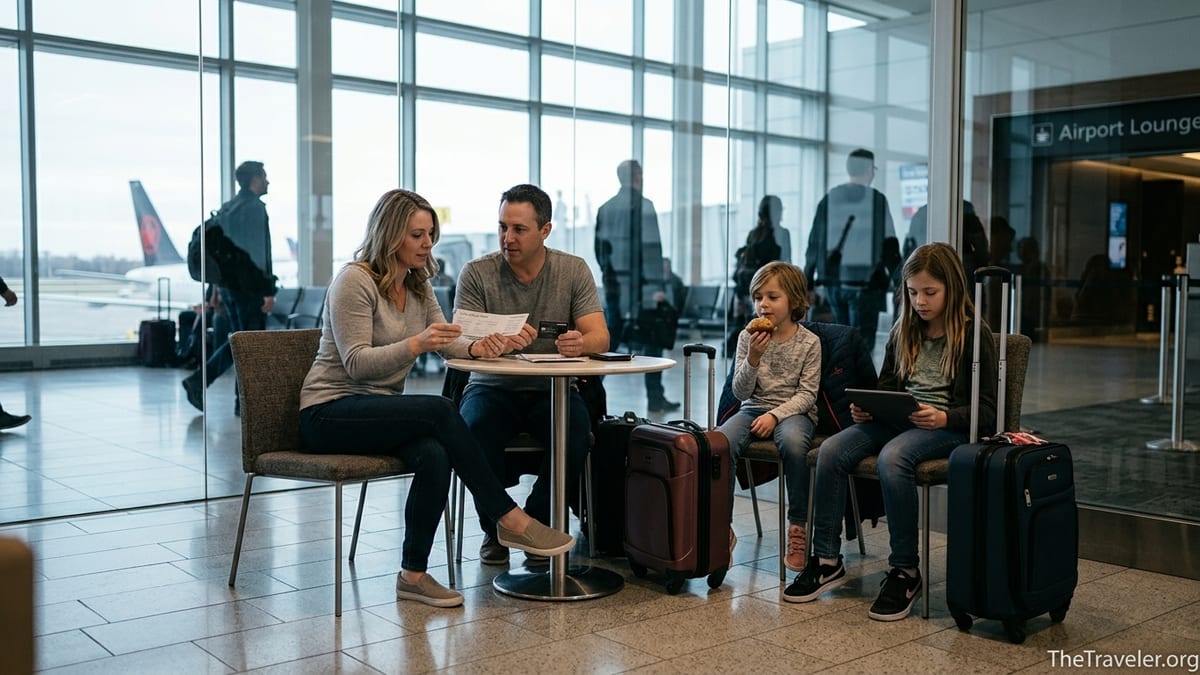
Key Features Canadian Families Actually Use
The BMO Ascend World Elite Mastercard is a premium travel rewards card designed for Canadians who spend frequently on travel, dining, entertainment, and recurring bills. As of mid 2026, it typically offers an annual fee of about 150 dollars for the primary cardholder, with additional cards costing around 50 dollars each, though promotions often waive the first year’s fee or rebate it for certain BMO banking clients. That means a family of four with two adult cardholders could be looking at roughly 200 to 250 dollars a year in ongoing fees if no rebate applies.
On everyday spending, the card earns BMO Rewards points, with higher multipliers in the categories many families touch regularly. You earn a base rate of 1 point per dollar on most purchases, 3 points per dollar on eligible dining, entertainment and recurring bill payments, and up to 5 points per dollar on eligible travel purchased through BMO’s travel platform, up to an annual cap before the earn rate drops back toward the base rate. In practice, this means groceries at a chain like Loblaws or Sobeys will often earn the base 1 point, while a family restaurant night at a Boston Pizza, movie tickets at Cineplex, or your monthly streaming subscriptions and cell phone bills can fall into the higher 3 point category.
The card also includes a package of premium benefits that appeal directly to travelers. Families get complimentary membership in Mastercard Travel Pass by DragonPass and a small bundle of free airport lounge visits each year, travel medical insurance that covers many trips up to a set number of days depending on age, trip cancellation and interruption coverage, delayed and lost baggage insurance, and car rental collision damage waiver. There is also mobile device insurance for phones and tablets purchased with the card or financed through a Canadian carrier with the recurring bills paid on the card, typically covering up to around 1,000 dollars in the case of loss, theft or accidental damage.
There are trade offs. Purchases in foreign currencies are still subject to the common 2.5 percent foreign transaction fee on top of the bank’s exchange rate, and the rewards program works best when you are comfortable booking through the BMO travel portal and tracking category bonuses. Families who want maximum simplicity, no foreign transaction fees, or cash back that can be applied anywhere may find that another product fits their habits more cleanly even if the headline earn rate looks lower.
How Rewards Add Up on a Real Family Budget
To understand whether the BMO Ascend World Elite card makes sense for your family, it helps to run through an example budget. Consider a Toronto based family of four that spends roughly 30,000 dollars per year on their credit card. Suppose they charge 8,000 dollars on travel, 4,000 on dining and entertainment, 3,000 on recurring bills like mobile plans and streaming, and the remaining 15,000 on general purchases such as groceries, clothing and household items.
If they book 5,000 dollars of that annual travel through the BMO travel portal, they could earn around 25,000 points at 5 points per dollar on those bookings. The remaining 3,000 dollars in flights or hotels booked directly with airlines or chains at the base 1 point level would earn 3,000 more points. Dining and entertainment at 3 points per dollar on 4,000 dollars would generate 12,000 points, and recurring bills at 3 points per dollar on 3,000 dollars would yield another 9,000 points. The 15,000 dollars in other everyday spending at 1 point per dollar adds 15,000 points. In total, this family would earn approximately 64,000 points in a year from spending alone, before any welcome bonus.
Valuing BMO Rewards points at around 0.6 to 0.7 cents each when redeemed for travel through the bank’s platform, those 64,000 points might equate to roughly 380 to 450 dollars in travel. In concrete terms, that could cover the base fare for two round trip economy tickets between Toronto and Halifax on a seat sale, or pay for three nights in a mid range hotel in Montreal or Quebec City during shoulder season. For a family planning a March break ski trip to Mont Tremblant, the points could offset a large chunk of a four night stay at a slopeside condo.
Layer in a welcome offer, which often advertises up to around 100,000 or more bonus points if you meet spending thresholds in the first year, and the first twelve months can be quite lucrative. A family that earns 64,000 points from spending plus an extra 80,000 points from a promotion could be sitting on the equivalent of around 900 dollars in travel by the time they are planning next summer’s flights to Vancouver or a family resort stay in Cancun. However, those elevated returns do not continue indefinitely. Once the bonus is gone, families should re evaluate whether their annual fee and spending patterns still justify keeping the card.
Airport Lounge Access and Travel Comfort for Kids
One of the most visible perks of the BMO Ascend World Elite Mastercard is airport lounge access. Cardholders receive complimentary membership in Mastercard Travel Pass from DragonPass and a finite number of complimentary lounge visits per year, often quoted as four free entries. In practice, this means that on a typical family trip, two adults can each enter a participating lounge once with one child guest free, or a single adult can bring in the whole family on a single visit, depending on the specific lounge rules and how many free passes you have remaining.
For example, imagine a family flying from Vancouver to Honolulu for a winter getaway. They arrive at Vancouver International Airport early and face a three hour wait. Instead of spending that time at the gate, they can use their Mastercard Travel Pass membership to access a participating lounge. Inside, the parents can grab a hot meal and coffee, while the kids enjoy complimentary snacks, soft drinks and Wi Fi. With seating, power outlets and quieter surroundings, the time before boarding becomes less stressful, especially if there are delays.
On another trip to Europe through Toronto Pearson, a family could use their passes at an eligible lounge in Terminal 1 or 3 while waiting for a red eye to London. Having a space where younger children can rest, older kids can catch up on shows using the lounge Wi Fi, and parents can take turns showering can significantly improve the start or end of a long journey. Paid lounge visits without a pass can easily cost 40 to 50 US dollars per person, so using two or three free visits a year can create real value.
Families should be aware that once the annual allotment of free visits is used, additional entries are charged a per visit fee that is typically around 32 US dollars per person. That means careful planning is helpful. You might choose to use your free passes for the longest layovers or for trips with younger children, and skip the lounge on shorter domestic hops where a quick stop at a coffee shop is enough.
Travel Insurance: Real Protection or Just a Nice to Have?
The BMO Ascend World Elite Mastercard comes with a broad travel insurance package that can be important for families. It typically includes out of province or out of country emergency medical insurance for trips of a specified length, trip cancellation and trip interruption coverage up to certain dollar limits per person, delayed and lost baggage protection, flight delay insurance, and car rental collision damage waiver when you charge the full rental cost to the card and decline the rental agency’s coverage. There is also hotel burglary coverage and purchase protection for eligible items bought with the card.
Consider a family of four from Calgary booking a summer trip to Italy. They pay 6,000 dollars for flights and 4,000 dollars for hotels using the BMO Ascend card. If a child becomes seriously ill a week before departure and a physician advises against travel, trip cancellation insurance could reimburse some or all of the non refundable costs, up to the policy limits, provided the terms and conditions are met and the illness is considered a covered reason. Without coverage, the family could be forced to absorb most of that 10,000 dollar loss.
On a smaller scale, imagine a trip from Montreal to Orlando to visit theme parks. If their checked bags are delayed by more than a set number of hours, delayed baggage insurance might reimburse the family for the cost of buying clothing and toiletries to get through the first day or two, up to a limit per person. Parents could pick up swimsuits and basic outfits for the kids at a nearby mall instead of waiting helplessly at the resort. If the bags are lost entirely, lost baggage insurance could cover additional costs on top of what the airline provides.
The included mobile device insurance can also be meaningful. If a teen buys an 800 dollar smartphone outright at a Canadian electronics retailer and pays with the BMO Ascend card, then accidentally drops it in a hotel pool on a trip to Banff, the mobile device insurance may reimburse repair or replacement costs up to the coverage cap after any deductible, as long as the terms are met. For a family with multiple phones and tablets, this can offset the stress of traveling with expensive electronics. However, parents must read the official certificate of insurance carefully, because age limits, trip length restrictions, pre existing condition clauses and coverage exclusions all affect whether a claim is approved.
Using the Card for Everyday Spending at Home
Beyond vacations, many families consider whether the BMO Ascend World Elite Mastercard should become their primary day to day card. The higher earn rates on dining, entertainment and recurring bills encourage shifting restaurant nights, streaming subscriptions, and phone plans onto the card. For example, a couple in Ottawa with two teenagers might put their Netflix and Disney Plus subscriptions, four mobile phone lines with a Canadian carrier, and a home internet plan on the card. If that totals 400 dollars per month, they would earn about 14,400 points per year in the 3 points per dollar category from those bills alone.
Dining and entertainment also add up quickly. A weekly 80 dollar restaurant outing plus occasional takeout and movie tickets could easily reach 5,000 dollars annually, generating about 15,000 points at the 3 points per dollar level. When combined with recurring bills, those two categories might produce 30,000 points or more per year without any flights involved. Parents who regularly attend concerts or sports events that code as entertainment at merchants like Ticketmaster or team box offices can add even more.
On the other hand, staples like groceries at major Canadian supermarkets, gas purchases outside promotional categories, and large retail purchases at stores like Costco often earn only the base 1 point per dollar. Families who spend the bulk of their budget on these items might see less spectacular returns than a pure travel or dining focused household. Some families pair the BMO Ascend with a separate no fee cash back card that offers higher rewards at grocery stores or gas stations, using the BMO card specifically when it earns 3 or 5 points per dollar or when they want the insurance coverage on a travel or high value purchase.
One more detail to watch is the annual cap on bonus travel earnings. The 5 points per dollar rate on eligible travel is typically limited to a certain amount of travel spending per year. A family that books multiple international trips or a very expensive once a decade round the world itinerary through the BMO portal might hit that cap, after which earnings drop back closer to the base rate. For most average households booking one or two trips per year, this ceiling is high enough that it will not be an issue, but it is worth understanding if you have unusually large travel plans.
Foreign Spending and When Another Card Might Be Better
One of the weaker points of the BMO Ascend World Elite Mastercard for globally mobile families is the foreign transaction fee. Like many Canadian credit cards, it charges approximately 2.5 percent on purchases made in foreign currencies. That fee is added on top of the bank’s exchange rate, so while you are still typically better off than using a currency exchange kiosk at a tourist spot, the extra cost is noticeable for families who spend heavily in the United States, Europe or Asia.
For instance, a family driving from Toronto to Florida for a two week vacation could easily spend 3,000 US dollars on hotels, restaurant meals, gas and shopping. If they use the BMO Ascend card for all those transactions, the 2.5 percent foreign transaction fee alone would add the rough equivalent of about 100 Canadian dollars to their trip cost, partially offset by whatever points they earn. If they instead used a Canadian no foreign transaction fee card that earns slightly fewer rewards, they might come out ahead simply by avoiding that fee.
Families who often book in foreign currencies online will feel this as well. Reserving a rental car in euros from a European company’s website, paying for theme park tickets in US dollars, or contributing to an overseas school trip can all trigger the foreign fee. For that reason, some households choose to carry both the BMO Ascend for its travel insurance, lounge access, and strong earn rates on Canadian dollar spending, and a separate no foreign transaction fee card reserved specifically for purchases in other currencies.
It is also important to compare the BMO Ascend World Elite with other premium Canadian cards in the same annual fee range. Some competitors offer modestly lower lounge access but no foreign transaction fees, while others provide higher multipliers on groceries or a more flexible points currency that can transfer to airline programs. For a family that takes one big overseas trip every three years but spends heavily at Canadian supermarkets and Costco, a different card could be a better primary choice, with the BMO Ascend used only when its unique benefits are needed.
Who in the Family Should Hold the Card?
Another practical question is which family member should be the primary cardholder. Because benefits such as travel insurance, mobile device coverage, and lounge access are tied to the cardholder and often extend to their spouse and dependent children when traveling together, many families designate the person who usually books travel and manages finances as the primary holder. That might be one parent who handles flight and hotel bookings for the entire household.
Authorized user or supplementary cards, which carry their own smaller annual fees, can be issued to a spouse or adult child. This allows older teenagers or university aged kids to earn rewards for the family while using their own cards for everyday spending. For example, a 19 year old living in residence at a university in another province might put textbooks, occasional flights home, and shared grocery runs on their supplementary BMO Ascend card, feeding points back into the family account. Parents can monitor spending through the main statement and adjust limits if needed.
In some cases, families with joint finances might hold more than one BMO Ascend account if there are specific banking package rebates available. However, since each account carries its own annual fee, most households are better off concentrating their spending on a single primary account with one or two supplementary cards. This avoids diluting spend across multiple reward pools while still giving both parents easy access to the card’s privileges while traveling alone with the children.
Younger children do not need their own cards to benefit from the BMO Ascend perks. Trip cancellation and medical coverage generally extends to dependent children travelling with the insured cardholder, and lounge access passes can be used to admit kids as guests where lounge policies allow. Before relying on this, parents should confirm the age definitions for dependents, the maximum number of guests per lounge visit, and how passes are charged when multiple people enter together.
The Takeaway
For many Canadian families who travel at least once or twice a year and are willing to route significant spending through a rewards card, the BMO Ascend World Elite Mastercard can be a strong choice. Its combination of elevated earn rates on travel, dining, entertainment and recurring bills, robust travel and mobile device insurance, and airport lounge access makes family trips smoother and can substantially offset costs when things go wrong. In the first year, a generous welcome bonus often enhances the value even further, especially if you have a big vacation planned.
Yet the card is not automatically the best fit for everyone. The annual fee becomes meaningful once any introductory waiver ends, and the 2.5 percent foreign transaction fee means it is not ideal as your sole card on extended trips abroad or for heavy spending in US dollars or euros. Families whose budgets are dominated by groceries and gas at merchants that earn only the base rate may find that a strong cash back or no foreign transaction fee card delivers better net value over time.
The decision ultimately rests on your family’s specific patterns. If you routinely book flights and hotels through online portals, dine out regularly, pay multiple recurring bills by credit card, and appreciate airport lounge comfort and comprehensive insurance, the BMO Ascend World Elite can be worth its annual cost. If you are occasional travelers who mostly shop at discount grocers and rarely leave Canada, a simpler low fee or no fee product may be more appropriate.
A practical approach for many households is to use the BMO Ascend as a primary travel and premium purchase card, complemented by a no foreign transaction fee or high grocery earn rate card for specific situations. By aligning the card’s strengths with your family’s real world spending, you can capture the benefits of the BMO Ascend World Elite Mastercard without paying for features you rarely use.
FAQ
Q1. Is the BMO Ascend World Elite Mastercard worth it for a family that only travels once a year? For a family that takes one substantial trip annually and puts regular dining, entertainment and recurring bills on the card, the combination of rewards, insurance and lounge access can still justify the annual fee, especially in the first year when a welcome bonus often applies. If your trip is modest and your everyday spending is low, a lower fee card might offer better value.
Q2. How much are BMO Rewards points from the Ascend card actually worth for family travel? BMO Rewards points often redeem at roughly 0.6 to 0.7 cents per point when used for travel through the bank’s portal, though the exact value can vary slightly by booking. In practice, 50,000 points might cover a few nights in a mid range Canadian hotel or significantly reduce the cost of economy flights for one or two family members.
Q3. Do children get coverage under the card’s travel insurance? Yes, dependent children traveling with the insured cardholder are generally covered under the emergency medical and many trip related insurance benefits, up to specified age and trip length limits. Parents should review the official certificate of insurance to confirm definitions and ensure each child meets the eligibility criteria before relying on the coverage.
Q4. Can my teenager have their own BMO Ascend World Elite supplementary card? In many cases, supplementary cards can be issued to older teenagers who meet the bank’s age requirements, often starting at 18 or 19 depending on province and bank policy. This allows them to make purchases that earn BMO Rewards for the household while parents maintain control and visibility through the main account statement.
Q5. How does airport lounge access work for a family of four? The primary cardholder receives complimentary membership in Mastercard Travel Pass by DragonPass and a limited number of free lounge visits each year that can be used for themselves and guests. A family of four can typically enter a participating lounge together, drawing down multiple passes depending on how the visit is counted, after which additional entries are charged at a per person fee. It is wise to check the current pass balance and lounge guest policies before traveling.
Q6. What happens if I book flights through an airline website instead of the BMO travel portal? Flights booked directly with an airline usually earn BMO Rewards at the base 1 point per dollar rate instead of the enhanced 5 points per dollar available for eligible travel booked through the BMO platform. You still benefit from the card’s travel insurance if the conditions are met, but you earn fewer points than you would through the portal.
Q7. Does the BMO Ascend World Elite Mastercard charge fees on US or European purchases? Yes, purchases made in foreign currencies, such as US dollars or euros, are generally subject to a foreign transaction fee of around 2.5 percent on top of the exchange rate. Families who spend heavily abroad often pair the BMO Ascend with a separate no foreign transaction fee card reserved for international purchases.
Q8. Is mobile device insurance automatically included if I pay my phone bill with the card? Mobile device insurance usually applies when you buy a phone or tablet with the card, or finance it through a Canadian wireless carrier and charge all recurring wireless bill payments to the card, subject to the policy terms. Simply paying an old device’s bill with the card may not be enough if the phone was not originally purchased or financed in the required way.
Q9. Can I downgrade the card after earning the welcome bonus without losing my points? If you switch to another BMO Rewards card, your points often remain within the BMO Rewards ecosystem, but some benefits such as travel insurance and lounge access will change or disappear. It is important to confirm how a downgrade affects your points, annual fee and benefits with BMO directly before making the change.
Q10. How does the BMO Ascend World Elite compare to a simple cash back card for families? Cash back cards are often easier to understand, with a flat percentage returned on every purchase and no need to think about portals or point values. The BMO Ascend World Elite can offer higher effective returns on travel and select categories plus premium perks like travel insurance and lounge access, but it requires a bit more engagement. Families that value simplicity over perks may prefer strong cash back, while frequent travelers may find the added complexity of the BMO Ascend worthwhile.