

For families who travel regularly, a good air‑miles credit card can make the difference between paying full fare for flights and snagging reward seats to visit grandparents, theme parks, or summer beach destinations. The HSBC EveryMile Card, positioned as a flexible travel card in Hong Kong, promises easy miles, airport lounge perks, and a streamlined way to turn daily spending into flights. But are those promises compelling enough for a real-world family juggling groceries, school fees, and annual holidays?
Get the latest updates straight to your inbox!
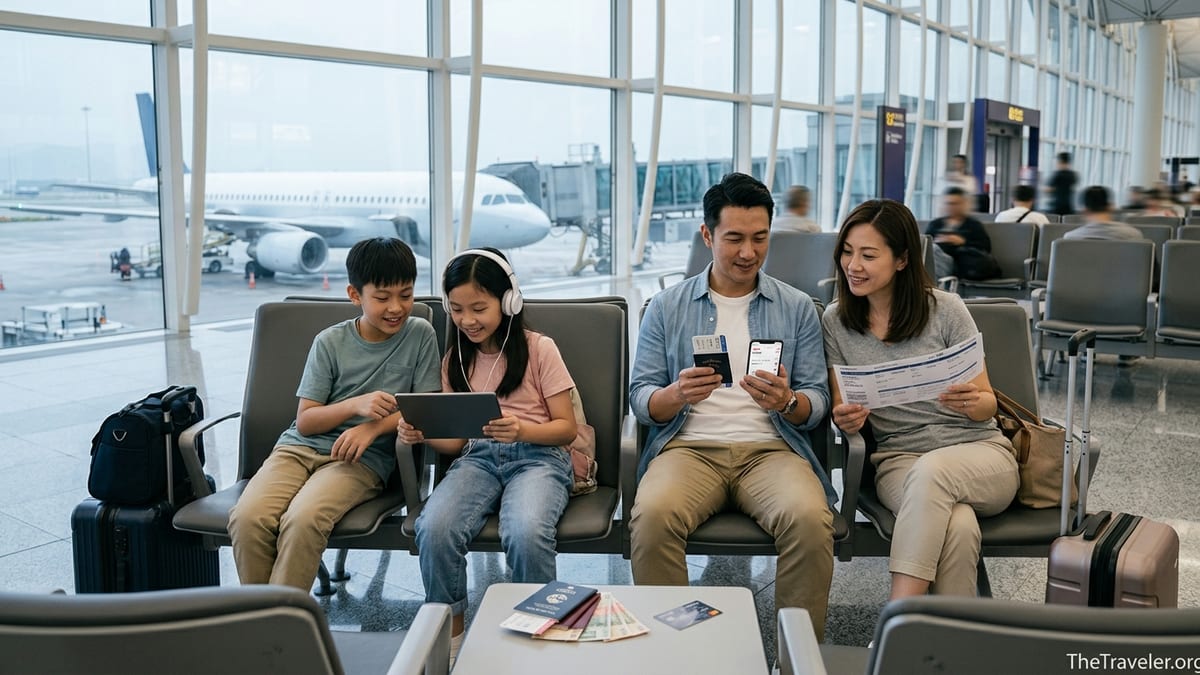
What the HSBC EveryMile Card Actually Offers
The HSBC EveryMile Credit Card is a Hong Kong‑market travel rewards card that converts spending into HSBC RewardCash, which can then be transferred into miles with a range of airline partners. Families based in or frequently traveling via Hong Kong will find the card marketed as a one‑stop solution for earning miles on everything from supermarket runs to overseas hotel stays. For example, a family that spends around HKD 18,000 a month on daily expenses could steadily build a pool of RewardCash that can be converted into miles for regional flights to cities such as Tokyo, Bangkok, or Taipei.
One of the headline features is the focus on travel spend. HSBC typically runs time‑limited promotions that improve the earn rate for foreign currency or travel purchases, such as campaigns where overseas spending earns a boosted miles rate when cardholders register through the HSBC Reward+ app. In practice, this means a family paying for a five‑night hotel stay in Osaka in Japanese yen, plus restaurant and transport costs abroad, can accumulate significantly more miles than they would from purely domestic spending during the same period.
The card also comes with a first‑year annual fee waiver for new customers, which immediately makes it more approachable for families testing whether a travel card suits their lifestyle. After the first year, an annual fee applies, and whether that fee is worth paying will depend on how much the family travels, how heavily they use the card day to day, and how much value they extract from miles and lounge access.
Another practical element for families is that the card integrates with the HSBC Reward+ mobile app, which is central to earning and redeeming rewards. Parents can track RewardCash balances, see how much spending is contributing toward future flights, and manage travel promotions from a single interface. For households that already bank with HSBC, having card and banking relationships in one ecosystem can simplify bill payments and budgeting.
Earn Rates, Promotions, and How Many Miles a Family Can Really Get
On paper, the HSBC EveryMile Card is designed to reward both everyday spending and overseas travel. The core mechanic is that eligible spending earns RewardCash, which can then be converted into miles through HSBC’s mileage programme partners. Depending on the promotion period and transaction category, overseas or travel‑related spending can earn the equivalent of a more favorable “dollars per mile” rate than local day‑to‑day transactions. For instance, during certain campaigns highlighted by local comparison sites in Hong Kong, foreign currency transactions have been effectively marketed at around HKD 2 per mile, while standard local spending typically earns miles at a less generous rate.
To put this into a real‑world context, consider a Hong Kong‑based family of four planning flights to Singapore for a school holiday. A typical economy return fare between Hong Kong and Singapore might be in the range of 25,000 to 30,000 miles per person on major Asian carriers, depending on sales and seasonality. That means a total requirement of about 100,000 to 120,000 miles. If the family focuses their large overseas expenses on the EveryMile Card, such as a HKD 30,000 resort booking in Thailand, HKD 8,000 in foreign‑currency restaurant spend, and another HKD 10,000 in online travel bookings priced in US dollars or euros, they could accumulate a meaningful chunk of the miles needed for one or two of those tickets.
Meanwhile, domestic spending in Hong Kong on categories like groceries, utility bills, and school fees will continue to generate RewardCash at the base rate. A family that charges HKD 15,000 to 20,000 a month in local spend can gradually build a background balance of RewardCash. Over a full year, that might be enough to top up the miles needed for one child’s seat on a regional flight or to cover the taxes and surcharges on award tickets. The key is consistency: the card works best when nearly all card‑eligible spending is channeled through it rather than split across multiple general cashback cards.
Promotional periods can also be strategically important. HSBC frequently runs limited‑time offers where new EveryMile applications or specific spending thresholds unlock bonus RewardCash that can be converted into miles. For example, a campaign might offer a sizeable lump of bonus RewardCash when a new cardholder spends at least HKD 5,000 within the first few months. A family timing big purchases, such as paying for an international school deposit, long‑haul flights to Europe, or a high‑end laptop for a university‑bound teenager, during such a campaign can accelerate their progress toward a long‑haul redemption.
Airport Lounge Access and Travel Perks for Families
One of the most tangible benefits of the HSBC EveryMile Card for travelling families is airport lounge access. HSBC promotes complimentary or subsidised entries to Plaza Premium airport lounges or selected airport dining outlets, tied to qualifying spending. For example, cardholders can earn up to six complimentary lounge entries or meals when they meet specified spending thresholds, often around HKD 4,000 in local or foreign currency within a set number of days after each lounge visit. This structure is particularly useful for families that take two or three international trips a year.
Imagine a family of four flying Hong Kong to London in economy for a summer trip. Without a travel card, they may spend hours at the gate with restless children. With an EveryMile Card, the primary cardholder could use one of the complimentary access rights to enter a Plaza Premium Lounge before a long overnight flight. Inside, the parents gain access to showers and a quieter environment, while the children enjoy hot food, soft drinks, and Wi‑Fi. For many parents, this is less about luxury and more about starting a twelve‑hour journey with everyone calmer and better fed.
The ability to bring companions into lounges is another factor. HSBC documentation and welcome materials for the EveryMile Card indicate that cardholders can bring travel companions into designated lounges and have the associated charges billed back to the card when complimentary quotas are exceeded. In practice, this means that, once a family has used up their free or promotion‑based entries, they can still access the lounge together by paying a per‑person fee. While these costs can add up, they may still appeal to families on especially long layovers in hubs such as Hong Kong International Airport or when travelling with elderly relatives who benefit from more comfortable seating.
Beyond lounges, some EveryMile Card promotions link to travel insurance and purchase protection when the card is used to pay for flights or travel packages. For families, built‑in travel insurance can be reassuring when booking multi‑segment itineraries that involve connecting flights, ski trips with checked sports equipment, or school tours. That said, coverage limits and exclusions matter: parents should read the travel insurance factsheet closely, checking how children are covered, whether pre‑existing conditions are excluded, and whether high‑value items like cameras or laptops require separate coverage.
Foreign Transaction Costs and Currency Considerations
Marketing materials for HSBC credit cards in multiple markets highlight limited or no explicit foreign transaction fees, which can sound ideal for overseas family vacations. However, even when a card issuer advertises no formal foreign transaction fee, the actual currency conversion might occur at an internal exchange rate rather than the pure mid‑market rate, effectively adding a small margin to each purchase. Families using the EveryMile Card abroad should therefore pay attention not only to disclosure of fees, but also to the exchange rates applied on their statements compared with publicly available market rates on the same day.
Consider a family trip where parents use the EveryMile Card to pay for a EUR 200 meal at a Paris brasserie, a EUR 90 museum pass purchase, and a EUR 60 taxi ride. When the statement arrives in Hong Kong dollars, the total in HKD may be slightly higher than the simple conversion at a neutral interbank rate. That difference, even if only a couple of percent, effectively works like a hidden foreign transaction cost. Over the course of a two‑week Europe trip with several thousand euros in spending, those small differences can add up to a noticeable amount, partially offsetting the value of earned miles.
Families should also be wary of dynamic currency conversion at overseas merchants. In many tourist hubs, hotels, shops, and restaurants offer to charge a Hong Kong‑issued card directly in HKD rather than the local currency. This may appear convenient but is almost always worse value because the merchant or its payment processor sets a rate that includes a significant markup. With a card like EveryMile, it is generally better to insist on paying in the local currency and letting HSBC handle the conversion, even if the bank’s own rate includes a modest margin. Doing so usually results in fewer hidden charges and still allows the family to earn the intended miles.
Another practical angle is where the family holds its assets. If parents have deposits in multiple currencies through HSBC’s global banking services, they may prefer to match spending currency with income currency to simplify budgeting. In such cases, they might use the EveryMile Card for travel spending in Hong Kong dollars, while relying on a separate multicurrency debit product for everyday transactions in, say, British pounds or US dollars. The goal is to reduce unnecessary conversions while still taking advantage of card‑linked travel benefits where they are most valuable, such as on flights and hotel bookings.
Everyday Spending vs Dedicated Travel Use
For most families, the key question is whether to use the HSBC EveryMile Card as the default card for everything, or to reserve it mainly for travel and big‑ticket purchases. The card is structurally strongest when spending is concentrated on categories that either earn an elevated miles rate during promotional windows or directly unlock travel perks like lounge access or bonus RewardCash. Flights, overseas hotels, travel packages, and foreign‑currency online bookings fit this profile well.
Take a household that spends HKD 12,000 a month on groceries and dining, HKD 4,000 on utilities, and HKD 3,000 on streaming subscriptions and other services. If all of this is put on the EveryMile Card, the family accumulates RewardCash steadily but at the base earn rate. Over twelve months, the pile of miles this generates may be enough for one or two short‑haul economy tickets within Asia, such as Hong Kong to Taipei or Manila, especially when topped up by a major overseas trip charged to the card. In this scenario, using EveryMile as a general everyday card works reasonably well.
However, families that value straightforward cashback might find better value pairing the EveryMile Card with a separate cashback card for non‑travel expenses. For example, a Hong Kong resident might use a high‑rebate supermarket card for weekly food shopping while reserving EveryMile for flights, hotels, and duty‑free purchases. The cashback could offset day‑to‑day costs, while miles from EveryMile focus on reducing airfares. This hybrid approach requires more intentional card management but can deliver higher overall value for households that are price‑sensitive on routine spending.
Another consideration is whether the family tends to book budget carriers or full‑service airlines. If parents often fly low‑cost carriers within Asia because of fare differences, they should still be able to use EveryMile’s miles by transferring RewardCash into a mileage programme for a traditional carrier and then selectively redeeming for one or two long‑haul flights a year. For example, a family might fly a low‑cost carrier to Bangkok for weekend breaks but save up EveryMile‑powered miles for an annual full‑service flight to Australia or Europe, where the comfort and extras matter more.
Supplementary Cards, Family Control, and Risk Management
Families rarely travel alone. Teenagers, university‑age children, and even grandparents often join trips and may need independent payment ability. While the EveryMile Card is a single primary card product, HSBC generally allows cardholders to request supplementary or additional cards that share the same credit line. In practice, this means a spouse or adult child can carry their own plastic, allowing them to make purchases and access some card benefits, while the primary cardholder maintains overall control and receives a consolidated statement.
From a travel perspective, supplementary cards can help families maximise miles. When all air tickets, theme park passes, and overseas dining are charged to either the primary or supplementary EveryMile Card, all of that spending flows into the same RewardCash balance. For example, a parent on a business trip in Singapore and a university‑age child on exchange in Europe might both use their respective EveryMile cards for expenses, accelerating the family’s progress toward a shared goal like a Christmas reunion in Canada paid partly with miles.
Supplementary cards also help with access logistics. In some HSBC card ecosystems, additional cardholders may use airport lounges independently or be treated as separate entries even when lounge access is pooled under a single allowance. For instance, in a family where both parents hold physical EveryMile cards linked to the same account, they can sometimes split up during a connection, with one parent taking younger children into the lounge earlier while the other finishes duty‑free shopping. Exact rules can vary by promotion, lounge operator, and region, so families should confirm how many free entries are available per account and per person before relying on lounge access for a large group.
Risk management is equally important. Giving supplementary cards to teenagers provides them with a secure way to pay during school trips or study‑abroad programmes, avoiding the need to carry large amounts of cash. At the same time, the primary cardholder should set clear spending expectations and monitor usage via HSBC’s mobile banking tools. Several issuers allow spending alerts or per‑card limits, which can be particularly useful if a child is attending a two‑week language camp in Japan and parents want to cap daily discretionary spending while still covering necessary transport and meals.
When the HSBC EveryMile Card Makes Sense for Families
For a family that travels internationally at least once or twice a year and is comfortable planning around miles, the HSBC EveryMile Card can be a worthwhile cornerstone of their travel strategy. The card is especially compelling when most major travel‑related expenses are routed through it, such as annual long‑haul flights to visit relatives, a regular ski trip in Hokkaido or Korea, or extended summer holidays in Europe. Under these conditions, the combination of enhanced overseas earn rates, occasional promotional bonuses, and lounge access perks can deliver tangible value.
Consider a scenario where a Hong Kong‑based family of four flies economy to Vancouver every other year to see relatives. Return tickets might cost a substantial amount in cash, but reward flight pricing in miles can sometimes provide savings if booked early and during off‑peak periods. The family could use the EveryMile Card throughout the year to pay for international school fees, supermarket bills, and medical expenses, while saving special promotions and high‑value purchases for the months leading up to buying those long‑haul tickets. With two years of concentrated spending and a couple of overseas holidays in between, converting RewardCash into miles could offset a significant portion of one or two seats on the trans‑Pacific route.
The card also suits families whose children are studying overseas. Parents in Hong Kong who regularly pay tuition deposits, rental payments, or airline tickets in foreign currencies can centralise these expenses on the EveryMile Card, timing payments to take advantage of enhanced foreign‑currency earn promotions. Combining those miles with lounge access on departure and return flights can make long, emotionally taxing journeys between home and university campuses a little smoother, particularly when travel involves multiple connections.
Finally, the EveryMile Card fits well for families who actively enjoy optimising points and miles rather than those who simply want a low‑maintenance card. Tracking promotions, monitoring exchange rates, and planning redemptions on airline partners requires a bit of admin. Households that are willing to treat travel planning as a part‑time hobby, comparing redemption prices across carriers and aligning them with school holiday calendars, will extract much more from the card than those who simply pay their bill each month and occasionally check their balance.
Potential Drawbacks and Situations Where Families Should Be Cautious
Despite its strengths, the HSBC EveryMile Card is not the ideal solution for every family. The most obvious drawback is the annual fee after the first‑year waiver. Families who do not travel regularly or who spread their spending across several cards may find that their annual miles accumulation is not enough to offset the fee. For a household that takes only one short‑haul trip every two years, a simpler no‑fee cashback card might be more cost‑effective, even if it lacks lounge access and mileage transfer options.
Another challenge is the complexity of airline mileage programmes. Once RewardCash is transferred out of HSBC into an external frequent flyer programme, it is generally subject to that programme’s rules, including expiry policies. Families who transfer small amounts impulsively to multiple carriers may end up with orphaned balances that are difficult to use. For example, holding 5,000 miles with three different airlines is far less useful than having 15,000 miles with a single carrier, especially when booking reward flights for four people at once.
Foreign exchange margins can also quietly erode value. While the appeal of earning extra miles on overseas spending is strong, families should remember that paying a subtly worse exchange rate on every transaction effectively reduces the net benefit. Parents who are extremely cost‑sensitive on long trips might compare the Effective cost of using EveryMile against using a separate multi‑currency debit solution for overseas day‑to‑day spending, reserving the card mainly for flights, accommodation, and other big‑ticket items where miles value and travel insurance benefits are clearest.
Lastly, there is the behavioural risk of overspending. Knowing that a purchase will “earn miles” can psychologically nudge families toward higher discretionary spending on holidays, such as upgrading room categories or booking extra activities, under the belief that they are recouping cost in future flights. In reality, the value of miles rarely matches the full cost of impulse upgrades. Families should set a hard cash budget for each trip and treat miles as a bonus rather than a justification for spending beyond their means.
The Takeaway
For travelling families based in or regularly using Hong Kong as a hub, the HSBC EveryMile Card can be a powerful tool when used deliberately. Its strengths lie in turning consistent household spending and large overseas purchases into airline miles, layering in practical travel benefits such as airport lounge access and, in some cases, built‑in travel insurance. Families who travel internationally at least once a year, particularly for long‑haul routes, can see meaningful savings if they actively plan redemptions and keep spending concentrated on the card.
At the same time, the card is not a universal solution. Households that rarely travel, prefer straightforward cashback, or dislike tracking points will likely find the annual fee and complexity unjustified. Exchange rate margins and the risk of scattered or expired miles are real considerations, particularly for parents managing busy schedules and varied expenses. Before committing, families should map out their expected annual travel, estimate how many miles they realistically need for common routes, and compare that against the spending required to generate those miles on EveryMile.
In practice, the HSBC EveryMile Card fits best as part of a balanced toolkit. Used alongside a solid cashback card for purely local spending, it can anchor a long‑term strategy for affordable family flights and more comfortable airport experiences. For those willing to plan ahead and pay attention to promotions, it offers a path to turning everyday supermarket runs and school fees into the occasional reward flight, turning routine expenses into shared memories at destinations around the world.
FAQ
Q1. Is the HSBC EveryMile Card good for families who only travel once a year?
For families that take just one short‑haul trip a year, the value can be modest, especially after the first‑year fee waiver ends. The card becomes more compelling if that annual trip is long‑haul, if most household spending is charged to the card, or if parents are willing to track promotions and redeem miles strategically. Otherwise, a no‑fee cashback card may be simpler and more predictable.
Q2. Can I realistically get free family flights using the EveryMile Card?
Completely free flights for an entire family are difficult unless spending levels are high and redemptions are carefully planned. More commonly, families use EveryMile to offset one or two tickets or reduce the overall cost of a long‑haul journey. For example, two years of disciplined spending and promotions might cover one or two economy seats on a regional or selected long‑haul route, with the rest paid in cash.
Q3. Does the HSBC EveryMile Card charge foreign transaction fees?
HSBC markets its travel cards as friendly for overseas spending, but even where explicit foreign transaction fees are limited, currency conversions typically include a margin embedded in the exchange rate. Families should compare statement rates with public market rates to understand the effective cost and avoid dynamic currency conversion at overseas merchants, which is usually worse value.
Q4. How valuable is the airport lounge access for families?
Lounge access can be particularly valuable on long‑haul or overnight flights with children or elderly relatives, providing quieter seating, food, and showers. With the EveryMile Card, complimentary entries are usually limited and tied to qualifying spend, so families should reserve them for the longest or most stressful travel days, such as red‑eye departures or lengthy connections, rather than short regional hops.
Q5. Should I use the EveryMile Card for all my everyday spending?
Using the card for all eligible spending simplifies miles accumulation and works well if your family travels frequently and values flights over cashback. However, many families benefit from a hybrid approach: using EveryMile for travel, foreign‑currency purchases, and large planned expenses, while relying on a high‑rebate cashback card for routine local groceries and bills.
Q6. Are supplementary cards useful for teenagers or students?
Supplementary cards can be very useful for older children on school trips or studying abroad, giving them a secure payment method while keeping all spending on a single account for miles. Parents should set clear rules, monitor statements through HSBC’s digital tools, and consider setting low limits or alert notifications to avoid misuse or overspending.
Q7. What happens if I transfer RewardCash to an airline and do not use the miles?
Once RewardCash is converted into an airline’s mileage currency, those miles are subject to the airline’s own expiry and usage rules. If your family does not fly that airline often, miles can expire unused or sit in balances too small to redeem. It is generally better to transfer only when you are close to booking a specific flight and to concentrate transfers into one or two frequent flyer programmes you genuinely use.
Q8. Does the card’s travel insurance cover the whole family?
The EveryMile Card’s travel insurance typically offers protection when eligible trips are paid with the card, but exact coverage for spouses and children depends on policy terms. Parents should review the official insurance factsheet, checking age limits, medical exclusions, and compensation caps for delays, baggage loss, and accidents before relying on the card as their primary travel insurance.
Q9. How should families compare the EveryMile Card with pure cashback cards?
The comparison depends on travel frequency and goals. If your family rarely leaves Hong Kong or prefers low‑cost carriers where miles are harder to use, a strong cashback card that reduces day‑to‑day expenses may deliver clearer value. If you take frequent regional or long‑haul trips and are willing to plan redemptions, the miles and lounge perks from EveryMile can outweigh simple percentage cashback over time.
Q10. Is the HSBC EveryMile Card worth keeping after the first‑year fee waiver?
Whether to keep the card depends on how much value you actually used in the first year. If you earned and redeemed miles for at least one significant flight, used lounge access on a couple of longer trips, and plan similar or higher travel in the coming year, paying the fee can be justified. If you barely travelled and your RewardCash balance remains small, it may be better to downgrade, switch to a no‑fee product, or use a cashback card instead.