


Getting your HSBC EveryMile Card in the mail is exciting, especially if you have travel plans on the horizon. It is designed around everyday spending that turns into airline miles and hotel points, but using it smartly from day one matters. From welcome offers and accelerated earn rates to airport lounge access and annual fees, the details can directly affect how much real value you unlock on your next trip. This guide walks through exactly what new cardholders should know before they tap or swipe their EveryMile Card for the first time, with concrete examples tied to real travel scenarios.
Get the latest updates straight to your inbox!
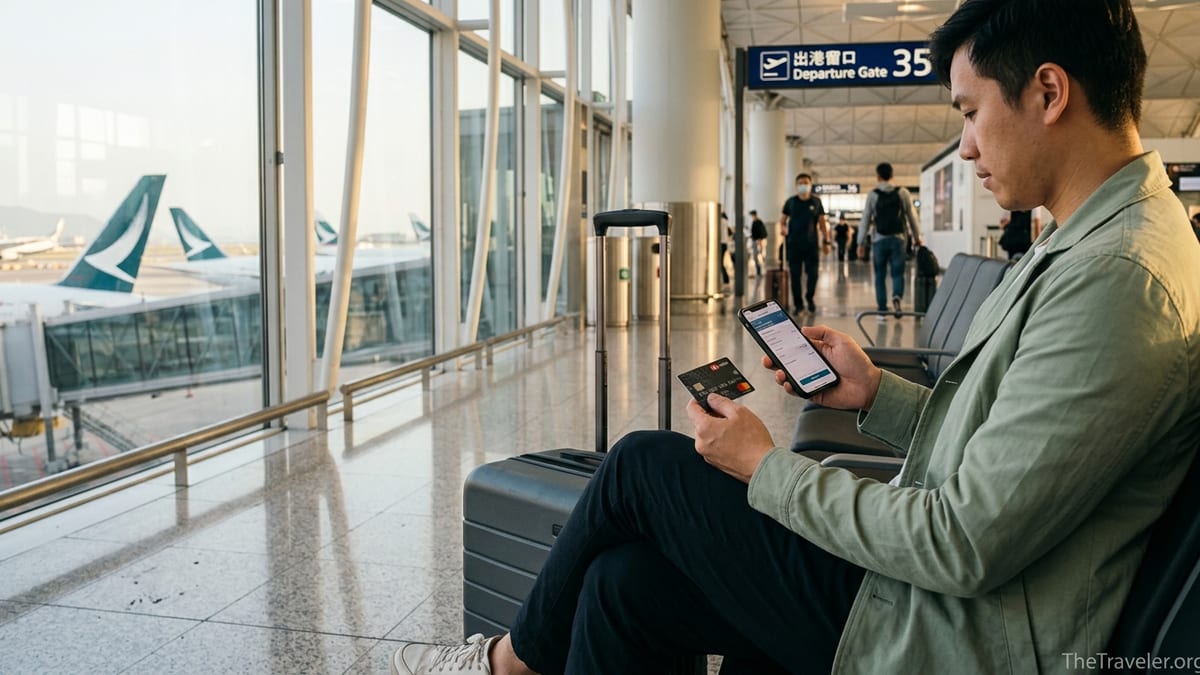
Understand What the HSBC EveryMile Card Actually Is
The HSBC EveryMile Card is a Hong Kong focused travel rewards credit card aimed at people who want to turn day-to-day spending into airline miles as efficiently as possible. It is issued by HSBC Hong Kong, and the rewards structure, promotions, and terms you see advertised are specific to that market. If you live in the United States or another country, you may find other HSBC travel products like the HSBC Elite credit card instead, but the EveryMile name, earn rates, and RewardCash mechanics are tied to Hong Kong customers.
At its core, the EveryMile Card earns HSBC RewardCash on your purchases, which you can then convert into airline miles or hotel points across a wide network of programs. HSBC highlights the fact that, during certain promotions, you can effectively earn miles at a rate as low as about HKD 0.4 per mile when you factor in accelerated earn and preferential conversion rates. In practical terms, that lets frequent travelers in Hong Kong build mileage balances quickly through everyday transactions, not just big-ticket airfares.
From a traveler’s perspective, the EveryMile Card sits in the same category as specialist travel cards like co-branded airline credit cards or flexible points cards. The big difference is that HSBC RewardCash can be converted to multiple airline and hotel partners, rather than locking you into one program. For example, you might move RewardCash into Asia Miles for a Cathay Pacific redemption one year, then redirect future RewardCash into another airline or hotel program the next year when your travel plans change.
Because this card is optimized for Hong Kong spending patterns, the categories that earn the best rewards focus on local and cross-border transportation, travel bookings, and selected cafés and light meals. That setup is ideal for someone who commutes by MTR or bus, books flights to nearby Asian destinations, and regularly eats out in Hong Kong, then wants to redeem those points for flights or upgrades for trips further afield.
Key Benefits and How They Work in Real Life
As a new EveryMile Card holder, the first benefit worth understanding is the welcome offer. HSBC periodically runs promotions where new cardholders can earn a significant amount of RewardCash or miles after meeting a spending target within a set period, often the first 60 days. For example, a promotion might give enough RewardCash to convert into tens of thousands of miles when you reach a few thousand Hong Kong dollars in spending. If you are planning a trip, timing large expenses like airline tickets or a hotel deposit during that welcome window can be one of the fastest ways to earn a starter stash of miles.
The everyday earn rates are the next big benefit. HSBC positions the EveryMile Card as offering accelerated rewards on “designated everyday and travel spend.” In practice, transactions like café and light meal spending, local transportation (such as MTR, buses, and taxis), cross-border transportation, and general travel services can earn at a better rate than standard purchases. HSBC has published examples that show how these categories can reach an equivalent of around 2.5 percent RewardCash rebate, which becomes even more powerful once you convert RewardCash to miles at preferential rates on the HSBC Reward+ app.
Travelers will also notice value in the way RewardCash converts to miles and hotel points. HSBC emphasizes the ability to convert RewardCash into miles or points across a large roster of frequent flyer and hotel programs, often at a promotional rate such as 1 RewardCash to 20 miles or points for selected partners. Imagine you have 500 RewardCash accumulated through several months of commuting, dining, and grocery runs. If a promotional conversion rate to your preferred airline is 1 RewardCash to 20 miles, that 500 RewardCash could translate into around 10,000 miles, which is a meaningful discount on a regional economy ticket.
There are also travel-focused perks beyond pure points earning. HSBC has linked the EveryMile Card with airport lounge access and dining benefits at selected outlets, often via separate partner lists and conditions. For instance, a traveler flying from Hong Kong to Bangkok might use the card to access a contracted airport lounge for a light meal and shower before a late-night flight, turning an otherwise crowded airport wait into a more comfortable pre-trip experience. These perks vary over time and may be subject to limits or enrollment requirements, so you should always check the latest lounge and privileges list from HSBC before you travel.
First-Year Costs, Annual Fees, and How to Avoid Surprises
Before making the EveryMile Card your main travel tool, it is important to understand the cost side. HSBC has promoted a first-year annual fee waiver for the EveryMile Card, which means new cardholders often pay no annual fee in the first 12 months. After that waiver period, a standard annual fee applies, and HSBC may require either a minimum spending level or a request for waiver to avoid the charge in subsequent years. Some cardholders in Hong Kong have reported that annual fee waivers are not automatic if spending is low, which is worth keeping in mind if you only use the card occasionally.
Consider an example. You receive the card in August and plan a major trip in October. You use it to book two economy tickets from Hong Kong to Osaka, a hotel stay, and a few large online purchases. You might easily cross HKD 20,000 in spending and hit any welcome bonus threshold. All of that takes place during the first year when the annual fee is waived, so your effective cost of holding the card is essentially zero, assuming you pay your statement in full and avoid interest. However, if you barely use the card after that trip and forget to either meet the spending requirement or call HSBC to request a waiver in year two, you could find an annual fee charged to your statement.
Interest charges are another risk for first-time users. Like most travel cards, the EveryMile Card offers attractive rewards but carries a relatively high interest rate on carried balances. If you revolve a balance from month to month, the interest cost can quickly outweigh the value of any miles earned. A traveler who spends HKD 8,000 on flights and hotels but then pays off only the minimum each month will accumulate interest charges that can erode the economic benefit of the card’s rewards. To truly come out ahead, you should treat the EveryMile Card as a charge card for travel and pay each month’s bill in full.
Foreign transaction fees are particularly relevant if you make purchases in currencies other than Hong Kong dollars. HSBC has structured promotions that reward overseas spending with higher earn rates, but the card will still convert those transactions at prevailing currency rates and may add a foreign transaction fee according to the card’s fee schedule. For a traveler who spends HKD equivalent of 10,000 on hotels and restaurants in Europe, the extra RewardCash from overseas bonuses can help offset such fees, but it is still wise to factor them into your trip budget and compare with any no-foreign-fee cards you hold.
Using the Card on Your First Trip: Step-by-Step Scenarios
Imagine you are planning your first trip with the EveryMile Card from Hong Kong to Tokyo. Two months before departure, you buy round-trip tickets on a major airline using the card for around HKD 5,000 per person. That initial charge not only contributes to any welcome bonus threshold, it also earns base RewardCash and possibly higher rewards if the spending falls into the designated travel services category. A few days later, you reserve a boutique hotel in Shinjuku for HKD 8,000, again using the card.
Once in Tokyo, you continue to lean on the EveryMile Card. Many cafés, casual restaurants, and train services accept international credit cards, so your daily spend on coffee, ramen, and metro reloads can add up quickly. If those transactions qualify under HSBC’s café and light meals or cross-border transportation categories, they contribute to the accelerated earn rate. After a week, your total trip spending might reach HKD 20,000 across flights, hotel, meals, and transport, which could be enough to both trigger a new-card welcome bonus and accumulate a healthy balance of RewardCash.
Back home, you open the HSBC Reward+ app to see your updated RewardCash balance. Suppose you find that between the welcome offer and your trip spending, you now have 800 RewardCash. You check participating frequent flyer programs and options inside the app, and you decide to convert a portion into miles with a regional airline that serves Southeast Asia. With a preferential conversion rate, 800 RewardCash could translate into a large enough mileage balance to cover one-way economy travel to Bangkok or Singapore during a fare sale, effectively turning one holiday into a stepping stone for the next.
A different scenario might involve using RewardCash directly to offset travel expenses rather than converting to miles. HSBC has offered promotional deals where 1 unit of RewardCash can be used at a better-than-usual rate to pay for travel purchases at designated merchants. For instance, if you return from a trip and have a HKD 3,000 hotel bill that posted to your EveryMile Card, you might log into the app and use the “Pay with RewardCash” function to offset part of that bill at a favorable rate, shrinking your out-of-pocket cost for the trip.
Maximizing Everyday Spend Before You Fly
You do not need to wait for an overseas vacation to start making the EveryMile Card work for you. In the months before your first major trip, you can route targeted everyday spending through the card to build up RewardCash more quickly. Categories like cafés and light meals, local public transportation, cross-border buses or trains into mainland China, and online travel bookings often qualify for enhanced earning. A commuter who buys breakfast and coffee on the way to work, rides the MTR twice a day, and occasionally uses cross-border coaches for weekend trips could generate a steady stream of RewardCash without changing their lifestyle.
For example, imagine your monthly routine looks like this: HKD 1,500 on takeaway lunches, HKD 800 on coffee and snacks, HKD 1,000 on local transport, and HKD 1,700 on occasional rideshares and tolls, all charged to your EveryMile Card. If those merchants map to HSBC’s designated everyday and travel spend categories, you might be effectively earning miles at roughly twice or more the base rate for that HKD 5,000. Over six months, that translates into HKD 30,000 of spending that has been quietly building your RewardCash balance, even before you book your first international flight.
Larger, predictable expenses are another way to accelerate your earn before travel. Annual insurance premiums, tuition payments, or big electronics purchases often can be charged to a credit card. If you know you will spend HKD 12,000 on a new laptop, timing that purchase to fall within a promotional period when HSBC offers better overseas or designated spending rates can yield more RewardCash than if you simply used a debit card. Just remember that large balances must be paid off in full to avoid interest undermining your savings.
Finally, think about how you split spending between the EveryMile Card and any other cards you own. If you also have a card that offers strong supermarket rebates or department store discounts, it may make sense to keep those transactions on that card and focus the EveryMile Card on its strength: travel and transport, dining, and cross-border expenses. That kind of deliberate card strategy can help you optimize each category without juggling too many accounts.
Mobile App, Conversions, and Avoiding Common Pitfalls
Using the HSBC Reward+ app is central to getting full value from the EveryMile Card. The app allows you to monitor RewardCash balances, check current promotional earn rates, register for targeted offers such as overseas spending bonuses, and convert RewardCash into airline miles or hotel points. Many of the most generous conversion rates, particularly where 1 RewardCash converts into a large number of miles, are only available when you process the transaction through the app.
One common pitfall for new cardholders is missing registration for special campaigns. HSBC has run promotions where overseas spending or certain designated merchants earn you as low as HKD 2 per mile, but only if you register in advance through Reward+. If you forget to register, your trip spending might default to the standard earn rate, leaving significant potential miles on the table. Before a holiday, it is worth opening the app and checking for any active “overseas” or “designated merchant” campaigns and completing the quick registration process.
Another issue involves misunderstanding which merchants qualify for accelerated earning. HSBC provides merchant category lists in supporting documents for the EveryMile Card, but not every café, hotel booking site, or transport provider will necessarily fall into the promoted categories. For example, a booking made via a lesser-known travel site might post under a generic online services code rather than as travel services, earning only the base rate. If your strategy heavily relies on a promotion, consider testing a small transaction before committing a large airfare or hotel booking, or booking directly with airlines and major hotel chains where the likelihood of a correct travel category code is higher.
Finally, be mindful of timing when converting RewardCash to miles. Airline programs occasionally devalue award charts or change their mileage requirements without long lead times. If you know you want to redeem for a specific route, such as Hong Kong to Taipei in economy or Hong Kong to Sydney in business class, you might convert only the amount of RewardCash you need for that booking rather than moving your entire balance into one airline program. Keeping some RewardCash unconverted preserves flexibility in case a different airline or hotel partner offers better value later.
The Takeaway
Using the HSBC EveryMile Card for the first time is less about memorizing fine print and more about aligning the card with your real travel habits. It rewards Hong Kong based travelers who frequently spend on local and cross-border transport, dining, and trip bookings, then convert those everyday expenses into airline miles or hotel points through the HSBC Reward+ app. By understanding how welcome offers, accelerated categories, preferential conversion rates, and travel perks like lounge access work together, first-time cardholders can turn a single holiday or a few months of commuting into meaningful future travel.
The key is to plan your spending rather than tapping the card at random. Use it heavily during welcome periods and targeted promotions, register for campaigns in the app, and always pay your statement in full to avoid interest costs. Treat RewardCash as a flexible currency that can be directed toward whichever airline or hotel program best fits your next itinerary. With that mindset, your EveryMile Card becomes more than just plastic in your wallet. It becomes a core tool for stretching your travel budget and unlocking more trips, upgrades, and experiences over time.
FAQ
Q1. Is the HSBC EveryMile Card available outside Hong Kong?
The EveryMile Card is primarily a Hong Kong product, so eligibility usually depends on meeting HSBC Hong Kong’s residency and income requirements. Travelers in other markets may see different HSBC travel cards with similar concepts but different names and terms.
Q2. How quickly do miles or RewardCash from my first purchases show up?
In most cases, base RewardCash from everyday purchases posts after the transaction is settled and your statement cycle closes. Promotional bonuses, such as welcome offers or special overseas spending campaigns, can take longer and may only appear after you meet spending thresholds and the promotional period ends.
Q3. Do I need to register somewhere before I can earn accelerated miles?
For standard earning, no registration is needed, but for many enhanced or time-limited offers, HSBC requires registration through the HSBC Reward+ app or specified online channels. If you plan to rely on an overseas or designated merchant promotion, check and register before making large purchases.
Q4. Can I use the EveryMile Card for contactless payments overseas?
Yes, the card supports contactless payments where the network is accepted. In many destinations such as Japan, Singapore, or major European cities, you can tap to pay at hotels, restaurants, and shops. Just be aware that foreign transaction fees and dynamic currency conversion can still apply depending on how the terminal processes your payment.
Q5. What happens if I cancel the card after earning a welcome bonus?
If you have already received the welcome RewardCash and converted it to miles or hotel points, those miles usually remain in your airline or hotel account even if you close the card. However, if HSBC determines that the card was obtained or used in a way that violates terms and conditions, it may claw back bonuses or refuse future applications.
Q6. Are airport lounge visits unlimited with the EveryMile Card?
Lounge access benefits vary over time and may be capped by the number of free visits per year, specific lounges, or guest policies. Some arrangements require enrollment or might only offer discounted access rather than completely free entry. Always confirm the current lounge list and conditions before relying on access for a particular trip.
Q7. Is it better to convert RewardCash to miles or redeem it as cashback on travel purchases?
The answer depends on how you travel. If you can redeem miles for high-value flights or upgrades, especially in premium cabins, converting RewardCash to miles often gives better value. If you prefer simple discounts on hotel bills or package tours, using RewardCash to offset travel spending through the app might be more straightforward.
Q8. Will using the card at ATMs help me earn miles faster?
No. Cash advances at ATMs do not earn RewardCash and usually incur fees and interest from the day of withdrawal. For rewards and cost reasons, using the EveryMile Card for purchases rather than cash advances is almost always the better choice.
Q9. How do I avoid paying the annual fee after the first year?
HSBC may waive the annual fee for cardholders who meet certain spending levels or upon request, but this is not guaranteed. If you want to avoid the fee, monitor your annual spending, watch for any waiver communications from HSBC, and contact customer service ahead of your card anniversary to discuss options.
Q10. Can I add supplementary cards for family members to earn miles faster?
Yes, HSBC allows additional cards for eligible family members, and their spending contributes to the primary cardholder’s RewardCash balance. This can help you reach welcome offer thresholds and accumulate miles more quickly, but it also means you should monitor all spending carefully and set clear expectations with supplementary cardholders.