


More news on this day
Siemens is set to modernise the train control system on Austria’s Zillertalbahn, a narrow-gauge railway in Tyrol, in a project that aims to boost safety, reliability and capacity on one of the country’s best-known tourist lines.
Get the latest news straight to your inbox!
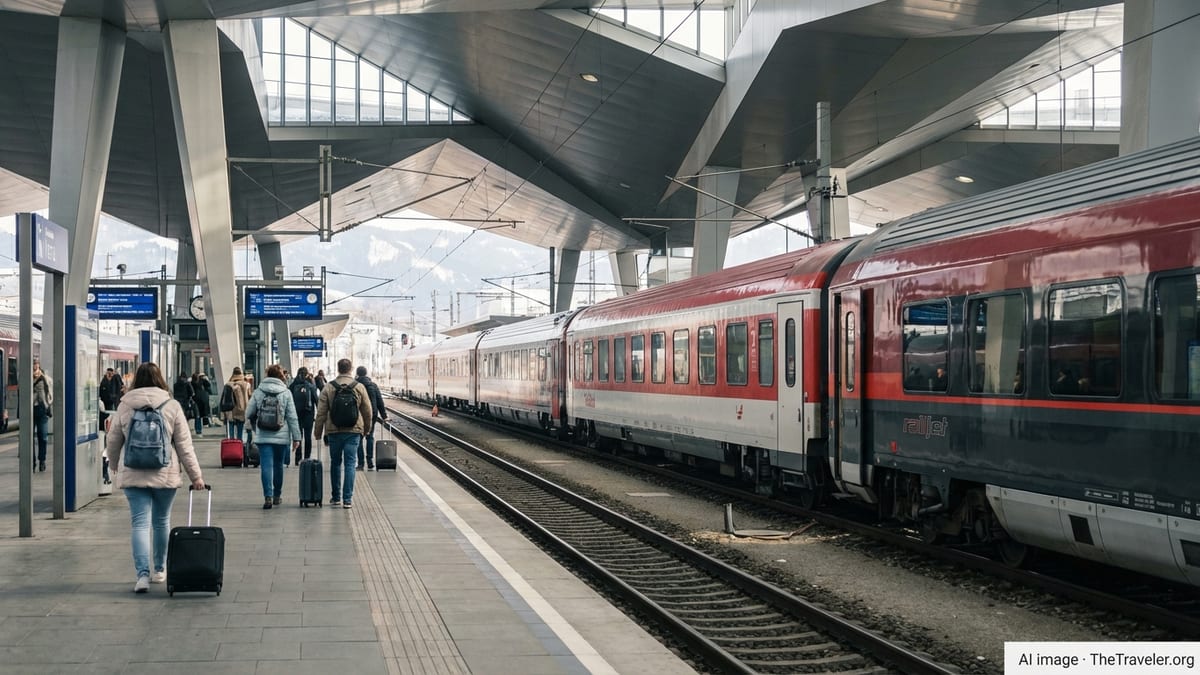
Digital upgrade for a historic Tyrolean railway
The Zillertalbahn connects the mainline hub of Jenbach with the Ziller Valley and is known for a mix of modern diesel services and heritage steam trains that attract visitors throughout the year. Publicly available information on recent project announcements indicates that the line’s aging signalling and control technology is being targeted for a comprehensive upgrade, with Siemens chosen to supply a modern train control solution tailored to the railway’s narrow-gauge infrastructure.
The current signalling on the Zillertalbahn was developed for lower traffic density and more limited real-time data exchange than is expected from today’s regional railways. Industry reports suggest that the new configuration will introduce digitally controlled interlockings and an integrated operations control layer, replacing legacy relay-based systems and localised control logic. This is expected to allow closer train spacing while maintaining, and in some sections improving, safety margins.
According to coverage of Siemens Mobility’s recent projects in Austria and neighbouring countries, the supplier has focused on modular architectures that can be adapted to smaller regional routes as well as high-traffic corridors. Applying this approach to the Zillertalbahn is intended to give the valley railway technology that is consistent with national and European standards, while still respecting the route’s particular operational and geographic constraints.
The investment aligns with broader trends in European rail policy, where regional lines are being equipped with digital signalling and monitoring tools to align with national safety frameworks and, where appropriate, future European Train Control System compatibility. For Zillertalbahn, this shift is expected to support both everyday commuters and the tourism market that depends heavily on reliable timetables during peak holiday seasons.
Modern signalling, interlocking and control technologies
Details reported in industry and company materials on comparable projects indicate that Siemens is likely to base the Zillertalbahn upgrade on its digital interlocking platform, combined with centralised operations control. Similar deployments on other European regional lines have used a mix of electronic interlockings, wayside elements and software-based traffic management designed to handle mixed traffic patterns.
These systems typically integrate point machines, signals and level crossing protection into one coherent control environment, enabling operators to see the real-time location and status of trains, track sections and critical assets. On Zillertalbahn, where the line shares space with roads, rivers and built-up valley settlements, enhanced control of level crossings and trackside equipment is expected to be a core safety benefit.
Reports on Siemens’ recent signalling work in Austria and Germany also highlight the gradual transition toward ETCS-ready architectures, even on lines that may not immediately deploy full European Train Control System functionality. For Zillertalbahn, a similar strategy would allow the new control system to accommodate future onboard equipment upgrades and potential interoperability requirements without another large-scale infrastructure replacement.
The digitalisation of control and safety functions also opens the door to condition-based maintenance of signalling assets. Sensors and diagnostic tools can feed data back to a central platform, allowing operators to detect issues such as intermittent faults or component wear before they lead to disruptions, a capability that can be especially valuable on a single-track regional line with limited rerouting options.
Benefits for safety, punctuality and capacity
One of the main goals of the modernisation is to enhance operational safety along the full length of the valley route. By replacing dispersed, hardware-based logic with integrated digital interlockings, the railway can apply more advanced safety rules and automated checks to prevent conflicting movements, overspeeding and unauthorised entry into occupied sections.
In parallel, the technology is expected to support higher punctuality. Centralised traffic management tools allow dispatchers to re-optimise train paths in real time when delays occur, reducing knock-on effects and improving recovery from disruptions. For passengers, this should translate into more predictable connections at Jenbach with long-distance and national services, as well as more reliable return journeys within the valley.
The Zillertalbahn has historically balanced regular commuter services with seasonal peaks in skier and summer tourist traffic. A modern control system can make it easier to insert additional trains during busy periods, using shorter headways and more precise scheduling while staying within safety limits. This, in turn, can help reduce road congestion in the valley by making rail a more attractive alternative to private cars and tour buses.
In the longer term, the upgrade provides a foundation for further digital passenger services, such as real-time information on train positions and platform occupancy. Siemens’ broader portfolio includes passenger information systems and data-driven applications for rail, and industry commentary suggests that control-system modernisation often precedes or coincides with improvements in customer-facing digital tools.
Integration with regional mobility and sustainability strategies
The Zillertal region has promoted public transport as part of its climate and tourism strategy, positioning rail as a low-emission way to access the valley’s ski areas and hiking routes. By equipping the railway with a state-of-the-art control system, regional authorities and the operator are aligning infrastructure with these policy objectives, aiming to handle more passengers with fewer delays and lower energy waste from stop-and-go operations.
Published information on Siemens’ rail automation projects in Austria underscores the supplier’s focus on energy-efficient operations, where optimised driving profiles, smoother traffic flow and fewer unscheduled stops can reduce fuel or electricity consumption. On a line such as the Zillertalbahn, with frequent station stops and a combination of gradients and curves, even modest improvements in driving and dispatching efficiency can translate into meaningful energy and cost savings.
The modernisation also supports the region’s economic resilience. Reliable, high-quality rail service is viewed as a key factor in maintaining year-round tourism and supporting local businesses that depend on both visitors and commuting workers. A robust, digitally managed control system is intended to reduce the risk of long service interruptions that could disrupt peak holiday periods or major events.
As European funding and national programmes increasingly prioritise rail as a backbone of sustainable mobility, projects like the Zillertalbahn upgrade are being watched as examples of how smaller, scenic lines can be integrated into wider decarbonisation strategies. The choice of Siemens, a major player in European rail automation, signals an effort to pair local heritage with technology that aligns with continental standards.
Implementation timeline and future prospects
Publicly available reporting suggests that the implementation of the new train control system will proceed in phases, allowing the Zillertalbahn to maintain service while sections of the line are migrated to the digital architecture. Typical steps on comparable projects include detailed design, factory testing of interlocking logic, staged installation along the route and comprehensive on-site testing before full commissioning.
During the transition, mixed operation of legacy and new systems may be necessary, especially at key junctions and station areas. Industry experience shows that careful planning of migration phases and intensive training for dispatchers and maintenance staff are crucial to ensure a smooth switchover. For passengers, most of the work is expected to take place behind the scenes, with visible changes mainly limited to new lineside equipment and, eventually, more stable timetables.
Once the Siemens solution is fully in place, the Zillertalbahn will have a train control and signalling platform that can support future rolling stock changes, additional services and potential enhancements such as more sophisticated traffic management algorithms. The project positions the railway to adapt to evolving safety regulations and technological advances without requiring another fundamental overhaul in the short to medium term.
Observers in the rail sector note that the Zillertalbahn modernisation reflects a broader shift in which even small and tourist-focused lines are embracing sophisticated control technologies previously seen mainly on mainline and high-speed routes. For the Tyrolean valley, that trend is set to deliver a combination of traditional charm and contemporary rail operations on one of Austria’s most recognisable regional railways.