


More news on this day
Italy has opened a crucial new section of the Naples–Bari high-speed and high-capacity line, marking a major step toward cutting journey times across the south and reshaping how residents, tourists and freight move between Campania and Apulia.
Get the latest news straight to your inbox!
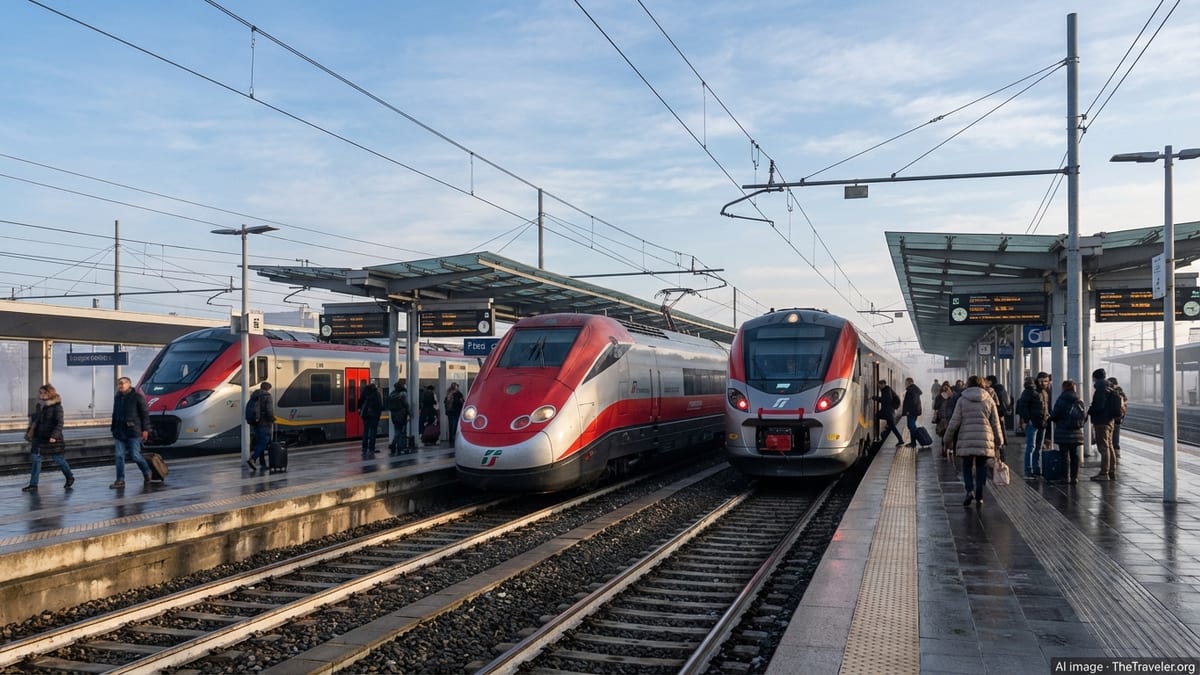
A New Link in the South’s Rail Backbone
The latest section to enter service lies between Cancello and Frasso Telesino–Dugenta, an 18 kilometer stretch that forms part of the broader 145 kilometer Naples–Bari upgrade. According to industry coverage, this is the second segment of the new corridor to be commissioned, following the earlier opening of the Bovino–Cervaro section further east.
The double-track line has been engineered for higher speeds and heavier traffic than the historic main line it parallels. Reports indicate that it incorporates the roughly 4 kilometer Monte Aglio tunnel and a series of viaducts, and that 13 level crossings on the older alignment have been removed, improving both safety and punctuality for trains running between Naples, Benevento and Apulia.
The infrastructure manager Rete Ferroviaria Italiana has described the Naples–Bari project as part of the wider Scandinavian–Mediterranean TEN-T corridor, a priority axis intended to better connect northern Europe with ports and cities in the central and southern Mediterranean. The new opening moves the Italian section closer to that goal by increasing capacity along one of the south’s most important east–west links.
Timetable changes are expected to follow as more rolling stock is shifted onto the upgraded route. Early indications from sector publications suggest that operators will gradually divert long-distance and some regional services over the new section, easing pressure on older tracks that continue to serve slower, stopping trains.
Travel Times Set to Fall as Work Advances
Publicly available planning documents point to a phased reduction in journey times between Naples and Bari as additional high-speed and high-capacity sections are completed. Information released over the past two years suggests that, once a critical mass of upgrades is in place, direct services should cut current travel times roughly in half.
Coverage of the project indicates that the full corridor is expected to allow a future Naples–Bari journey of around two hours when the line is entirely finished, compared with about four hours on today’s conventional services. Interim targets foresee a first major reduction to about two hours and forty minutes once several further segments, including more of the inland Apennine crossings, are operational.
The newly opened section is therefore being seen as both a practical improvement for current passengers and a symbolic milestone on the way to that future timetable. By separating faster intercity trains from slower local services on one of the busiest stretches approaching Naples, the works are designed to unlock higher average speeds without compromising the accessibility of smaller towns along the legacy line.
Rail specialists note that the project also has implications beyond passenger transport. A higher-capacity, more reliable east–west axis is expected to benefit freight flows to and from the port of Bari and logistics hubs in inland Campania, offering an alternative to increasingly congested motorways across the Apennines.
Engineering Through the Apennines
Behind the latest opening stands a complex civil engineering effort across some of southern Italy’s most demanding terrain. The broader Naples–Bari program includes extensive tunnelling and viaduct construction through the Apennine foothills between Benevento and the inland plateau around Ariano Irpino.
On the Apice–Hirpinia section, which is still under construction, project updates from the infrastructure group overseeing the works describe a succession of milestones. The mechanized excavation of the Grottaminarda tunnel, approximately two kilometers long, was completed earlier in the program, followed by progress on the longer Rocchetta tunnel and preparation of the future Hirpinia station site.
In May this year, published reports highlighted the breakthrough of the final rock partition in the 6.5 kilometer Rocchetta tunnel, the longest underground structure on that section of the line. The result is that two of the three major tunnels on Apice–Hirpinia have now been structurally completed, significantly de-risking one of the most technically challenging parts of the corridor.
The works rely heavily on tunnel boring machines and advanced monitoring systems to manage complex geological conditions. Engineering communications emphasize the need to secure slopes, protect watercourses such as the Ufita River and limit disruption to nearby communities while maintaining a rapid pace of construction.
Economic and Tourism Impact for Southern Regions
Italian and European planning documents frame the Naples–Bari line as a flagship project for reducing the infrastructure gap between northern and southern regions. By bringing major cities in Campania, Basilicata and Apulia within faster rail reach of each other, the new corridor is expected to support both everyday commuting and long-distance tourism.
Analysts of the country’s transport policies note that easier rail access from Naples and Rome to coastal destinations around Bari and the wider Apulia region could shift more visitor traffic from road to rail in the coming years. Shorter journey times and the prospect of direct high-speed services are considered particularly attractive for international travelers using Naples as a gateway to southern Italy.
The upgraded line is also designed to strengthen smaller inland areas. The planned Hirpinia station, for example, is intended to act as a hub for the provinces of Avellino and Benevento, tying rural communities more closely into the national high-speed network and broadening access to jobs, education and services in the metropolitan areas of Naples and Bari.
Local development strategies tied to the project highlight potential growth in logistics, agrifood exports and tourism in the interior, where many towns have historically faced outmigration and limited rail options. Better connections are expected to make it easier to market hilltop villages, wine regions and natural parks to visitors who previously focused on coastal itineraries.
Next Steps Toward Full Corridor Completion
With the Cancello–Frasso Telesino–Dugenta section now open to traffic, attention is turning to the remaining gaps needed to complete the high-speed and high-capacity axis. Sector reports state that the Naples–Cancello stretch is due to follow, creating a fast, mostly new-build alignment from the outskirts of Naples toward the interior.
Further east, construction continues on the Apice–Hirpinia and Hirpinia–Orsara lots, including the completion of tunnels, viaducts and the new Hirpinia hub. Official planning targets linked to national recovery and resilience funding envisage substantial additional track being commissioned by mid-2026, with final works on the corridor extending toward the end of the decade.
As each new section opens, timetable planners are expected to gradually recast services to maximize the benefits of the investment while maintaining connectivity on the historic routes. Observers of Italy’s rail sector note that this staged approach, already used on earlier high-speed projects in the north, allows the market to adapt and demand to build as travel times steadily fall.
The entry into service of this latest Naples–Bari segment therefore represents more than a local upgrade. It signals that one of southern Europe’s most ambitious rail undertakings is moving from construction sites to the daily experience of passengers, reshaping expectations for how quickly and comfortably it is possible to cross the Italian south by train.