


More news on this day
Athens International Airport is facing mounting scrutiny after a succession of technical glitches, capacity strains and inspection related disruptions led to days of widespread flight delays, prompting aviation authorities and airlines to accelerate efforts to stabilize operations at Greece’s busiest gateway.
Get the latest news straight to your inbox!
Operational strains ripple through Europe’s air network
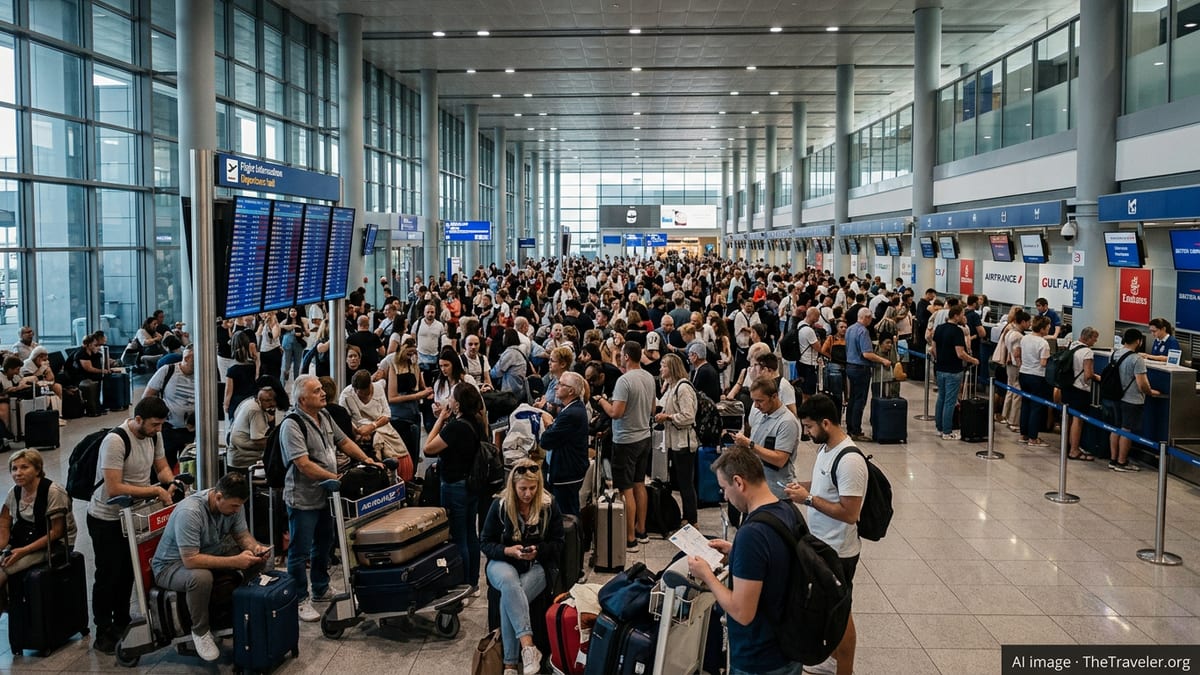
Recent weeks have seen Athens International Airport emerge as a notable delay hotspot in Europe, with disruption at the Greek hub increasingly affecting schedules across the continent. Industry data and travel rights analyses indicate that on several peak days in June more than 250 arrivals and departures at Athens experienced delays or cancellations, contributing to knock on effects for onward connections and regional networks.
According to aviation performance overviews, average delay minutes per flight at Athens have climbed as summer traffic ramps up, putting the airport among Europe’s more congested nodes by early season benchmarks. Reports indicate that much of the strain is linked to a sharp increase in flight frequency and tight scheduling, combined with limited flexibility in airspace management and staffing.
Travel advocacy groups report that passengers transiting through Athens on busy weekends have faced extended waits on the tarmac, long queues at departure gates and late night arrivals at regional destinations. The growing pattern of knock on disruption has drawn attention from European air traffic monitoring bodies, which have repeatedly highlighted the role of air traffic control capacity constraints in driving delays during the early 2026 summer period.
Technical checks and radar problems trigger acute disruption
Beyond structural congestion, a series of technical and safety related events has directly triggered large clusters of delays at Athens this year. In early June, mandatory inspections of precision landing and navigation systems led to significant schedule disruption, after checks on the airport’s approach and instrument landing systems were slotted into already busy operating days. Publicly available statements from airlines indicate that the late scheduling of these inspections limited the ability to adjust rosters and flight plans in advance.
Earlier in the year, Athens also experienced interruptions linked to failures in radar surveillance and communications systems serving the wider Athens Flight Information Region. Published reports describe periods during which aircraft movements were reduced or temporarily suspended while technical faults were investigated and rectified, leading to hours of delays and diversions at the capital’s main airport.
Industry commentary notes that while such inspections and repairs are required to maintain safety standards, their timing and the level of contingency planning can strongly influence how much disruption passengers ultimately face. At Athens, the concentration of checks and outages in a relatively short window, against a backdrop of rising summer demand, has intensified the sense of instability among travelers and airlines.
Regulators, air traffic controllers and airlines under pressure
The pattern of repeated disruption has increased pressure on all parts of Greece’s aviation system. Coverage in Greek and international media indicates that the Hellenic Civil Aviation Authority and related oversight bodies have convened urgent meetings with air traffic controllers, Athens International Airport management and major carriers to review recent incidents and capacity limits.
Airlines have publicly pointed to planning and communication gaps around inspections and system maintenance, arguing that late notice and limited coordination aggravated the impact on passengers. In parallel, air traffic controllers’ unions have highlighted persistent equipment issues and staffing constraints, warning that reliance on overtime and manual workarounds is not sustainable during a busy holiday season.
Observers note that these exchanges reflect broader European tensions over how to balance cost control, infrastructure investment and resilience in air navigation services. As one of the region’s fastest growing leisure gateways, Athens is seen as a test case for how quickly authorities can respond when a combination of technical vulnerabilities and heavy demand exposes weaknesses in the system.
Actions underway to reduce delays for summer travelers
In response to the recent disruption, publicly available information shows that Greek aviation bodies and Athens airport stakeholders are working on a package of near term measures aimed at stabilizing operations through the peak summer months. These efforts include revisiting traffic flow regulations during periods of technical work, refining slot allocation to smooth peak congestion and increasing real time coordination between the airport, air navigation services and airline operations centers.
Sector analyses suggest that additional staffing for critical air traffic control positions and technical support roles is being prioritized where possible, within the constraints of recruitment pipelines and training requirements. There is also a focus on accelerating the completion of outstanding system upgrades and maintenance tasks outside of the busiest travel windows, to reduce the risk of further unplanned outages.
For passengers, consumer organizations emphasize that greater transparency around expected delays, clearer rebooking options and consistent application of compensation rules under European air passenger legislation will be important in rebuilding confidence. Travel experts advise those flying through Athens in the coming weeks to allow generous connection times, monitor flight status closely and retain documentation in case disruption triggers eligibility for reimbursement.
Implications for Athens as a Mediterranean hub
The challenges at Athens arrive at a moment when Greece is seeking to consolidate its position as a year round destination and strengthen the capital’s role as a connecting hub between Western Europe, the Balkans and the Eastern Mediterranean. Pre pandemic growth in passenger numbers has largely returned, and recent financial reports from Athens International Airport point to robust air and non air revenues supported by strong tourism demand.
A prolonged period of high profile delays could undermine some of that momentum if travelers begin to favor alternative gateways in the region. Tourism industry observers note that perceptions of reliability are particularly important for long haul visitors combining Athens with island itineraries, as missed connections can disrupt tightly planned holiday schedules.
At the same time, analysts argue that the current turbulence may catalyze overdue investment and process reforms, from modernizing surveillance and communication systems to revising staffing models and contingency planning. If the actions now underway succeed in reducing delays through the crucial mid summer peak, Athens could emerge with a more resilient operational framework and renewed confidence from airlines and travelers alike.