


More news on this day
Passengers traveling through London Gatwick on Tuesday, July 7 are experiencing a generally busy but manageable day of operations, with early reports pointing to scattered delays and a limited number of flight cancellations amid peak summer demand and hot weather conditions across southeast England.
Get the latest news straight to your inbox!
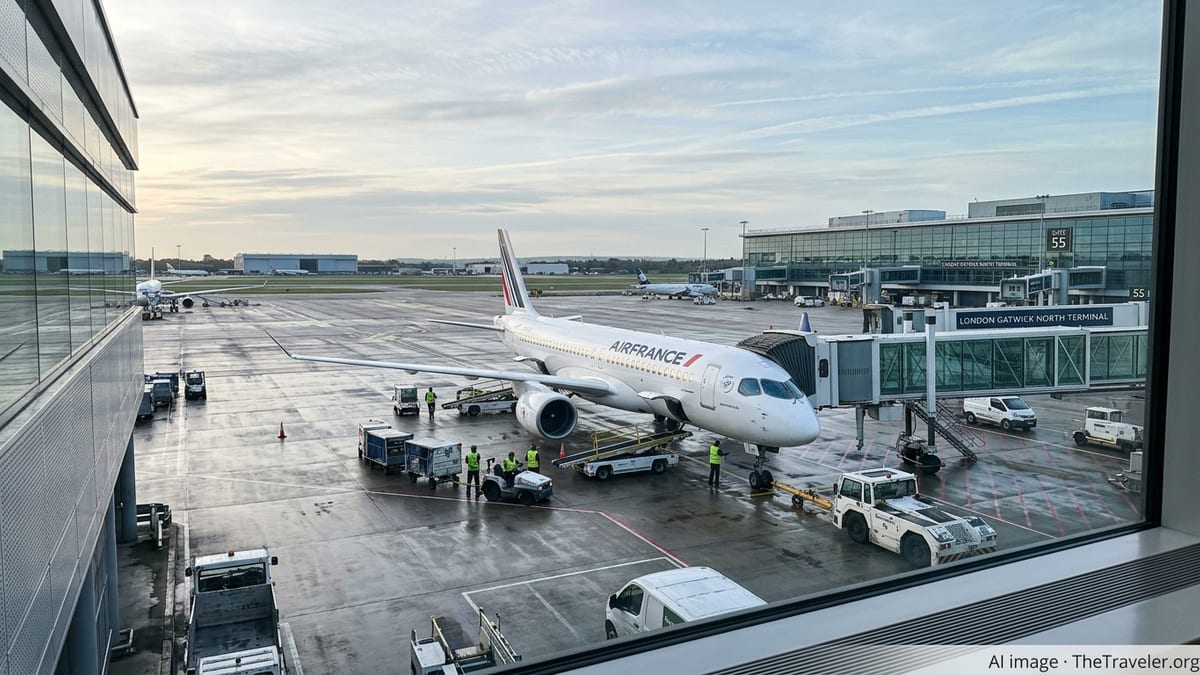
Overall picture: busy schedules and scattered disruption
Publicly available departure and arrival boards indicate that Gatwick is handling several hundred flights on July 7, with airlines operating close to peak summer capacity. One independent tracker that compiles schedule data reports just under 400 departures scheduled from the airport today, underscoring the scale of traffic moving through both the North and South terminals.
Within that busy program, the majority of flights are currently showing as scheduled or on time, but with a noticeable cluster of services running late in the early morning period. A smaller subset of flights has been cancelled outright, in line with wider UK aviation trends this year in which operational pressures, crew availability and airspace constraints have contributed to modest but recurring levels of disruption.
Most of today’s issues at Gatwick appear to be localized and flight specific rather than the result of a single major systems failure. Unlike previous high-profile episodes involving drone sightings or radar problems, there have been no publicly reported airport-wide shutdowns or extended ground stops so far on July 7.
Nonetheless, the combination of high passenger volumes, tight aircraft rotations and warm conditions means even relatively minor operational challenges can ripple through individual airlines’ schedules, particularly during the early morning and evening peaks.
Morning delays at Gatwick arrivals and departures
Live arrivals data for Gatwick show a mix of on-time and delayed services during the first wave of inbound flights before and after sunrise. Several long-haul and overnight services into the South Terminal have landed as planned, while others have arrived behind schedule, reflecting wider congestion patterns across European and Middle Eastern airspace in recent days.
Short-haul arrivals show a similar pattern. Flights from Mediterranean destinations such as Bodrum and Malaga, as well as services from hubs in the Gulf and East Asia, feature on the arrivals board with a blend of “en route,” “landed” and “delayed” statuses. One Wizz Air UK service from Medina, for example, is flagged as delayed into the South Terminal, with its expected arrival time pushed back by more than an hour compared with the original schedule.
On the departures side, airline schedule aggregators indicate that early-morning services from Gatwick to popular European destinations, including Amsterdam, Berlin and various Mediterranean resorts, are largely proceeding as planned. However, a number of flights have been reassigned slightly later departure times, with some low-cost carriers showing minor gate holds and rolling delays as aircraft and crews arrive late from previous sectors.
At this stage of the day, the disruption picture is dynamic and continues to evolve. Travellers with early flights are being advised through airline channels and digital displays to monitor their departure status closely and allow extra time at the airport in case of queuing and last-minute gate changes.
Cancellations remain limited but affect key leisure routes
While the overall number of cancellations at Gatwick on July 7 appears limited relative to the total schedule, even a small proportion of scrapped flights can affect a significant number of travellers during the peak holiday season. Leisure-focused routes to Spain, Greece and other southern European destinations are particularly sensitive, as many aircraft operate as part of tightly scheduled day-long rotations.
Recent operational data published by regulators and industry bodies show that Gatwick has seen a steady but controlled level of cancelled air transport movements this year, reflecting the ongoing balancing act between ambitious summer schedules and the realities of weather, staffing and airspace restrictions. Today’s cancellations appear consistent with those broader patterns rather than constituting an exceptional spike.
Passengers whose flights are cancelled are typically being offered rebooking onto later services or alternative routings via other UK or European airports, subject to availability. Consumer advice from travel organizations continues to stress the importance of checking booking details regularly on the day of travel, paying close attention to airline notifications and being prepared for the possibility of overnight stays if same-day re-accommodation is not possible.
For some charter and package-holiday passengers, a single cancelled flight can disrupt an entire trip, particularly when transfers and onward connections are bundled. As a result, travel companies are closely watching Gatwick’s performance and adjusting contingency plans as the day unfolds.
Heatwave and wider operational context
The disruption at Gatwick today is unfolding against a backdrop of unusually hot weather in southeast England. Forecasts for Tuesday point to temperatures in the low 30s Celsius in parts of the region, as the UK moves into what meteorologists describe as its third heatwave of the year. Prolonged heat can add strain to airport and airline operations, affecting everything from aircraft performance to ground handling and staff comfort.
There is currently no indication that the heat alone is driving large-scale cancellations at Gatwick, but it is one of several environmental and operational factors airports must manage during the height of summer. Recent weeks have also seen periods of heavy rain and thunderstorms elsewhere in the UK, which have disrupted flights at multiple airports and occasionally produced knock-on delays for aircraft positioning into London.
Industry dashboards and prior months’ statistics from airport and regulator reports underline how quickly small disruptions can accumulate at a hub such as Gatwick. Late arrivals near the end of the night period, constraints related to local noise rules and the limited runway capacity compared with the number of scheduled movements can leave airlines with little margin when unexpected delays occur.
Gatwick’s ongoing growth and infrastructure projects, including work linked to its long-term expansion plans, form another part of the broader context. Although today’s operations are focused on moving existing flights rather than introducing new capacity, the airport’s busy schedule reflects the strong demand that has underpinned those expansion proposals.
What travellers using Gatwick today should expect
For passengers flying from or into Gatwick on Tuesday, the practical impact of today’s disruption will vary widely. Many will experience a routine journey punctuated only by longer-than-usual queues at security or border control. Others may face one or more hours of delay, last-minute gate changes or the need to rebook entirely if their service is among those cancelled.
Travel guidance from airlines, consumer advocates and previous disruption episodes at UK airports converges on a few recurring themes. Passengers are encouraged to check their flight status repeatedly on the day of travel, to make sure contact details are up to date in their booking so that text or app alerts can be received quickly, and to arrive at the airport with additional time to navigate check-in, bag drop and security during peak times.
Those connecting onto onward flights or cruises are advised to build in generous buffers where possible, as even moderate delays on the first leg of a journey can complicate tight same-day connections. Travellers with flexible tickets or travel insurance that covers delay-related expenses may be better positioned to absorb schedule changes.
As the day progresses and more information emerges, the pattern of delays and cancellations at Gatwick may shift. For now, publicly available data suggest a familiar summer picture: a very busy airport, running a dense schedule with pockets of disruption that will matter a great deal to the passengers on the affected flights, even as most services continue to operate broadly as planned.