


More news on this day
A minor train derailment reported in Morgan County, Tennessee, is renewing scrutiny of rail operations near popular outdoor tourism areas only weeks after a separate crash in the same county released more than 100,000 gallons of alcohol products and fueled a prolonged fire near the Emory River.
Get the latest news straight to your inbox!
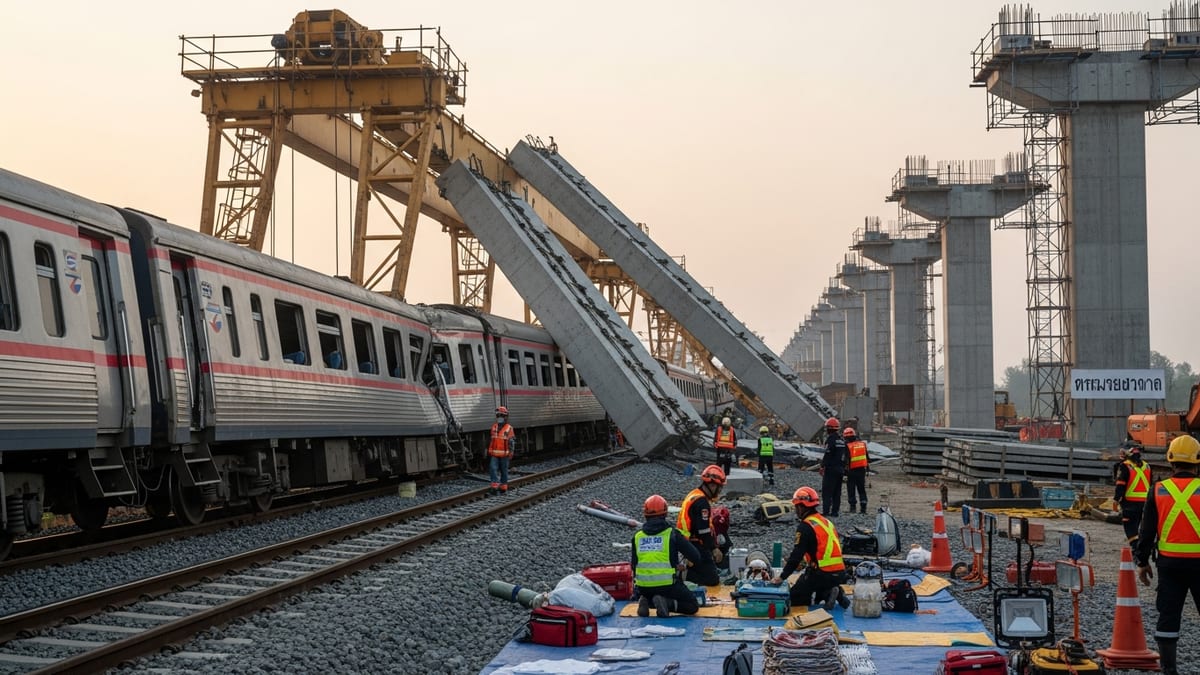
New derailment reported along busy rail corridor
Recent coverage from regional outlets indicates that the latest incident occurred in early July along a Norfolk Southern freight route in Morgan County, a sparsely populated part of eastern Tennessee intersected by rail lines that also serve as gateways to nearby public lands. Reports describe the new derailment as minor, with cars leaving the track but remaining largely intact.
According to publicly available information, no injuries were reported and no hazardous materials release has been identified in connection with the new event. The affected train was described as a mixed freight consist, and early accounts suggest that the damage was confined to a short section of track and a small number of railcars.
Rail traffic through the area experienced temporary disruption while crews worked to re-rail equipment and inspect infrastructure, but service was reported to be resuming on a limited basis within hours. Cleanup and inspection activities are expected to continue as investigators review conditions along the line.
The incident drew regional attention less for its immediate impact and more because of its timing and location, coming so soon after a much larger rail accident in the same county that captured national interest.
Major June spill released over 100,000 gallons of alcohols
In mid-June, a Norfolk Southern freight train derailed near Lancing in Morgan County, triggering evacuations and an extended emergency response after multiple tank cars carrying flammable liquids were breached. A preliminary report published by the National Transportation Safety Board describes how a portion of the train left the track along a remote stretch near the Obed Wild and Scenic River, igniting a fire that burned for hours.
According to that preliminary account and subsequent regional news coverage, at least three tank cars carrying alcohol products were compromised in the June incident, releasing an estimated 107,000 gallons of liquids classified as alcohols and ethanol. The spill led to visible flames and dense smoke, prompting temporary evacuations in nearby communities and road closures in the surrounding area.
Monitoring data summarized in public updates shows that released alcohols migrated toward the Emory River, a key waterway for both local residents and visiting paddlers. Environmental agencies reported detecting alcohols in river samples in the days after the derailment while also noting that some deeper groundwater wells in the same watershed did not show contamination.
The scale of the June spill, combined with the resulting fire and evacuations, positioned Morgan County at the center of an ongoing national conversation about freight train safety, hazardous materials transport and oversight of routes that skirt rivers, trails and other outdoor recreation sites.
Tourism corridor faces renewed attention
Morgan County serves as a jumping-off point for visitors heading to Obed Wild and Scenic River and other natural attractions in eastern Tennessee, and the back-to-back rail incidents have raised questions about how freight operations intersect with tourism and recreation. Coverage in regional outlets and industry publications notes that the derailed trains were operating near corridors used by hikers, climbers, paddlers and campers.
Following the June derailment, state environmental officials issued a temporary contact advisory for portions of the Emory River, asking the public to avoid specific stretches of water while ethanol levels were evaluated. That advisory affected a river system often marketed for whitewater runs and scenic paddling, underscoring the potential for transportation accidents to reshape visitor itineraries even when impacts prove temporary.
Although no similar advisory has been reported in connection with the more recent minor derailment, the proximity of rail lines to waterways and trailheads continues to draw concern from local businesses and travelers tracking conditions before trips. Publicly available guidance encourages visitors to check the latest local advisories and park updates when planning outings in regions where cleanups and environmental monitoring are underway.
For destinations that rely heavily on outdoor tourism, even short-lived disruptions can influence seasonal travel patterns. Travel planners watching Morgan County note that perceptions of risk, however brief, can shift interest to alternative rivers or climbing areas elsewhere in the region.
Investigations and rail safety debates continue
The National Transportation Safety Board’s preliminary report on the June alcohol spill marked an early step in what is typically a lengthy process to determine causes and contributing factors in major derailments. Rail labor organizations and safety-focused groups have highlighted the Morgan County case as part of broader debates over train length, track inspection practices and the movement of hazardous commodities across rural terrain.
Industry-focused reporting indicates that specialized safety task forces are assisting federal investigators in reviewing train handling, equipment performance and track conditions tied to the June crash. While those efforts remain in progress, the subsequent minor derailment in the same county has prompted fresh calls in commentary and public forums for closer scrutiny of the corridor and its maintenance history.
Nationally, transportation data show that derailments involving hazardous materials remain a small share of overall freight movements, yet incidents like those in Morgan County tend to resonate widely because of their potential environmental footprint. The contrast between the June alcohol spill and the latest, nonleaking derailment illustrates how varied the consequences of rail accidents can be, even along the same route.
For travelers and communities along heavily used freight lines, the developments in Morgan County have become another reference point in ongoing discussions about how to balance the economic role of railroads with expectations for safety, transparency and environmental stewardship.
What travelers should watch in the months ahead
In the near term, publicly available information suggests that rail operations through Morgan County are functioning with added attention to inspection and cleanup activities. No long-term closures affecting visitor access to regional highways or park entrances have been reported in connection with the latest minor derailment.
However, the June spill has left a legacy of continued environmental monitoring along portions of the Emory River. State agencies have signaled that testing for residual alcohols and related indicators will continue, and any changes to contact advisories or recreational guidance are likely to be communicated through standard public information channels.
Travel observers note that the outcomes of the ongoing federal investigation may influence future infrastructure investments and operating practices along the corridor, potentially affecting everything from train speeds to the types of commodities prioritized on certain routes. For visitors, those decisions could shape long-term perceptions of safety in gateway communities that depend on both rail-served industries and nature-based tourism.
As Morgan County navigates the aftermath of one high-profile hazardous spill and a subsequent minor derailment, the region remains under a brighter spotlight than usual for a rural rail corridor. For now, the message from publicly available updates is that conditions are stable, yet the experience has underscored how quickly a remote stretch of track can become central to national conversations about travel, safety and the environment.