


More news on this day
Severe weather and airspace restrictions have caused hundreds of delays and cancellations at Heathrow and Gatwick in recent weeks, pushing passenger rights back into the spotlight and prompting fresh guidance from travel commentator Simon Calder on what stranded travellers can lawfully expect from airlines.
Get the latest news straight to your inbox!
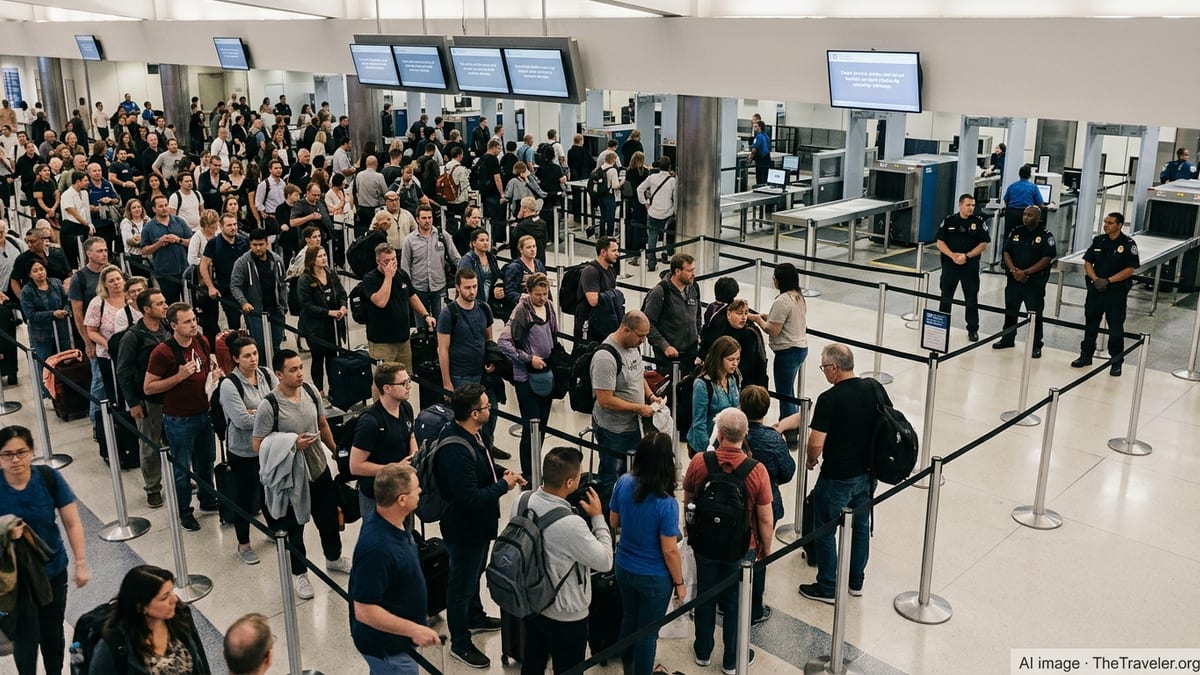
Storm disruption leaves London passengers seeking clarity
Thunderstorms and unstable summer weather systems have repeatedly disrupted operations at Heathrow and Gatwick during June, with reports indicating hundreds of flights delayed or cancelled in short bursts as air traffic controllers temporarily reduced capacity for safety reasons. Live tracking data cited by broadcasters and online flight boards has shown long queues, missed connections and significant evening knock-on disruption when aircraft and crews were left out of position.
Coverage of the latest storms describes passengers waiting for hours on grounded aircraft, only to be told flights would not depart, while others landed in London to find ongoing services cancelled and overnight accommodation difficult to secure. Travel industry reports suggest that both hub and point to point operations have been affected, with Heathrow’s long haul connectivity and Gatwick’s dense short haul schedules amplifying the impact of every delay.
In broadcast and newspaper analysis, Simon Calder has used the London disruption to underline the difference between inconvenience and enforceable rights. He has noted that while airlines cannot control thunderstorms or airspace restrictions, they remain bound by UK passenger rights rules that were carried over from the European Union framework, setting out specific obligations when flights are cancelled or heavily delayed.
Those obligations sit alongside commercial policies such as rebooking waivers or goodwill vouchers, which some carriers introduce during periods of widespread disruption. Calder has pointed out that passengers should distinguish between what is guaranteed in law and what is offered as a discretionary gesture so that they can make informed decisions at the airport.
Refunds and rerouting under UK261 rules
Calder’s explanations focus first on the core decision that confronts most disrupted travellers at Heathrow and Gatwick: whether to accept a new itinerary or to abandon the trip. Under the UK version of Regulation 261, passengers whose flights are cancelled are entitled to choose between a full refund of the unused ticket or rerouting to their final destination at the earliest opportunity or at a later date of their choosing, subject to seat availability.
According to consumer guidance regularly referenced by Calder, this choice applies regardless of the reason for the cancellation, including bad weather or air traffic control restrictions. Where a passenger decides to travel, the airline is expected to secure a replacement route within a reasonable time frame, which can include placing the traveller on a competing carrier if that is the only practical way to complete the journey.
For those who opt for a refund, UK rules do not oblige the airline to cover onward costs such as unused hotel bookings or car hire, making travel insurance an important backstop. Calder has stressed that a refund returns the passenger to their starting point in financial terms but does not compensate for lost holidays or missed events, which often fall to insurance or to separate dispute channels with tour operators.
Rerouted passengers also retain certain rights if the replacement itinerary causes a lengthy delay in arrival. If the substitute flight leaves the following day, for example, passengers may still be entitled to assistance and in some cases further compensation depending on the cause of the disruption and the length of the delay to the final destination.
Right to care: meals, hotels and transfers
Another theme of Calder’s guidance is the distinction between the right to care and the right to cash compensation. UK rules require airlines to provide practical support during long delays or overnight disruptions, even when the underlying cause is outside their control. This typically includes meals and refreshments after a specified waiting period, access to communication such as phone calls or emails, and hotel accommodation with transfers if an overnight stay becomes necessary.
Reports from recent Heathrow and Gatwick disruption suggest that this is where confusion is most common. Some passengers have described being advised that storms or airspace issues remove the airline’s responsibility for hotels, when in fact the right to care normally continues to apply for UK and EU regulated flights regardless of extraordinary circumstances. Calder has encouraged travellers to keep receipts if they are told to arrange their own accommodation, as these costs can often be reclaimed later.
Transport between airports has also become a particular point of contention around London. When flights are diverted between Gatwick and Heathrow or when rerouting strands passengers at the wrong airport, guidance cited by Calder indicates that airlines should normally cover reasonable ground transport to the ticketed point of arrival. Travellers who pay for taxis or rideshares out of necessity are therefore advised to retain detailed receipts and to submit a written claim promptly.
For those who book package holidays rather than flight only tickets, additional layers of protection may apply through tour operator responsibilities and financial protection schemes. Calder has pointed out that package organisers are often responsible for arranging alternative accommodation and transport if part of the itinerary becomes impossible to deliver, offering a more joined up response than passengers may receive when dealing solely with an airline.
Compensation and what counts as extraordinary
Perhaps the most complex aspect of passenger rights at Heathrow and Gatwick concerns cash compensation. Under UK law mirroring the former EU261 rules, compensation of up to several hundred pounds per person can be payable when flights are cancelled at short notice or arrive at their destination more than three hours late, provided the disruption is not caused by so called extraordinary circumstances.
Calder’s commentary has consistently highlighted that bad weather and certain air traffic control restrictions are usually treated as extraordinary, meaning compensation is unlikely even though refunds and care still apply. By contrast, technical faults that are part of the normal running of an airline, crew shortages and some operational decisions not imposed by external authorities are generally considered within the carrier’s control and can give rise to compensation.
Recent legal and regulatory discussions on air passenger rights in Europe have sought to clarify these boundaries, tightening definitions of cancellation and setting time limits for bringing claims. Although the United Kingdom is no longer part of the European Union, analysts note that UK261 remains closely aligned with European standards, and Calder has suggested that London passengers should continue to think in terms of the familiar three pillars of rights: refund or rerouting, care and, where eligible, compensation.
Because determining eligibility can be complex, consumer organisations recommend that passengers check both the reason for cancellation as stated by the airline and independent information about wider disruption on the day of travel. Calder has pointed travellers towards using this evidence when challenging rejected claims, especially in cases where other flights operated normally under similar conditions.
Practical steps for travellers using Heathrow and Gatwick
Alongside explanations of legal rights, Calder has used the recent storms to underline some practical steps that can help passengers navigate disruption. He recommends travelling with a fully charged phone and key airline apps installed, as rebooking options and gate changes are often communicated digitally long before they appear on airport screens.
He also notes that passengers should keep boarding passes, booking confirmations and proof of expenses in a single digital folder to support later claims. Screenshots of delay announcements and notifications can be particularly useful where the stated reason for disruption later changes, something that has been reported at both Heathrow and Gatwick during busy periods.
For those with tightly timed connections, especially long haul itineraries routed through London, Calder suggests considering longer self connection buffers during the peak summer season. While this does not alter legal rights, it can reduce the risk of missed onward flights when thunderstorms or air traffic restrictions suddenly reduce capacity.
As the busiest weeks of the summer approach, the disruption at Heathrow and Gatwick has reinforced the message that knowing one’s rights is as important as monitoring departure boards. Simon Calder’s widely shared guidance emphasises that while airlines cannot control the weather, they can and must meet clear obligations to look after passengers when flights do not go to plan.