


More news on this day
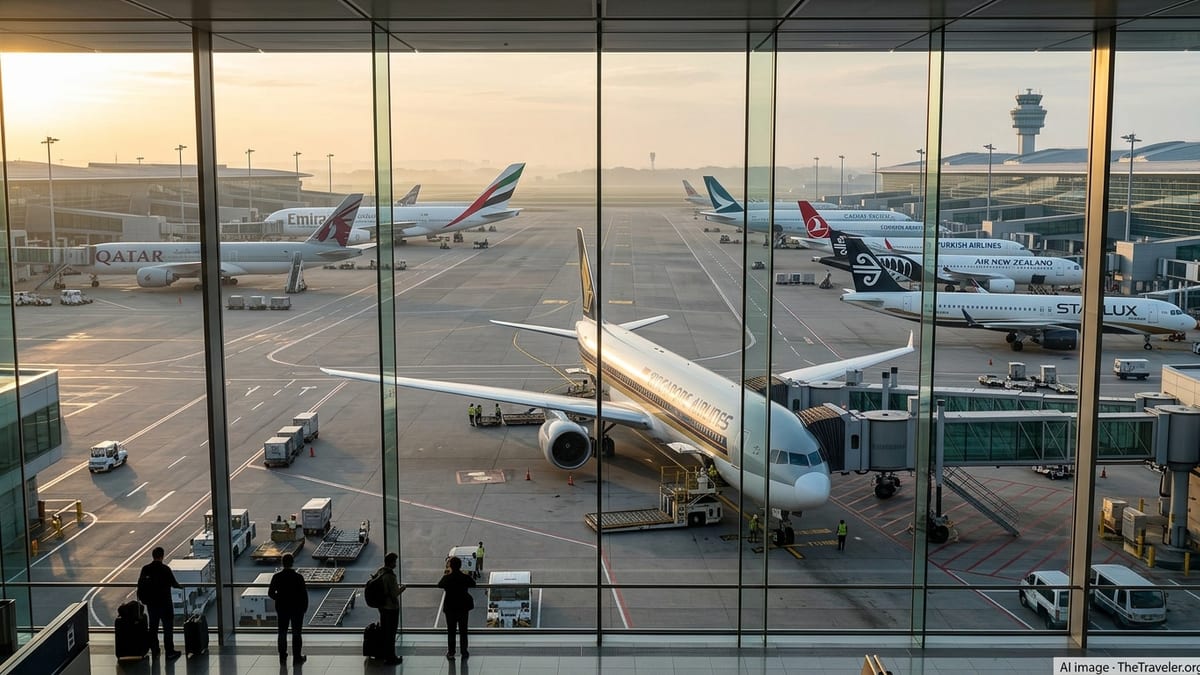
Long-haul travel between Singapore and the United States is set to become more seamless, as a new interline partnership between Singapore Airlines and Southwest Airlines links Singapore’s flagship carrier with one of America’s largest domestic networks on single-ticket itineraries.
Get the latest news straight to your inbox!
New Interline Agreement Links Global and Domestic Networks
According to publicly available information from both carriers, Singapore Airlines and Southwest Airlines have launched an interline partnership that allows passengers to book journeys spanning both networks on a single ticket. The announcement was made in early June during the International Air Transport Association’s annual gathering in Brazil, highlighting the growing role of partnerships in connecting long-haul and domestic operations.
Industry coverage notes that the agreement is structured as an interline rather than a full codeshare or alliance tie-up. Each airline continues to operate and market flights under its own designator code, but itineraries can now combine a Singapore Airlines long-haul sector with one or more Southwest domestic segments, all appearing on one reservation and one electronic ticket.
The arrangement is part of Southwest’s expanding portfolio of international partners and builds on Singapore Airlines’ strategy of deepening access to North American markets without relying solely on alliance-based partnerships. Analysts describe the deal as a pragmatic way to stitch together complementary networks while preserving the carriers’ distinct business models.
Smoother Singapore–US Journeys via West Coast Gateways
Publicly available route information indicates that the partnership initially centers on key Singapore Airlines gateways on the United States West Coast, including major hubs where Southwest maintains a significant presence. From these entry points, travelers arriving from Singapore can connect onward to Southwest-operated flights that serve a wide range of domestic destinations.
Travel industry reporting suggests that the combined network now opens access to nearly 120 United States cities in a single booking, significantly extending Singapore Airlines’ reach beyond its existing non-stop and one-stop services to the country. Instead of piecing together separate tickets and self-connecting between airlines, passengers can select end-to-end journeys that include both carriers from the outset.
For travelers starting in Singapore, this structure is designed to simplify long-haul itineraries that previously required manual coordination or the use of third-party booking platforms. With one reservation record and a single ticket, passengers can plan trips from Singapore to a wider range of American cities, including smaller regional airports that are not served directly by long-haul operators.
Single-Ticket Convenience, Baggage Handling and Protection
A central benefit of the new interline partnership is the ability to travel on a single ticket, which can streamline several practical aspects of long-haul journeys. When flights are issued under one itinerary, standard interline practices typically allow checked baggage to be tagged through to the final destination, reducing the need to collect and recheck bags during transfers between the two carriers.
Travel industry analyses also highlight that single-ticket itineraries can offer stronger disruption protection than self-connected journeys. In the event of delays or missed connections, both segments on an interline ticket are handled within the same booking, which can provide more structured options for rebooking compared with separate, unrelated tickets.
Reports indicate that fares sold under interline agreements may not always be the absolute cheapest compared with DIY combinations, as pricing reflects a coordinated structure across both airlines. However, observers note that many long-haul travelers accept a modest fare premium in exchange for through-checking of baggage, unified itineraries, and clearer support if travel plans are disrupted.
How and Where Travelers Can Book the New Itineraries
Coverage of the rollout explains that customers can access the combined itineraries through Singapore Airlines’ sales channels and through participating travel agents and online travel agencies. Tickets are issued under Singapore Airlines’ code, with Southwest sectors appearing as connecting legs within the same booking rather than as standalone segments sold by Southwest.
This reflects the interline structure, which focuses on back-end coordination for ticketing, baggage and schedule compatibility rather than front-end co-marketing of flights under shared codes. Southwest continues to sell and manage its own domestic services separately, while Singapore Airlines packages Southwest legs as part of longer-haul journeys between Singapore and a variety of American endpoints.
Travel management companies and corporate travel buyers are expected to play a role in bringing the new options to business travelers, especially on secondary routes where direct long-haul access is limited. For leisure travelers, the partnership offers another way to book complex itineraries in a single transaction, avoiding multiple separate purchases and check-in processes.
Strategic Implications for Long-Haul and Domestic Competition
Aviation analysts view the Singapore Airlines–Southwest collaboration as a notable development in how long-haul carriers link into the United States domestic market. Southwest operates one of the largest domestic networks in the country, and pairing that coverage with Singapore Airlines’ long-haul services from Asia positions the two carriers to compete more effectively for traffic beyond major coastal gateways.
The agreement also illustrates Southwest’s broader strategy of using interline partnerships to extend its footprint into international markets without joining a global alliance or operating long-haul aircraft of its own. Recent years have seen Southwest add several overseas partners, and the Singapore Airlines deal strengthens its presence in the Asia–Pacific travel corridor.
For Singapore Airlines, the partnership provides an additional avenue into United States secondary and regional markets alongside existing collaborations through global alliances and other bilateral deals. Industry commentary suggests that such flexibility is increasingly valuable as carriers seek to balance network breadth, cost control and resilience in a competitive and evolving long-haul travel landscape.