


More news on this day
Air travelers across the Middle East are facing fresh disruption as published flight data and airport information show at least 20 flights cancelled and more than 180 delayed in and out of Doha, Dubai, Riyadh and Erbil, affecting services operated by Qatar Airways, FlyDubai, Saudia and several partner carriers.
Get the latest news straight to your inbox!
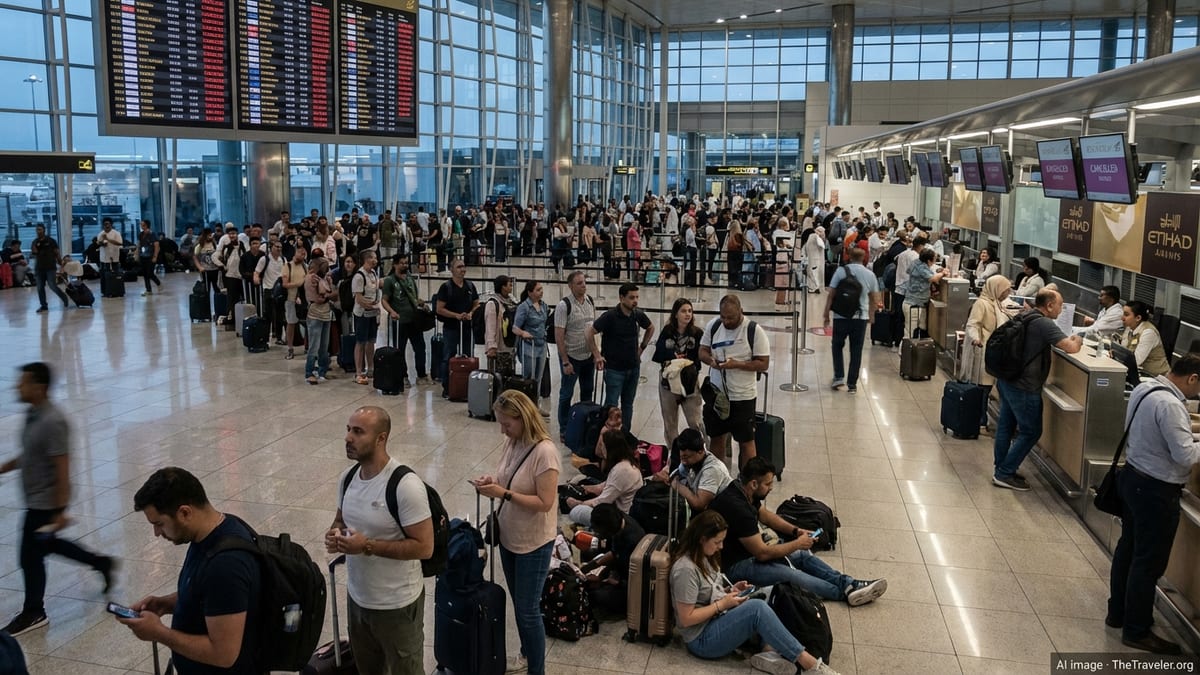
New Wave of Disruptions at Key Gulf and Iraqi Hubs
The latest disruptions follow months of on-and-off schedule changes across the region, with airspace restrictions and capacity adjustments continuing to filter through airline timetables. Operational notices, travel alerts and third-party schedule trackers indicate that Qatar, the United Arab Emirates, Saudi Arabia and Iraq have all experienced another spike in irregular operations, concentrated at their main gateways.
Doha’s Hamad International Airport, Dubai International Airport, Riyadh’s King Khalid International Airport and Erbil International Airport have all reported a combination of outright cancellations and extended delays on Tuesday, particularly on short- and medium-haul services connecting the Gulf to Iraq and other Middle Eastern destinations. The impact has been most visible during peak bank times when multiple departures and arrivals are closely bunched.
Publicly available information points to at least 20 cancellations across these hubs within a single operational day, alongside approximately 185 delays ranging from minor schedule slips of under an hour to hold-ups of several hours for some departures and inbound flights. The numbers reflect only flights listed on airport and flight-tracking boards and may not capture all equipment swaps or quiet schedule adjustments made earlier in booking systems.
While long-haul operations have largely continued, some have been subject to retiming or extended connection windows, compounding knock-on delays for passengers connecting through the regional hubs.
Qatar Airways Adjusts Network Amid Ongoing Volatility
Qatar Airways, based in Doha, has been rebuilding its regional and global network with a published plan to operate to more than 150 destinations this summer. At the same time, its travel alerts and operational updates continue to warn that flight schedules remain subject to sudden change due to regulatory, safety and broader regional conditions.
Recent timetable information shows Qatar Airways reinstating and increasing services on several Middle Eastern routes, including to Baghdad, Basra and Erbil, even as some flights to and from Iraq and neighboring markets face day-of-operation cancellations or delays. Industry commentary notes that passengers traveling through Doha toward conflict-adjacent areas have been particularly exposed to last-minute changes.
Data from flight-tracking platforms for the busy Doha to Dubai corridor show that most flights between the two cities are still operating, with high on-time performance overall, but individual services continue to be pushed back or adjusted. The mixture of expansion in some markets and sudden cancellations on others has led to a patchwork picture in which schedules appear robust on paper yet remain fluid in practice.
Qatar Airways has encouraged travelers via its public channels to monitor their booking status and to check for updates close to departure, as operational realities may diverge from initial itineraries issued months in advance.
FlyDubai, Saudia and Partner Airlines Feel the Strain
At Dubai International Airport, carrier FlyDubai has faced recurring disruption over recent months tied to regional security concerns and shifting airspace corridors. Historical reports described temporary closures of airspace over parts of the Gulf earlier this year, which forced Dubai’s main hub to operate with a reduced schedule and a backlog of delayed flights. Although overall throughput has improved, peaks of delayed departures continue to surface.
Saudia, the Saudi flag carrier, has also been navigating a challenging operating environment. Schedule data for Saudi routes, including flights between Qatar and Saudi Arabia and services into Riyadh, highlight frequent timetable revisions and occasional cancellations, particularly on connections that intersect or overfly sensitive areas. Travelers report being rerouted via alternative Saudi gateways such as Jeddah when direct options into Riyadh or other cities are disrupted.
Other partner and codeshare airlines serving Doha, Dubai, Riyadh and Erbil are also caught up in the irregular operations. When a Qatar Airways flight into Iraq or the Gulf is cancelled or retimed, affected passengers may be shifted onto Saudia, FlyDubai or other regional carriers if seats are available, adding pressure to already busy services and contributing to the overall tally of late departures.
Airline schedule changes issued in recent weeks show that carriers are trying to restore capacity for the peak summer travel period, but the latest wave of cancellations underlines how quickly conditions can shift for operators across the Middle East.
Erbil and Iraqi Routes Continue to See Vulnerabilities
Erbil International Airport in the Kurdistan Region of Iraq has emerged as one of the more vulnerable points in the network, sitting close to areas where regional tensions periodically affect airspace usage. Published flight schedules from Doha and Dubai to Erbil show resumed services and increasing frequencies for June, yet monitoring tools and traveler accounts indicate that some of these flights have been cancelled or heavily delayed on specific days.
Routes linking Doha and other Gulf hubs to Iraqi cities such as Baghdad, Basra and Erbil have been particularly prone to rapid rescheduling. In some cases, services that had been reintroduced only weeks earlier have faced temporary suspensions or day-specific cancellations when security assessments change or when neighboring airspaces are restricted at short notice.
These vulnerabilities create additional uncertainty for passengers planning travel to or from Iraq, especially those relying on tight connections in Doha or Dubai. Missed links can result in lengthy rebookings, overnight stays or rerouting via alternative airports if capacity allows.
Airline advisories reviewed in recent days continue to urge travelers on Iraqi routes to build extra time into their journeys and to remain flexible regarding routings, as operational decisions may be revisited closer to departure based on updated risk analyses.
Passengers Face Missed Connections and Longer Journeys
The combined effect of cancellations and delays across Doha, Dubai, Riyadh and Erbil is being felt most acutely by connecting passengers, who rely on the high-frequency banked structures of Gulf hubs to reach long-haul destinations in Europe, Asia, Africa and the Americas. When short-haul feeders into these hubs run late or are cancelled, entire itineraries can unravel.
Recent traveler reports on public forums describe multiple instances of flights between Doha and Dubai being cancelled or retimed several times, forcing passengers to accept alternative routings via Riyadh or other cities. Others recount last-minute changes that turned simple one-stop journeys into multi-leg itineraries operated by different carriers, often with extended layovers.
Airlines across the region have been offering rebooking options and, in some cases, hotel accommodation or alternative transport, but capacity constraints on popular routes mean that same-day solutions are not always possible. This is especially true when several cancellations cluster around the same time, concentrating demand onto a limited number of remaining services.
Travel specialists recommend that passengers transiting through the affected hubs closely monitor flight status through airline apps and airport boards, allow generous connection times wherever possible, and consider travel insurance that covers disruption in volatile regions. With flight schedules still in flux, flexibility has become a critical asset for anyone flying through the Middle East in the coming weeks.