


More news on this day
Thousands of air travelers were left scrambling for last-minute options across the United States today as more than 4,200 flights were delayed and over 100 were canceled, disrupting operations for United, American, Delta, Republic and several other carriers at major hubs from Puerto Rico and New York to California, Las Vegas, Atlanta and Minneapolis.
Get the latest news straight to your inbox!
Widespread Operational Turbulence Across Major Hubs
Publicly available tracking data shows that 4,259 flights within, into or out of the United States encountered delays today, while 125 were canceled outright. The disruption rippled across multiple time zones, creating bottlenecks at check-in, security and gate areas as aircraft and crews fell out of position.
Among the hardest-hit locations were major coastal and inland hubs, including airports in Puerto Rico, New York, Las Vegas, Atlanta, Minneapolis and multiple cities in California. These airports serve as critical connective points for domestic and international networks, so localized problems quickly cascaded into missed connections and extended layovers for passengers far from the original source of delay.
United Airlines, American Airlines, Delta Air Lines and regional operator Republic Airways were among the carriers most visibly affected, alongside a mix of low-cost and regional airlines. While the majority of flights ultimately operated, the cumulative impact of thousands of late departures and arrivals left many travelers stranded overnight or forced into improvised re-routing across several days.
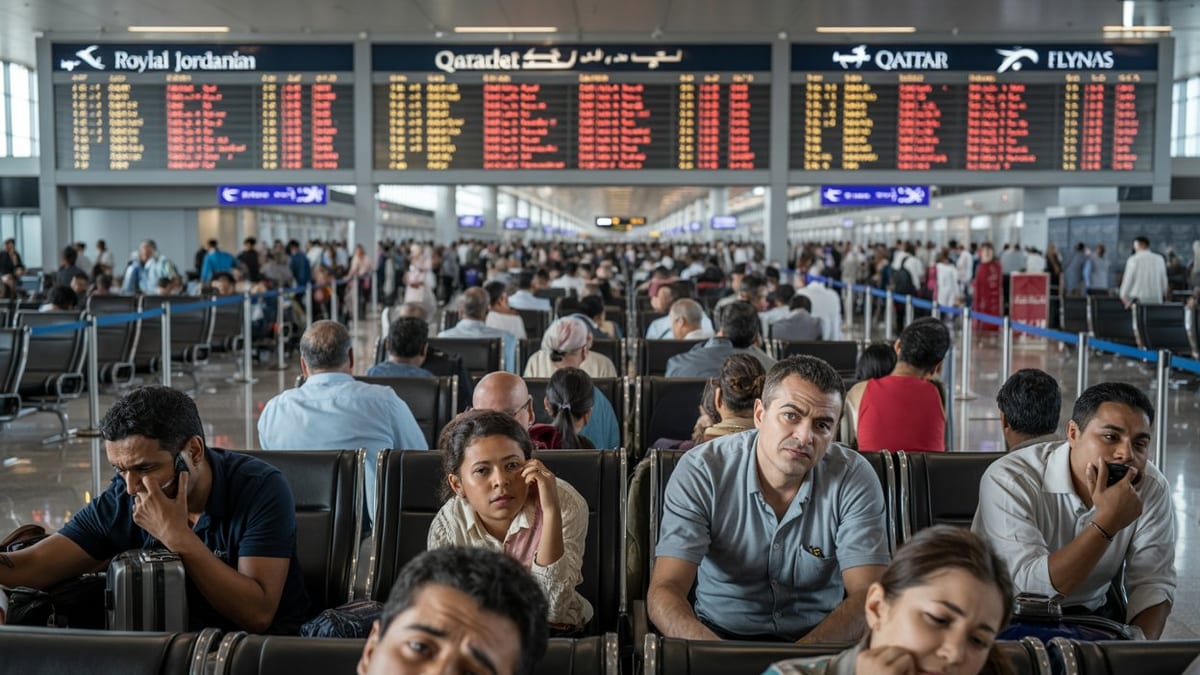
For passengers, the statistics translated into long hours in terminals, crowded customer service lines and rolling gate changes that made it difficult to predict when, or even if, their flights would depart.
Weather, Congestion And Knock-On Effects
Published coverage and live aviation dashboards indicate that a mix of weather-related constraints and airspace congestion contributed to today’s operational stress. Intermittent storms and low visibility in parts of the Northeast and Upper Midwest, combined with localized wind and ground-delay programs at several busy hubs, reduced capacity at key airports and forced airlines to slow arrivals and departures.
When airports such as New York’s major fields, Atlanta, Minneapolis and Las Vegas throttle traffic, the resulting backlog often extends to secondary airports that depend on those hubs for connecting flows. Flights departing from or bound for Puerto Rico and West Coast cities, including several in California, experienced rolling delays as crews and aircraft became stuck out of place.
Even where skies remained relatively clear, air traffic management constraints and crowded airspace limited the ability of airlines to recover quickly. Once early-morning and midday banks were disrupted, later flights often faced slot limitations, compounding delays into the evening hours and stranding connecting passengers overnight.
Industry data and past disruption patterns show that such days can have a lingering effect, with equipment and crews continuing to run behind schedule for 24 to 48 hours after the initial shock, particularly on tightly timed short-haul and regional routes.
Impact On United, American, Delta, Republic And Others
According to flight-tracking tallies and airline status pages, the bulk of today’s delays were concentrated among the country’s largest network carriers and their regional partners. United Airlines, American Airlines and Delta Air Lines each operate complex hub-and-spoke systems through airports such as Newark, Chicago, Dallas–Fort Worth, Atlanta, Minneapolis and Los Angeles, which are highly sensitive to any reduction in runway or airspace capacity.
Republic Airways and other regional operators, which fly many shorter segments under the brands of the larger airlines, faced particular challenges. Because these carriers operate smaller aircraft on high-frequency schedules, a disruption early in the day can quickly propagate across multiple subsequent legs, multiplying the number of affected passengers even when relatively few flights are canceled outright.
Low-cost and ultra-low-cost airlines, including those serving leisure-heavy routes to Las Vegas, Puerto Rico and California, also experienced scattered disruptions according to publicly available tracking boards. Travelers on point-to-point routes often have fewer alternative options when flights are canceled, increasing the risk of extended delays, overnight stays or complete trip cancellations.
As airlines worked through backlogs, many passengers reported multiple schedule changes, last-minute gate swaps and rebookings on unfamiliar routing through secondary hubs, turning routine domestic trips into complex, multi-stop journeys.
Travelers Face Long Lines, Missed Connections And Extra Costs
For travelers on the ground, today’s numbers manifested as overcrowded terminals, long queues at customer service desks and uncertainty about when itineraries might stabilize. In hub airports such as Atlanta, Minneapolis, New York and Las Vegas, departure boards displayed waves of delayed flights across numerous carriers and destinations, with estimated departure times frequently shifting forward in small increments.
Passengers connecting through these hubs, including many traveling from or to Puerto Rico and cities across California, were at heightened risk of missed connections. Once an initial flight departed late, downstream segments often became unreachable, forcing travelers to be rebooked on later flights or alternate routings, sometimes extending travel days by many hours.
Additional costs also mounted. Public reports and consumer advocacy guidance indicate that travelers frequently turned to same-day hotel stays, airport meals and on-the-spot purchases of replacement tickets when original itineraries fell apart. While some airlines offer meal vouchers or lodging in specific circumstances, U.S. regulations provide limited guaranteed compensation for delays, leaving many costs to be absorbed by passengers or travel insurance policies.
Families and business travelers alike faced difficult choices about whether to wait for delayed flights, attempt stand-by on earlier departures, or abandon trips entirely when it became clear that key events, meetings or cruises would be missed.
What Passengers Can Do After A Day Of Disruption
In the wake of a day marked by 4,259 delayed and 125 canceled flights, consumer advocates recommend that travelers document every schedule change, keep boarding passes and receipts, and review each airline’s published customer service plan. These plans, which are available on carrier websites, outline circumstances under which airlines may provide meal vouchers, hotel accommodations or rebooking on partner airlines.
Publicly available guidance from the U.S. Department of Transportation also encourages passengers to submit complaints if they believe carriers failed to meet their stated commitments. Such filings can be made after travel is complete and may support future enforcement actions or policy changes that affect how airlines handle widespread disruption events.
Experts further suggest that travelers caught in cascading delays consider contacting airlines through multiple channels simultaneously, including mobile apps and call centers, while monitoring airport departure boards for earlier options. Same-day changes and re-routing can sometimes be arranged at no additional fare when delays are extensive, although availability is often limited on peak travel days.
With major hubs from Puerto Rico and New York to Las Vegas, Atlanta, Minneapolis and California all impacted today, industry observers note that further knock-on effects are possible in the coming days. Travelers scheduled to fly soon are being advised to check flight status frequently, allow extra time at the airport and prepare backup plans in case the system remains under strain.