


More news on this day
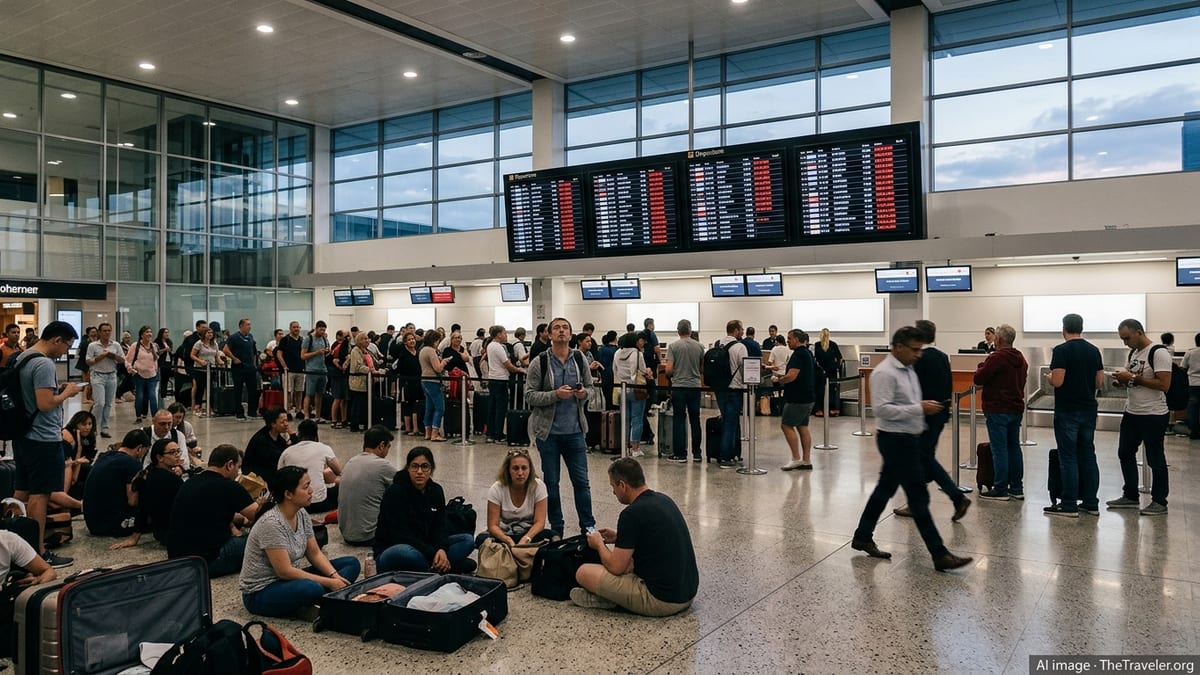
Holidaymakers flying between the UK and Europe this summer are being urged to brace for airport queues that could stretch to six hours, as new border technology, rising passenger numbers and recent scenes of disruption fuel warnings of severe delays at passport control.
Get the latest news straight to your inbox!
New EU border system under scrutiny
The primary focus of the latest warning is the European Union’s new Entry/Exit System (EES), which became fully operational at Schengen external borders earlier this spring. The scheme replaces manual passport stamping for most non-EU visitors with biometric registration, capturing fingerprints and facial images at the point of entry.
Industry briefings and travel trade coverage indicate that the change has significantly lengthened the time needed to process each non-EU passenger, including British travellers heading for popular holiday destinations in Spain, France, Italy and Portugal. Where a manual stamp could be applied in seconds, first-time EES registration can take several minutes per person, especially if technical issues arise or passengers need extra guidance at kiosks.
Reports from airline and airport groups across Europe suggest that the system has yet to bed in smoothly at many locations. Some hubs have experienced intermittent technical faults with biometric kiosks, while others have struggled to staff enough border control booths to cope with peak holiday traffic. As a result, queues at passport control have already stretched to multiple hours during busy weekends this spring, even before the main summer getaway begins.
Travel-industry analysis notes that while not every airport is seeing extreme disruption, the early pattern points to a “high-risk” summer in which localised problems could quickly escalate into very long waits at key leisure gateways when flight banks arrive together.
Six-hour queues flagged as realistic worst case
The headline warning of six-hour airport queues has emerged from modelling and early real-world experience at several major entry points into the Schengen area. Airline bodies referenced in recent European coverage caution that a combination of slower EES processing, full flights and limited peak-time staffing could push waiting times well beyond anything most holidaymakers have previously encountered.
Published accounts from travellers this spring describe queues of three to four hours at some Mediterranean airports and at major hubs such as Brussels, with passengers held in congested immigration halls and, in some cases, missing onward connections or return flights as a result. In Italy, British holidaymakers reported three-hour waits at Milan’s Linate Airport in April, with some passengers falling ill in crowded conditions and being left to seek alternative flights home after missing their original departure.
Trade and consumer travel outlets emphasise that six hours remains an extreme scenario rather than an everyday expectation. However, they also stress that such waiting times are no longer seen as implausible outliers, particularly on peak Saturdays in late July and early August when multiple full flights from the UK can land within short windows at holiday hotspots.
Analysts highlight that the strain is likely to be felt most acutely at airports where a high proportion of passengers are non-EU leisure travellers and where terminal layouts leave limited space for long, snaking queues. In those conditions, any technical failure or staffing shortfall at border control can quickly multiply delays.
Knock-on disruption across ports, rail and return journeys
The warning to holidaymakers is not limited to airport arrivals halls. Coverage of the first months of EES operation shows that similar pressures are emerging at ferry ports and cross-Channel rail terminals, where Schengen border checks for outbound UK passengers are carried out before departure.
During the late May bank holiday period, reports from Dover highlighted multi-hour queues for coach and car passengers heading to France, prompting local authorities to relax some EES procedures temporarily in order to clear a growing backlog. Travel commentators have described that weekend as an early stress test for the summer peak, suggesting that comparable surges in July and August could again stretch port infrastructure close to capacity.
On the return leg, passengers can also face delays at UK border control when several busy flights arrive simultaneously from Europe. While British and Irish nationals benefit from e-gates at many UK airports, long lines still form when systems are interrupted or when arrivals halls become congested. Observers note that such bottlenecks can add further hours to an already extended journey home, particularly for families with young children or travellers with late-night arrivals.
Rail hubs are under similar scrutiny. Cross-Channel rail services that process exit checks before boarding have limited platform and concourse space, meaning that extended EES registration can push queues back into terminal areas and force operators to hold or cap services during the busiest periods.
Travel industry urges realistic planning from passengers
Against this backdrop, airlines, airports and travel associations are stepping up public messaging aimed at reducing the risk that passengers miss flights or find themselves stranded. Recent media interviews with airline executives and trade bodies underline a common theme: holidaymakers should build generous time buffers into their travel plans and assume that border checks may take significantly longer than in previous years.
Several low-cost carriers with large operations at Mediterranean airports have publicly recommended that UK travellers allow at least three hours at the airport before their flight home, and longer at locations where EES issues have already been widely reported. Tour operators are also adjusting transfer schedules in some resorts, with coaches leaving hotels earlier to account for the extra time needed at departure terminals.
Consumer advice from travel experts circulating in the UK press suggests a series of practical steps to mitigate risk. These include avoiding the tightest possible flight connections through European hubs, keeping hand luggage organised to move swiftly through security, and ensuring that essential items such as medication, snacks and water are accessible in case queues at border control become prolonged.
Industry commentary further encourages passengers to stay closely informed via airline apps and airport information channels on the day of travel. While EES-related issues are a major factor in the current warnings, more traditional causes of disruption such as thunderstorms, air traffic control restrictions and local IT failures are also continuing to trigger lengthy delays at individual airports.
Peak summer getaway set to test systems
All of these concerns are sharpening as Europe heads into what is expected to be one of the busiest summer travel seasons in years. Booking data cited by tour operators and airline groups points to robust demand for Mediterranean and city-break destinations through July, August and the early autumn, buoyed by strong package holiday sales and continued appetite for overseas travel.
Analysts say that pattern creates a challenging backdrop for the first full high season under the new border regime. Even if EES processing speeds improve as staff gain experience and technical glitches are resolved, the sheer volume of passengers moving through relatively constrained airport facilities on peak days may still produce queues measured in hours rather than minutes.
Infrastructure experts note that longer-term solutions, such as expanding terminal space or redesigning immigration halls, cannot be delivered in time for this summer. For 2026, therefore, the emphasis is on operational tweaks, contingency measures and clear communication to travellers about what to expect.
The message emerging from current reporting is that holidaymakers should not be deterred from travelling, but should treat warnings of potential six-hour waits as a serious prompt to plan ahead. For many, that will mean arriving at airports and ports earlier than in previous years, building in flexibility around connections, and preparing mentally and practically for queues that may become an unavoidable feature of this year’s peak getaway period.