


More news on this day
Severe travel disruption is rippling through the eastern Caribbean after a U.S.-registered Gulfstream G200 business jet crashed during an attempted emergency landing at La Romana International Airport in the Dominican Republic, killing both pilots and prompting a temporary lockdown of the busy resort gateway.
Get the latest news straight to your inbox!
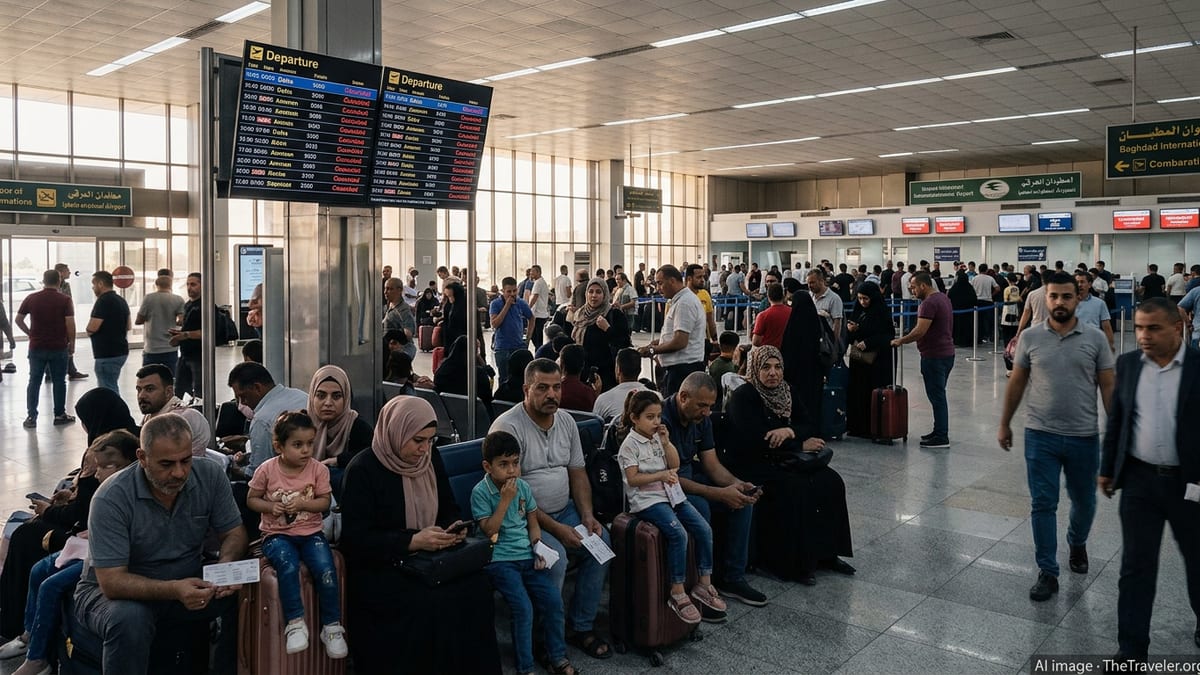
Fatal Emergency Landing Triggers Airport Lockdown
Publicly available information indicates that the twin engine Gulfstream G200 went down on Sunday, June 7, during an attempted return to La Romana International Airport shortly after departure. Aviation incident databases describe the aircraft overrunning or veering off Runway 29 and bursting into flames, leaving the jet destroyed and the two crew members on board dead.
Reports from regional and international outlets state that the jet had stopped in La Romana to refuel and was heading toward Austin, Texas, when it experienced technical difficulties. The pilots reportedly declared an emergency and attempted to circle back to the airport, but video shared on social platforms shows the aircraft engulfed in fire after coming to rest beyond the paved surface.
In the immediate aftermath, operations at La Romana were brought to a standstill as emergency services responded to the burning wreckage and investigators secured the scene. Flight tracking data and local media coverage show multiple inbound private and charter aircraft diverting to nearby airports including Punta Cana and Santo Domingo while the field remained closed.
The closure effectively created a temporary lockdown at La Romana International, which handles a high volume of business jets and leisure traffic for the nearby Casa de Campo resort area. Passengers arriving in the Dominican Republic for vacations and cruise connections reported significant last minute schedule changes as operators scrambled to reroute aircraft.
Impact on Travelers Across the Eastern Caribbean
La Romana International is a key point of entry for high end resort guests and cruise passengers along the Dominican Republic’s southeastern coast. Airline schedules and airport information show that, although the airport sees fewer large commercial jets than Punta Cana or Santo Domingo, it plays an outsized role in handling private and charter services tied to the region’s tourism sector.
With the airport locked down after the accident, travelers on both private jets and chartered flights found themselves diverted or delayed. Some passengers bound for La Romana were routed instead to Punta Cana International, roughly an hour and a half away by road, while others were rebooked through Santo Domingo or left awaiting aircraft repositioning once the runway reopened.
Tour operators and resort transfer services faced cascading logistical challenges as arriving guests appeared at alternate airports with little notice. Ground transport providers had to rapidly adjust plans to collect travelers from multiple entry points, while cruise excursion schedules built around La Romana arrivals required last moment reshuffling.
Across the broader Caribbean network, the incident added strain to a system already operating near peak capacity at the start of the northern hemisphere summer holiday period. Aviation analysts note that private and charter flights have grown steadily in the region in recent years, leaving limited slack when a key airport experiences a sudden, extended shutdown.
Early Investigation Focuses on Technical Failure
Dominican civil aviation bodies have publicly confirmed that a formal technical investigation is under way into the Gulfstream G200 accident. Initial statements and specialist aviation reporting suggest that a serious mechanical or hydraulic problem shortly after departure may have prompted the crew to request an emergency return to La Romana.
Video footage and still images circulating online depict the jet touching down at relatively high speed before leaving the runway and erupting in flames. Accident archives and aviation safety literature identify runway excursions and landing overruns as recurring risks in business jet operations, particularly when aircraft are dealing with system failures or challenging weight and runway length combinations.
The Gulfstream G200, introduced in the late 1990s, is a widely used super midsize business jet. While the type does not have a record of frequent catastrophic accidents, safety specialists observe that any serious event involving a well known corporate aircraft tends to reinforce regulatory scrutiny of maintenance practices, crew training and operating procedures in the business aviation sector.
Investigators are expected to examine flight data and cockpit voice recordings if available, alongside maintenance logs and fuel quality records. Weather conditions at the time of the accident appeared relatively benign based on regional meteorological information, placing greater emphasis on technical, operational and human factor lines of inquiry.
Airport Safety Measures and Operational Recovery
The lockdown at La Romana International allowed emergency teams to extinguish the fire, recover the victims and begin securing physical evidence from the wreckage. Standard post accident procedures typically include a detailed inspection of runway surfaces, lighting systems and safety areas, as well as cleanup of debris and spilled fuel before normal traffic can resume.
By Monday, publicly accessible flight tracking data and local press coverage indicated a gradual resumption of operations, with a mix of business jets and occasional commercial charters restoring access to the resort region. The disruption, however, highlighted how a single serious incident at a specialized leisure gateway can ripple outward, affecting itineraries across multiple islands and connecting hubs.
Airport operators in the Caribbean have invested in upgraded rescue and firefighting capabilities in recent years, partly in response to the rising volume and size of corporate aircraft visiting resort destinations. Industry observers suggest that the La Romana crash and resulting shutdown will likely prompt renewed review of emergency response plans, runway overrun protections and coordination protocols with nearby alternate airports.
For travelers, the episode serves as a reminder that even relatively small, business jet focused airfields can be critical nodes in the holiday travel chain. When one such node suddenly goes offline, airlines, charter companies and tour operators must quickly reweave complex schedules to keep passengers moving, often with limited spare capacity during peak seasons.
Questions for Business Aviation and Regional Connectivity
Beyond the immediate human toll, the Gulfstream G200 crash at La Romana has raised fresh questions about risk management in high end leisure aviation. Business jets frequently operate into secondary and resort airports with shorter runways, time pressured turnarounds and dense peak season traffic, conditions that can magnify the consequences of technical failures.
Analysts note that the Caribbean’s dependence on a web of small and mid sized airports creates particular vulnerabilities when one facility experiences a serious incident. Unlike large hubs with multiple runways and extensive backup infrastructure, resort focused airports often have limited redundancy, making complete shutdowns more likely in the wake of an accident.
Regional tourism officials and aviation stakeholders are expected to watch the La Romana investigation closely, looking for any recommendations that could influence runway safety enhancements, operator training requirements or contingency planning for sudden closures. While business aviation has an overall strong safety record, the highly public nature of this crash and the imagery shared across social media platforms ensure that it will remain in the spotlight until a clearer picture emerges.
For now, published information suggests that traffic at La Romana is gradually stabilizing, even as airlines and charter operators work through backlogs and reposition aircraft. Travelers heading to the Dominican Republic and neighboring islands in the coming days are being advised by carriers and tour companies to monitor itineraries closely and allow extra time for potential schedule adjustments resulting from the lingering effects of the airport lockdown.