


More news on this day
British holidaymakers heading to Spain are being urged to factor in significantly longer passport control times as reports emerge of queues of up to six hours linked to the European Union’s new Entry/Exit System (EES) at two popular Spanish airports.
Get the latest news straight to your inbox!
Six-hour waits reported at Alicante and Lanzarote
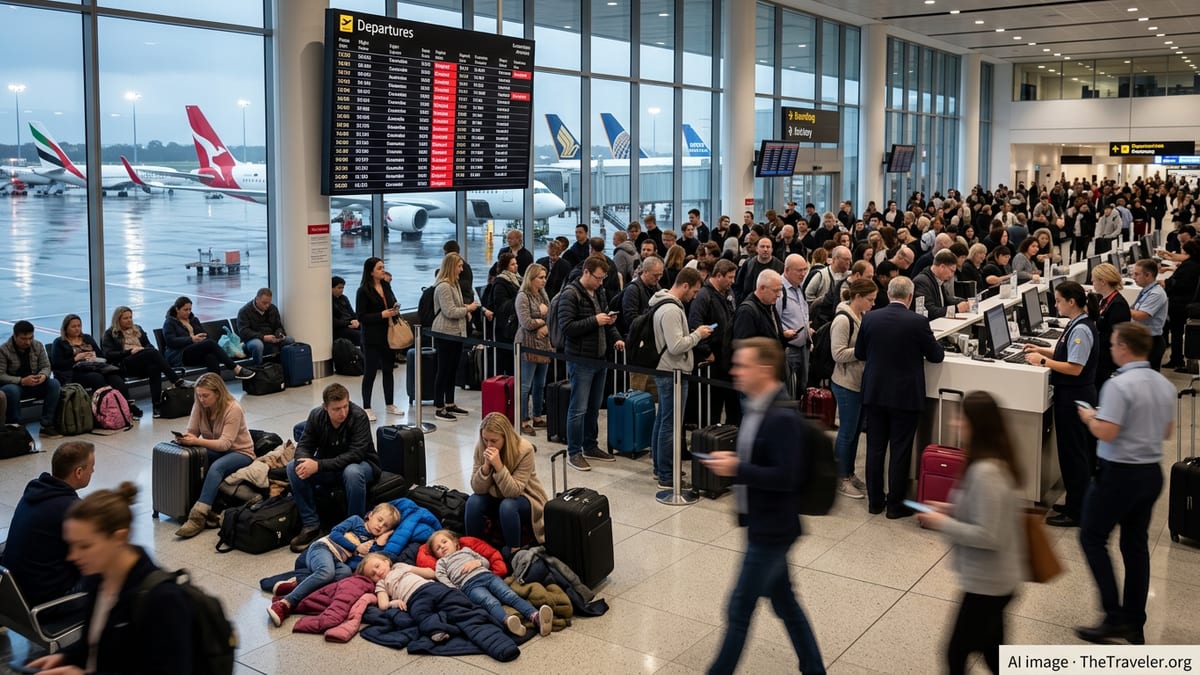
Recent reports indicate that some of the longest EES-related queues for Britons are occurring at Spanish airports serving major package holiday markets, notably Alicante on the Costa Blanca and Lanzarote in the Canary Islands. Coverage of the situation describes lines for non EU passengers stretching through arrivals halls at peak times, with travellers facing several hours of waiting before completing biometric checks and passport inspection.
According to published coverage of the issue, the bottlenecks are arising where multiple flights from the United Kingdom arrive within short windows, overwhelming the capacity of the new EES kiosks and manual booths. At Alicante, which handles large volumes of low cost and charter services from regional UK airports, passenger flows have reportedly pushed queue times towards the six hour mark on some busy travel days.
In Lanzarote, similar accounts describe British tourists encountering very long waits at border control after landing, particularly on weekends and during school holiday periods. Travel forums and local media in Spain highlight cases of passengers missing onward coach transfers and arriving at resorts in the early hours of the morning after extended delays in the arrivals area.
While such extreme cases are not universal, the reports are fuelling concern among tour operators and travellers that the EES transition is hitting leisure focused airports hardest, where terminal layouts and staffing levels were already stretched during peak summer operations.
New biometric system struggles to cope with holiday peaks
The EES, which became fully operational for air travel in April 2026, records the entry and exit of non EU nationals using facial images, fingerprints and passport data. For British travellers who are counted as “third country” visitors since Brexit, the first trip into the Schengen area after activation involves a full biometric enrolment at a kiosk or staffed desk, followed by verification at passport control.
Industry analyses and travel advisories note that this initial registration is taking considerably longer than the average processing time projected by EU institutions. While official estimates suggested around a minute per person, experience at busy airports in Spain and elsewhere in the Schengen area has included multi hour queues when several flights arrive simultaneously and a high proportion of passengers are using EES for the first time.
At airports like Alicante and Lanzarote, which rely heavily on short haul tourism and operate with compact arrivals zones, the combination of new kiosks, holding lines and traditional passport booths has created complex queue patterns that are difficult to manage at full capacity. Reports describe machines being taken out of service due to technical issues, forcing passengers back into manual processing and compounding congestion.
Airline and airport groups have previously warned that without additional staff and revised terminal layouts, the phased roll out of EES risked creating systemic delays at key holiday gateways. The latest accounts from Spain appear to confirm that pressure points are emerging first where infrastructure and manpower were already under strain.
Mixed experiences across Spain’s main gateways
Although the six hour queues reported at Alicante and Lanzarote have attracted particular attention, experiences for British travellers in Spain remain mixed and can vary by airport, time of day and travel date. Larger hubs such as Madrid Barajas and Barcelona El Prat, which began trials and preparations earlier, are reported to be managing EES flows more consistently, with wait times closer to one to two hours at peak and shorter at quieter periods.
Regional tourism media and traveller reports suggest that some Spanish airports, including Palma de Mallorca, have introduced dedicated non Schengen or “British” lanes to try to separate first time EES users from returning passengers and EU nationals. Where these measures are in place and kiosks function reliably, travellers describe a more predictable, if still slower, arrival process compared with the pre EES era.
Other airports, such as those in the Canary Islands and along the Mediterranean coast, appear to be in a transitional phase. At times, passengers report relatively swift passage through biometric kiosks and e gates; at others, staffing shortages, equipment faults or sudden surges in arrivals have led to lengthy queues and confusion about which line to join.
This patchwork picture makes it difficult for travellers to anticipate exactly what they will encounter on any given day, but the pattern emerging from Spain suggests that smaller or leisure focused airports are more vulnerable to severe disruption when multiple UK flights are banked together.
Travel industry calls for urgent mitigation
The airline industry’s main trade bodies have repeatedly highlighted the risk that EES could generate multi hour queues at Europe’s borders if mitigation measures are not fully in place before peak holiday seasons. At recent industry gatherings, representatives have flagged examples of two to four hour waits at airports across the Schengen zone and warned that delays of up to six hours cannot be ruled out at the most pressured locations.
Tourism organisations in Spain have also raised concerns that repeated reports of long queues for British visitors could damage the country’s reputation as an easy and convenient holiday destination. Publicly available statements from hotel and travel associations call for more border police, fully functional kiosks and clearer passenger information to ease the strain at key gateways such as Alicante, Malaga and the Canary Island hubs.
Some industry voices are urging authorities to consider additional measures, including extended staffing during peak arrival and departure banks, better use of real time passenger flow data, and temporary adjustments to flight schedules to smooth the arrival profile. There have also been suggestions that wider promotion of official pre travel guidance on EES could help reduce confusion at the border.
So far, there is no indication that Spain intends to scale back or delay the implementation of EES at its airports. However, the intensifying focus on six hour queues for British travellers in specific hotspots is adding to pressure for rapid operational improvements before the main summer rush.
What British travellers can do before flying
With EES now embedded at Spanish borders, British visitors are being advised by travel bodies and consumer groups to plan for longer processing times and adapt their journeys accordingly. Guidance circulating in the UK travel industry recommends allowing additional time for border control on both arrival in Spain and departure for the return flight, especially at airports where long queues have already been reported.
Passengers travelling with young children, older relatives or tight onward connections are being encouraged to factor in the possibility of extended waits at passport control. For package holidaymakers, tour operators are reviewing transfer schedules and warning that late night arrivals could be particularly vulnerable to disruption if staffing levels are lower.
Travel commentators also emphasise the importance of having passports, boarding passes and any required documentation ready before reaching EES kiosks, and of following signage carefully to avoid joining the wrong queue. First time visitors to the Schengen area since EES went live may face the lengthiest enrolment steps, while those who have already been registered should in theory move more quickly through verification at subsequent trips.
Ultimately, the reports of six hour queues in Alicante and Lanzarote underline that the early months of EES are proving challenging for popular Spanish holiday gateways. For British travellers, the safest strategy this summer is to stay informed about conditions at their chosen airport and to build generous time buffers into every stage of their journey.