


More news on this day
A slow-speed derailment involving an empty Sound Transit light rail train near Seattle’s International District/Chinatown Station disrupted weekend service for several hours, stranding riders and forcing a temporary shift to shuttle buses and other alternatives across the downtown core.
Get the latest news straight to your inbox!
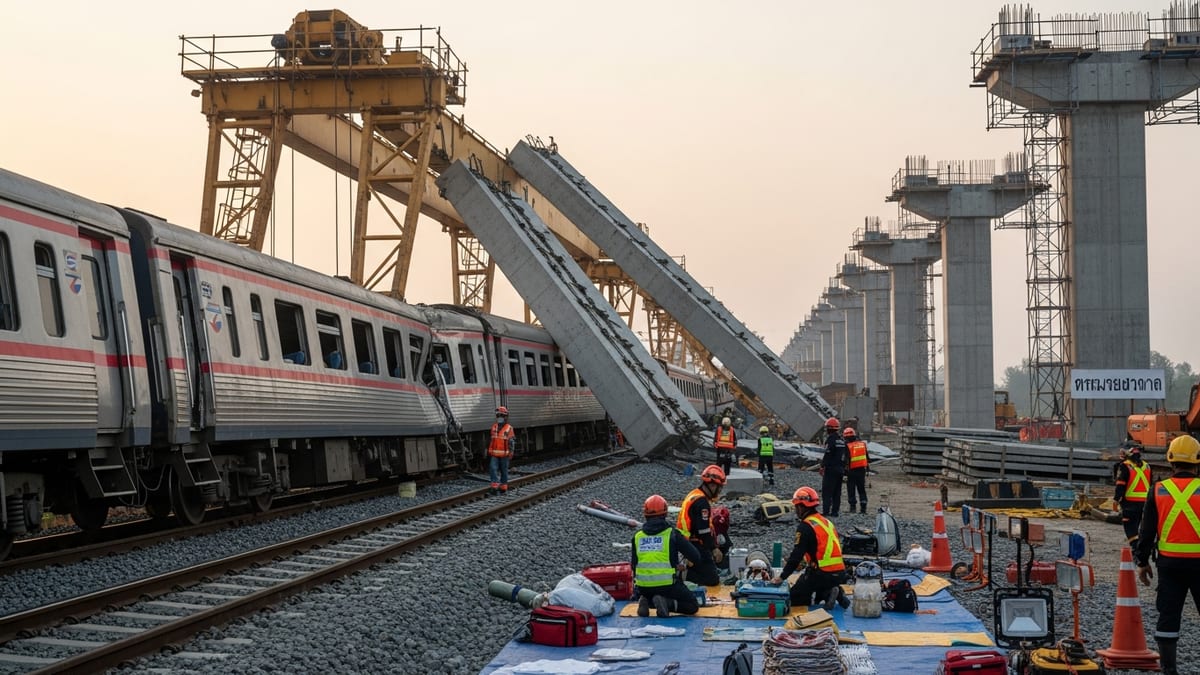
Derailment Near Key Downtown Hub Disrupts Weekend Travel
Published reports indicate the incident occurred as a light rail train was entering the International District/Chinatown Station area at low speed, in a section of track that connects the stadium district to central Seattle. Early descriptions circulating Sunday describe an out-of-service train that left the rails while maneuvering near the station throat, a critical junction where multiple tracks converge.
Initial accounts from riders and local coverage describe the train as largely or completely empty of passengers at the time, with only the operator on board. The low operating speed and lack of a full passenger load appear to have limited the physical impact of the derailment, but the location of the incident made it difficult to move trains through the tunnel and along the shared tracks.
Because the disruption occurred at a major node that serves both stadium traffic and downtown travelers, the event quickly rippled through Sound Transit’s 1 Line and 2 Line operations. Publicly available service alerts and rider reports point to cascading delays as trains were turned back short of downtown and some trips were canceled or truncated.
No Injuries Reported but Service Severely Curtailed
According to published information, there were no reported injuries connected to the derailment. The train was traveling at low speed and was not in normal passenger service, reducing the likelihood of serious harm even as wheels left the rails near the platform area.
Despite the absence of injuries, the derailment significantly curtailed light rail operations for several hours. Service through the core of downtown was suspended while crews inspected track, switches, and overhead power systems and worked to re-rail or move the disabled train out of the way. Riders described trains stopping short of the incident and being instructed to disembark, with continuing trips no longer possible through the affected section.
Some trains reportedly continued running on unaffected stretches of the network, particularly away from the immediate downtown core, but with altered turn-back points. This created an irregular and fragmented service pattern that left many weekend passengers uncertain about how far their train would actually travel.
Shuttle Buses, Rideshares and Walking Fill the Gap
Service alerts and local coverage show that Sound Transit and local transit partners activated bus bridges and encouraged riders to transfer to surface routes while light rail was unavailable through downtown. Replacement buses were deployed to connect stations on either side of the disruption, though riders posting publicly described long waits and crowded stops as demand surged.
With the derailment occurring on a weekend when visitors often travel to and from the stadium district and Chinatown-International District for events, dining and cultural activities, many riders reportedly turned to rideshare services and taxis. Social media posts referenced rising prices and limited driver availability as more people sought last-minute alternatives to reach destinations that are usually a short, predictable train ride away.
Some travelers opted to walk between closely spaced downtown stations such as Pioneer Square, International District/Chinatown and Stadium, while others connected to King County Metro routes or regional express buses. The disruption underscored how interdependent Seattle’s rail and bus networks have become, and how a single incident at a chokepoint can quickly strain the entire system.
Focus on Infrastructure and Operations After Incident
While detailed technical information about the cause of the derailment was not immediately available, the low-speed nature of the incident and its occurrence near switches and crossovers has drawn attention to track infrastructure and operating procedures at busy junctions. Previous safety reports for rail fixed guideway systems in Washington have documented a small number of low-speed collisions and other operational issues on light rail systems, usually without injuries but occasionally resulting in equipment or track damage.
Observers familiar with light rail operations note that complex interlockings, where trains switch tracks and reverse direction, can be particularly sensitive to maintenance conditions, wheel profiles and operator inputs. Even minor alignment or component issues can increase the risk of a wheel climbing the rail, especially at low speeds where dynamic forces behave differently than at normal operating velocity.
Publicly available materials from regional transportation agencies highlight ongoing efforts to modernize signaling, improve automatic train protection and refine operating rules across the Link light rail network. The latest derailment is likely to focus renewed attention on how those investments are prioritized at high-traffic locations such as the International District/Chinatown area, which serves as a central gateway for both existing and future lines.
Rider Frustration and Resilience on a Growing Network
Rider accounts shared online in the wake of the incident describe a mix of frustration and resignation, with many travelers noting that while serious derailments are rare, smaller disruptions and service gaps have become a recurring part of the light rail experience as the system expands. For regular users, the hours-long interruption served as an unwelcome reminder to build extra time into trips and to stay familiar with backup bus routes and station connections.
At the same time, some passengers pointed out that the system’s built-in redundancy and Seattle’s dense downtown street grid allowed them to improvise alternative routes, even if their journeys took significantly longer than planned. Travelers reported pairing partial light rail trips with surface buses, walking segments between close-in stations, or coordinating carpools when shuttle buses and rideshares were overwhelmed.
As Sound Transit and regional partners continue to extend light rail eastward and southward, incidents like this derailment highlight the dual reality of a fast-growing network: more people can rely on rail for daily travel, but temporary failures at key choke points can also affect a larger share of the region’s mobility. For visitors and residents alike, the slow-speed derailment near International District/Chinatown became a weekend test of how resilient Seattle’s multimodal system can be when one of its most important links suddenly goes offline.