


More news on this day
Uruguay’s preparations for the 2026 World Cup in the United States were plunged into uncertainty over the weekend after a paperwork problem left the national team temporarily unable to fly from Mexico to Miami for its opening match.
Get the latest news straight to your inbox!
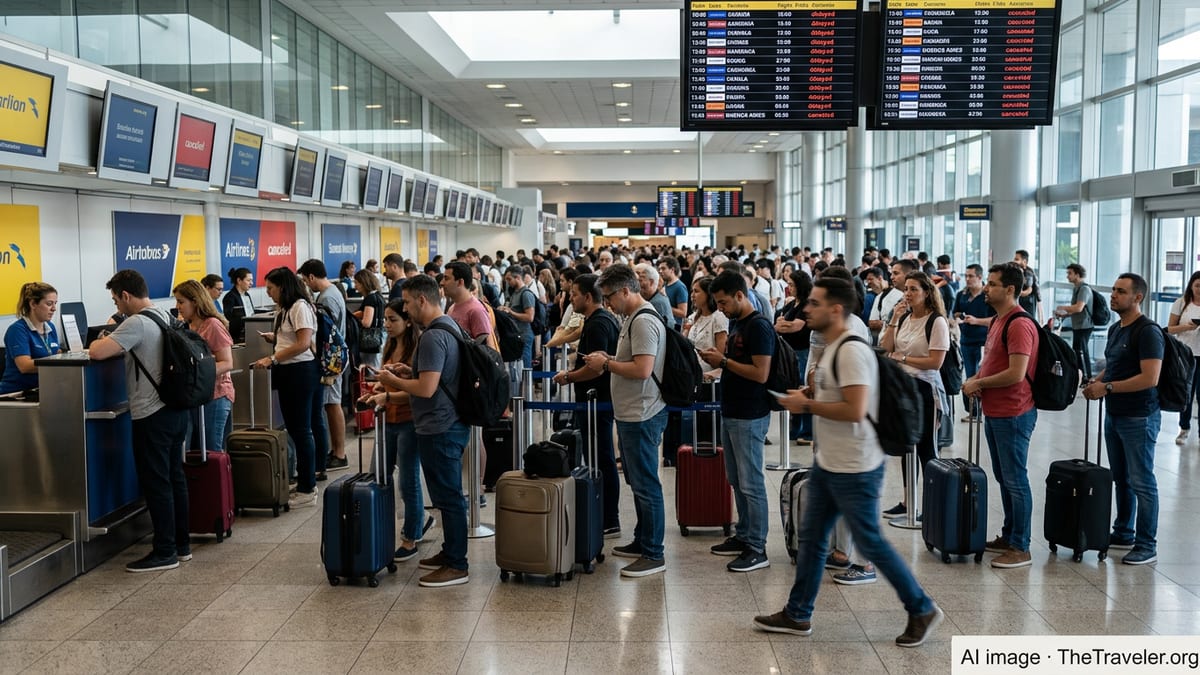
Documentation snag strands squad in Cancún
The South American side had been scheduled to leave its pre-tournament base in Playa del Carmen on Saturday, June 14, with a charter flight from Cancún to Miami timed to allow a smooth final build-up to its opener against Saudi Arabia. Instead, reports indicate that the aircraft due to carry the delegation did not have the permits required to enter United States airspace, leaving the squad effectively grounded while a solution was sought.
Coverage from Uruguayan and international outlets describes a bureaucratic fault related to flight documentation that prevented the original charter from operating the route into Florida. The issue was widely attributed in reporting to an error within the process overseen for tournament logistics, rather than to any failure on the part of the players or coaching staff. With a firm arrival deadline set by organizers for teams entering the country, the delay immediately raised concerns over whether Uruguay would reach Miami in time.
Members of the back-room delegation were already at Cancún airport when the problem emerged, while the players and coaching staff remained at their coastal training base awaiting instructions. Local media detailed how bags and equipment that had been loaded for departure had to be offloaded as officials looked for a replacement aircraft that met the regulatory requirements.
Flight plans were eventually reworked for a later departure slot, with the team reported to have secured another charter meeting the necessary criteria. Even so, the change compressed what had been a carefully calibrated travel schedule into a race against the clock to comply with entry rules and keep match preparations on track.
Carefully planned schedule thrown off balance
Publicly available information on Uruguay’s tournament itinerary shows that the team’s travel had been mapped out to the hour, including arrival in Miami, hotel check-in, light training and mandatory media obligations at the match venue. The disruption prompted a cascade of knock-on changes, starting with the cancellation or postponement of a pre-match news conference with head coach Marcelo Bielsa and defender José María Giménez that had been set for Saturday evening.
Instead of final tactical fine-tuning at the stadium and time to acclimatize to conditions in South Florida, players spent several additional hours waiting in Mexico for confirmation that a new jet and flight slot had been secured. Reports from regional sports media described an atmosphere of frustration within the broader delegation, even as official channels presented a calm front and emphasized that efforts were under way to minimize the sporting impact.
By the time Uruguay finally took off for Miami on the replacement aircraft, the squad had lost a significant portion of its planned rest and preparation window. Arrival was pushed back towards the upper limit of the time frame established by organizers for teams to enter the United States before their opening fixtures, leaving little margin for further complications upon landing.
The delayed arrival also meant last-minute revisions to training schedules in Miami, with recovery and tactical sessions compressed into a shorter period ahead of the match. In high-performance tournament environments, even small disruptions can be keenly felt; for a side widely regarded as a serious contender to progress deep into the competition, the episode represented an unwelcome variable at a critical moment.
High-security welcome deepens sense of disruption
After finally landing in Florida, Uruguay’s players and staff faced an unusually intense security screening. Video and photographic footage carried by outlets in South America and Europe showed sniffer dogs inspecting team luggage and security personnel conducting close checks around the delegation as it disembarked.
Commentary around the footage suggested that the procedures were part of strict protocols for charter arrivals connected to the World Cup, particularly given heightened security considerations at major U.S. venues. Nonetheless, the images quickly circulated on social media, fueling debate among supporters and commentators over whether the scrutiny added to an already fraught arrival for a team that had just spent hours dealing with flight uncertainty.
The combination of delayed take-off, a time-sensitive re-entry into the schedule, and the high-profile visual of security dogs around the squad contributed to a perception that Uruguay’s World Cup campaign had begun in anything but routine fashion. Travel and logistics, often unnoticed when they run smoothly, became the central storyline of the team’s first days on U.S. soil.
Despite the turbulence, published coverage notes that team representatives publicly downplayed the significance of the checks and insisted that the focus remained squarely on the opening match. From a sporting perspective, coaches and performance staff were left balancing the need for recovery from an interrupted travel day with the urgency of final tactical work before kick-off.
Logistical headaches highlight World Cup hosting pressures
The incident has drawn wider attention to the complexity of staging a World Cup across multiple countries, with the 2026 tournament co-hosted by the United States, Mexico and Canada. Travel between base camps and match venues requires close coordination between national associations, local organizers, aviation authorities and tournament officials, particularly where charter flights and tight deadlines are involved.
Analysts covering the competition noted that Uruguay’s predicament in Cancún underlined how even established national teams can be left exposed when any link in the logistical chain falters. In this case, reports pointed to documentation for the original aircraft not aligning with U.S. entry regulations, a problem that only became apparent when the delegation was ready to travel.
The situation has also prompted discussion about the balance between stringent regulatory compliance and flexibility for elite sports delegations operating under fixed match schedules. While there is no suggestion that immigration or aviation rules were breached, the episode has been widely portrayed as a cautionary example of how important it is for all parties to anticipate and safeguard against administrative snags.
For Uruguay, the hope is that the chaos surrounding the journey from Mexico to Miami will remain a short-lived subplot rather than a defining feature of its World Cup story. With matches coming in rapid succession once the group stage begins, the team will have limited time to dwell on the disruption as it turns attention back to the pitch.
Psychological test for Bielsa’s Uruguay
Beyond logistics, the saga represents an early psychological test for a squad already under close scrutiny. In the build-up to the tournament, Uruguay had commanded attention for both its ambitious, high-pressing style under Bielsa and reports of internal strains during a volatile qualification and friendly period. The travel disruption added another layer of uncertainty to a narrative already rich with intrigue.
Sports commentators argue that how the players respond to such adversity may shape external perceptions of Uruguay’s prospects. A strong performance in the opening match would help to quickly reframe the conversation around football rather than flight plans; by contrast, any early slip could invite renewed questions about preparation and focus.
Within the camp, the priority is likely to be turning the episode into a source of solidarity rather than distraction. Tournament history is full of examples in which teams have used logistical setbacks as a rallying point, reinforcing a sense of shared challenge against circumstances beyond their control.
As the World Cup gathers pace across North America, Uruguay’s experience in Cancún stands as a reminder that, off the field as well as on it, the margins between smooth progress and sudden chaos can be thin. The coming days will show whether the Celeste are able to convert that early turbulence into competitive edge on football’s biggest stage.