


More news on this day
China’s air travel network is facing a new wave of disruption as severe storms and widespread schedule changes ripple across key hubs, snarling operations from Beijing and Shanghai to the country’s southern coastal cities.
Get the latest news straight to your inbox!
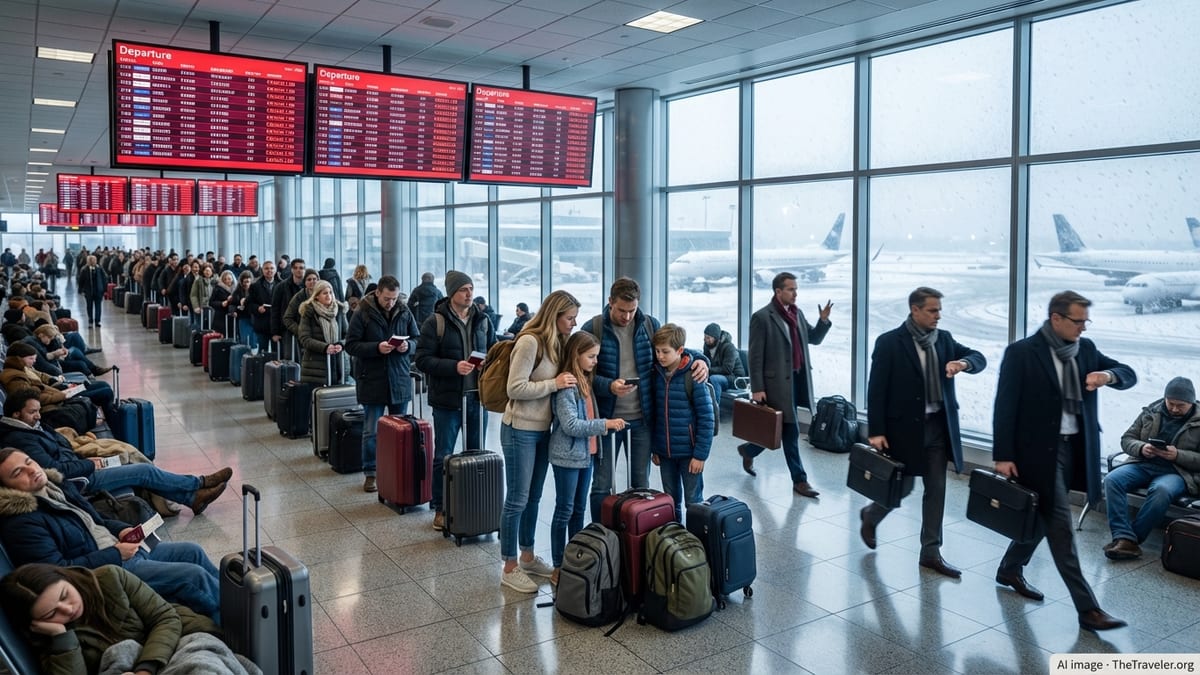
Severe Weather Slams Southern and Eastern Hubs
Heavy rain and intense thunderstorms have battered large parts of southern China since the weekend, triggering flooding, transport disruption and renewed strain on aviation at some of the country’s busiest airports. Public reports highlight significant impacts in Guangdong and Guangxi provinces, where key gateways such as Guangzhou Baiyun, Shenzhen Bao’an and regional fields in the Pearl River Delta handle dense domestic and regional traffic.
Weather alerts issued for Shenzhen and surrounding districts point to repeated thunderstorm and gale warnings, with short, intense downpours and strong winds affecting operations near Shenzhen Bao’an International Airport. Rainfall projections in urban districts and coastal zones have been high enough to prompt warnings of flash flooding and localized transport chaos, a combination that frequently leads to rolling delays and extended ground holds for aircraft.
National meteorological updates indicate that heavy to violent rainfall is expected to persist through midweek across swaths of southern and southwestern China, including parts of Guangdong, Fujian, Jiangxi and Yunnan. That pattern encompasses several busy aviation nodes, from Guangzhou and Shenzhen in the southeast to Kunming Changshui in Yunnan, compounding the difficulty of maintaining on-time operations across interconnected domestic routes.
As storms linger over these corridors, airlines are being forced into a cycle of delay management, diversions and tactical cancellations. With many of the affected cities functioning as transfer points between north and south China, even localized weather problems can quickly cascade, affecting flights far beyond the immediate storm zones.
Beijing and Shanghai Feel the Ripple Effect
While the heaviest rain has focused on southern provinces, China’s northern and eastern mega-hubs are experiencing knock-on effects. Beijing Daxing, Beijing Capital and Shanghai Hongqiao all act as major feeders into storm-struck southern airports, and disruptions at destination fields are feeding back into departure schedules in the capital and the Yangtze River Delta.
Flight-status data for routes linking Guangzhou and Shenzhen with Beijing Daxing show cancellations and unscheduled gaps on certain services on June 16, underscoring how weather and operational decisions in the south are reshaping timetables in the north. Some flights between Guangzhou Baiyun and Beijing Daxing were listed as cancelled, while certain Daxing routes to Shenzhen Bao’an and Guangzhou were not operating as usual, indicating capacity reductions and targeted cuts on selected city pairs.
Shanghai Hongqiao, which serves as a key domestic connector within the Yangtze River Delta, is also exposed to weather fronts affecting coastal and inland provinces. Storm activity impacting Fujian and Jiangxi, combined with unsettled conditions projected for eastern Yunnan and neighboring regions, places further pressure on airlines attempting to synchronize east–west operations linking Shanghai to Kunming, Xi’an, Wuhan and other interior hubs.
Although Beijing and Shanghai may avoid the most intense rainfall, their role at the top of the domestic network means they absorb secondary disruption. Delays propagating from Guangzhou, Shenzhen, Xiamen, Hangzhou and other affected airports can lead to aircraft and crew imbalances, missed connections and rolling schedule adjustments across the country’s busiest trunk routes.
Secondary Hubs From Kunming to Wuhan Under Strain
Beyond the marquee gateways, a series of important regional hubs are also being drawn into the disruption. Kunming Changshui in Yunnan lies within areas highlighted in national forecasts for heavy rainfall and severe convective weather, a combination that often complicates mountainous approaches and departures. As a major western hub linking China’s interior with Southeast Asia and the rest of the country, any slowdown in Kunming’s operations can reverberate widely.
In central and eastern China, airports such as Hangzhou Xiaoshan, Xiamen Gaoqi, Xi’an Xianyang and Wuhan Tianhe form part of dense domestic networks connecting coastal megacities with inland population centers. Publicly available flight data and traveler reports over recent weeks describe scattered cancellations and schedule shifts on various Chinese carriers, alongside this week’s weather-related disruptions in southern corridors that feed many of these hubs.
Wuhan and Xi’an sit at crucial crossroads for national east–west and north–south flows. When southern routes into Guangzhou, Shenzhen or Xiamen are constrained by storms, airlines often re-time or consolidate services via interior hubs, a practice that can leave passengers facing tight connections, rebookings or overnight stays. Hangzhou and Xiamen, meanwhile, anchor dense business and leisure traffic along the eastern seaboard, where any reduction in flights to and from storm-affected regions quickly translates into crowded departure halls and pressure on remaining services.
The coincidence of seasonal heavy rain with growing summer travel demand heightens the operational challenge for these airports. As more travelers fan out across inland provinces and coastal resort cities, secondary hubs are expected to bear an increasing share of the disruption burden when severe weather hits primary gateways.
Travelers Face Cancellations, Rebookings and Longer Journeys
For passengers, the combination of intense storms and broader schedule adjustments is translating into missed flights, extended waits and forced changes of itinerary. International and domestic travelers have recently reported cancellations on Chinese airlines across multiple airports, and this week’s weather-related turmoil is adding another layer of complexity to already fragile plans.
On some busy routes connecting Guangzhou and Shenzhen with Beijing and Shanghai, travelers are encountering cancelled flights, reduced frequencies and last-minute rebookings onto alternative services or different dates. With more than 30 departures reportedly delayed at Shenzhen Bao’an on one day due to thunderstorms and hundreds of flights across southern hubs affected by heavy rain in recent days, the risk of disruption for anyone relying on tight connections has risen sharply.
As air travel reliability wavers, some passengers are turning to China’s extensive high-speed rail network as a fallback. Long-distance routes linking Beijing, Shanghai, Hangzhou, Wuhan and Xi’an, as well as fast services along the Guangzhou–Shenzhen corridor, offer alternatives that are less exposed to convective storms, even if still vulnerable to extreme flooding. For travelers already in the country, switching to rail can sometimes provide a more predictable path to key hubs when short-haul flights are repeatedly delayed or cancelled.
However, rebooking options may be constrained in peak summer periods, and shifting from air to rail often means longer overall journey times and additional planning. With weather systems forecast to remain active over several regions, passengers heading to or transiting through the affected airports are being encouraged by publicly available advisories and media coverage to monitor their flight status closely and allow extra time for connections.
Network Pressures Highlight Structural Vulnerabilities
The latest wave of cancellations and delays is shining a light on structural vulnerabilities in China’s aviation system during periods of intense weather. Many of the airports currently under strain, including Guangzhou Baiyun, Shenzhen Bao’an, Beijing Daxing, Beijing Capital, Shanghai Hongqiao, Kunming, Hangzhou, Xiamen, Xi’an and Wuhan, serve as multi-directional hubs where disruption quickly cascades through the network.
In past years, periods of sustained storms, fog or typhoons have exposed how quickly congestion can build at these facilities, especially when traffic volumes are elevated. The current pattern of severe rain and thunderstorms across southern and southwestern provinces is again testing the ability of airlines and airports to recover from rolling delays while maintaining tight turnarounds, crew rosters and gate availability.
At the same time, continued expansion of rail infrastructure and the construction of new aviation capacity, such as additional runways at major hubs and new regional airports, reflect efforts to relieve some of this pressure over the longer term. Projects underway in the Pearl River Delta and other fast-growing regions are designed to spread traffic more evenly and improve resilience when a single hub is constrained by weather or airspace limitations.
In the near term, however, travelers passing through China’s largest airports are likely to continue feeling the effects of the current bout of severe weather. With storms forecast to persist across several key provinces and airlines still adjusting schedules in response to recent operational challenges, air journeys through Beijing, Shanghai, Guangzhou, Shenzhen, Kunming and other affected hubs may remain unpredictable in the days ahead.