


More news on this day
A mechanical failure on a Sound Transit Link light rail train after the Apple Cup rivalry game left thousands of fans stranded for up to two hours near Seattle’s University District, prompting an internal review and fresh questions about the system’s preparedness for major events.
Get the latest news straight to your inbox!
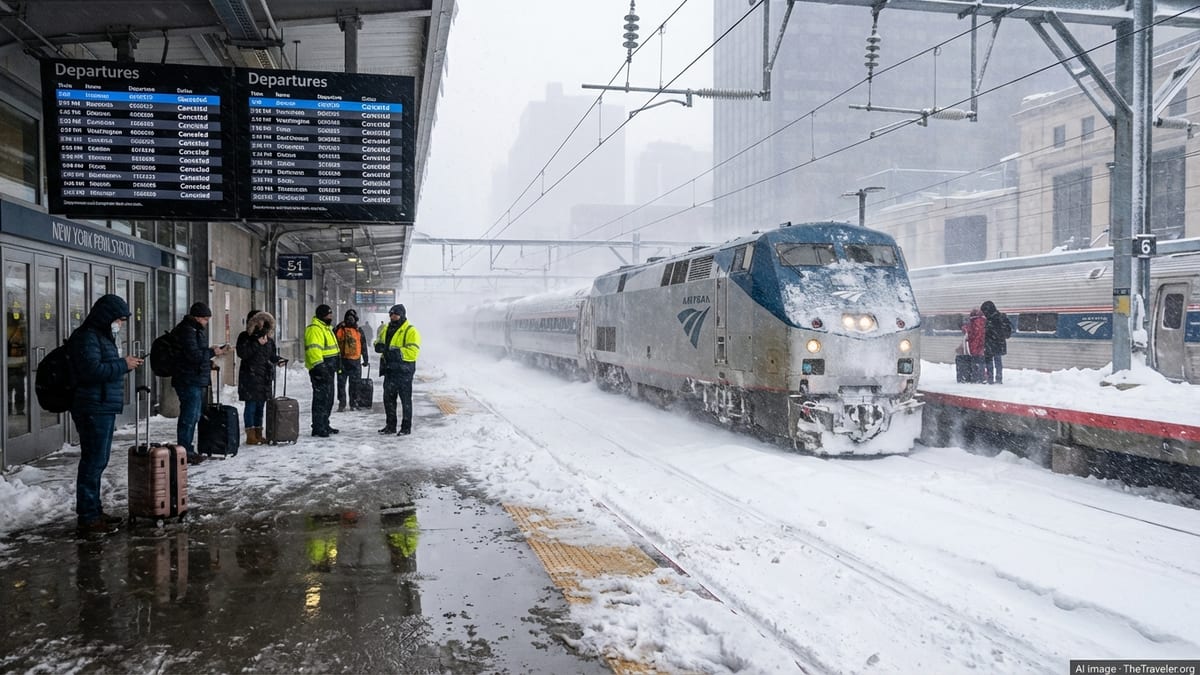
Train Stalls Between Stations After Postgame Rush
According to published coverage, a northbound Link light rail train experienced a mechanical malfunction just before 6 p.m. on Sunday, shortly after departing the University of Washington Station following the Apple Cup matchup between the University of Washington and Washington State University. The disabled train came to a stop in the tunnel segment between the University of Washington and Roosevelt stations, trapping riders in packed cars at the height of the postgame rush.
Reports indicate that thousands of fans who had opted for transit over traffic found themselves stuck on platforms and on board trains as Link service through the corridor slowed to a crawl. Crowded platforms formed at University of Washington, U District, Roosevelt and Northgate, as riders waited for limited rescue and shuttle trains to move around the stalled vehicle.
Sound Transit described the incident as a mechanical malfunction on a 2 Line train operating in shared tunnel infrastructure, which forced the agency to improvise around a critical chokepoint. The affected stretch serves as a key link between the university area and north Seattle neighborhoods, making any disruption particularly visible on event days.
Normal operations did not resume until about 8:20 p.m., according to local broadcast reports, meaning many Apple Cup fans faced delays of roughly two hours on what is typically a 10 to 15 minute trip between the stadium area and Northgate.
Rescue Trains, Single-Tracking and Packed Platforms
Publicly available information shows that Sound Transit responded by dispatching rescue trains to offload passengers from the disabled train and by running a shuttle train on the adjacent southbound track between the University of Washington and Northgate stations while crews worked to move the stalled vehicle out of the tunnel. That workaround effectively put the corridor on single-track operations, cutting overall capacity at the exact moment demand was highest.
Riders described packed conditions on trains that did arrive and long queues to reach platforms, as passengers from the stadium trickled into an already constrained system. Social media posts from the evening showed lines snaking through station mezzanines and onto sidewalks, with many riders reporting waits of an hour or more before boarding.
The episode echoed earlier high-profile disruptions on Link, including a 2021 post-Apple Cup incident in which a fully loaded train lost power in the same tunnel segment and riders began self-evacuating along the tracks. An internal audit of that event, released later, pointed to communication gaps and challenges moving disabled trains in constrained tunnel environments.
While no injuries were reported in the latest Apple Cup disruption, the experience highlighted how even a single disabled train can cascade into major delays across the system when it occurs at a pinch point with limited alternative paths and heavy event traffic.
Investigation Focuses on Mechanical Failure and Response
Sound Transit has begun reviewing the cause of the malfunction, according to regional news coverage, with attention on both the train’s mechanical systems and the sequence of operational decisions that followed. Early descriptions point to a mechanical fault on the northbound consist, but further technical details have not yet been made public.
Previous Sound Transit materials on similar disruptions emphasize the complex chain of responsibilities between the agency, which owns the Link light rail system, and its contracted operating partners for train operations and maintenance. Internal documents from the 2021 Apple Cup incident urged improvements in contingency planning, tunnel evacuation procedures and real-time communication with passengers when trains lose power between stations.
Observers are now watching to see how much of that earlier guidance was implemented and whether new issues emerged in the latest breakdown. System performance dashboards published by Sound Transit highlight on-time performance and disruption metrics, but riders and local advocates have increasingly called for more granular reporting on major incidents that overlap with large events.
Publicly available safety guidance from the agency stresses that trains and stations are designed to remain safe during service interruptions, with riders instructed to wait for staff direction in the event of an emergency. Sunday’s disruption will likely feed into ongoing discussions about how those protocols function when crowds are unusually large and delays stretch into multiple hours.
Growing Scrutiny of Game-Day Reliability
The Apple Cup incident landed amid broader public scrutiny of Link’s performance on major event days, including Mariners games, Sounders FC matches and this summer’s World Cup fixtures at Lumen Field. Riders have increasingly questioned whether the current mix of train frequency, crowd management and contingency planning can keep pace with surging demand.
Recent online discussions among transit users have chronicled prolonged waits, skipped trains and confusing platform controls after high-attendance events, even when there are no major mechanical failures. Some riders have characterized game-day light rail as unreliable enough that they now build in significant extra time or revert to buses and rideshare when stadiums are full.
Sound Transit’s own performance materials frame reliability as a core metric, noting that passengers should be able to expect consistent, on-time service and timely disruption alerts. However, as weekend stadium schedules and special events converge with regular commuter demand, even minor hiccups can ripple across the network, turning what is marketed as a stress-free alternative to driving into a source of frustration.
The Apple Cup breakdown appears poised to intensify these concerns, particularly among travelers who chose light rail as a way to avoid postgame traffic on Interstate 5 and surface streets around the University District and downtown. For many of those fans, the experience of waiting on crowded platforms or stalled trains for up to two hours undermined the appeal of leaving the car at home.
Implications for Future Expansion and Visitor Travel
The timing of the disruption arrives as Sound Transit continues an aggressive expansion of the Link network, with new extensions north, east and south designed to carry increasing numbers of regional commuters and visitors. Future milestones, including additional stadium-adjacent stations and connections to tourism hot spots, are being promoted as key tools to manage congestion and support sustainable travel.
Episodes like Sunday’s breakdown, however, raise questions about operational resilience as the system grows. Transit and tourism observers note that large events such as rivalry games, concerts and international matches are often first impressions for out-of-town visitors who rely on light rail to move between hotels, stadiums and the airport. Prolonged delays or confusing service patterns can shape perceptions of Seattle’s broader transportation network.
Community-facing materials from both Sound Transit and local transportation agencies encourage visitors to use Link to bypass event-day gridlock, underscoring the importance of dependable rail service for the region’s travel and tourism economy. The Apple Cup incident illustrates how a single mechanical failure, if it coincides with a major event, can quickly become a regional travel story rather than an isolated operational issue.
As the investigation proceeds, riders and local stakeholders will be watching for concrete steps on fleet reliability, incident response and passenger communications. For Apple Cup fans who spent part of their evening stranded in tunnels and on platforms, future confidence in Seattle’s light rail will depend on seeing those lessons translated into fewer breakdowns and faster recoveries when problems occur.
KIRO 7 local coverage of the Apple Cup disruption
KOMO News report on Sound Transit’s investigation