


More news on this day
Flights between Miami International Airport and Chicago O'Hare faced fresh disruption on Monday after an Amazon-branded cargo jet overran a runway in Miami, killing five people and forcing a temporary ground stop that rippled through one of the country’s busiest air corridors.
Get the latest news straight to your inbox!
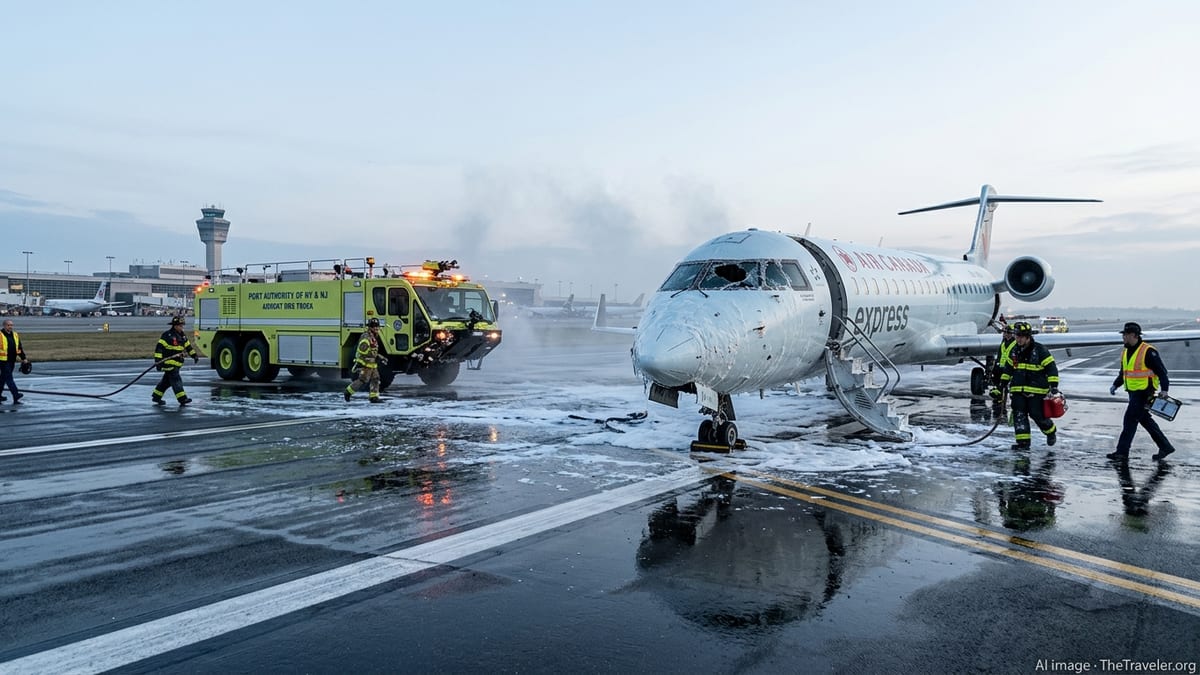
Runway overrun in Miami sparks cascading delays
The Boeing 767-300 freighter, operating as 21 Air Flight 7598 for Amazon, arrived at Miami International Airport on Sunday, September 6, from San Juan, Puerto Rico. Publicly available flight-tracking data shows the aircraft overran the runway at about 2 p.m. local time, crossed a service road and struck several vehicles before coming to rest in an area near airport facilities.
Published coverage indicates that five people were killed and five others injured in the crash and subsequent fire, including occupants of vehicles hit beyond the runway’s end. Images and video from the scene show the aircraft’s fuselage largely intact but sitting on its belly amid scorched pavement and emergency foam.
The overrun triggered a full ground stop at Miami International as rescue crews responded and officials assessed damage to the runway environment. According to airport statements summarized in local reporting, all flights were halted for several hours on Sunday afternoon before limited operations resumed.
Data compiled by flight disruption tracking services and cited in national outlets indicates that by late Sunday more than 160 flights had been canceled at Miami, with hundreds more delayed. Carriers continued to work through the backlog into Monday as aircraft and crews remained out of position.
Direct Miami–O'Hare services among most affected
The Miami to Chicago O'Hare route, a key link between South Florida and the Midwest, was among those directly affected by the temporary shutdown. Coverage from Chicago-based outlets notes that flights between O'Hare and Miami experienced delays, schedule changes and scattered cancellations on Sunday as the ground stop took effect and into the following day as airlines adjusted rotations.
Schedules on the corridor are typically dense, particularly around peak weekend travel periods. When operations paused in Miami, several northbound departures to Chicago were delayed on the ground, while inbound aircraft from O'Hare held, diverted to other airports or returned to gates. Some travelers reported via social media and local interviews that rebookings pushed their arrivals into Monday or later.
While the total number of impacted Miami–O'Hare passengers has not been published, the route is served by multiple major carriers using mainline jets. Aviation analysts note that even a few canceled segments on such a heavily trafficked pairing can displace hundreds of travelers and pressure connecting banks at O'Hare and other hubs.
The disruption came at the tail end of a busy travel weekend for Chicago-area airports. Separate reports estimate that more than 1.7 million passengers were expected to move through O'Hare and Midway over the extended period, leaving fewer open seats for same-day reaccommodation on the Miami link.
Ground stop and diversions ripple through Florida network
The impact of the crash extended beyond the single runway and beyond the Miami–Chicago pairing. Miami International temporarily shut all runways on Sunday to allow emergency response and to secure the accident site, forcing a broad mix of domestic and international flights to hold, divert or cancel.
Regional coverage from central Florida indicates that some Miami-bound flights were rerouted to Orlando International and other nearby airports during the ground stop. Travelers arriving at those alternate airports reported extended waits for rebooking and onward transport, adding pressure on Florida’s broader aviation network.
By Monday, Miami International had resumed operations, but airport advisories relayed in local media continued to urge passengers to check directly with airlines before traveling to the airport, citing residual delays and cancellations. The disabled cargo aircraft remained near the runway environment, requiring adjusted taxi routes and contributing to ongoing congestion.
Airlines serving Miami rebalanced aircraft and crew schedules across their systems, which can take several days after a major disruption. That process affects city pairs like Miami–O'Hare that depend on consistent aircraft flows from multiple hubs.
Investigators focus on speed and stopping performance
Federal safety agencies have opened an investigation into why the freighter failed to stop on the runway. Early flight-tracking analyses cited in broadcast and online coverage suggest the Boeing 767 approached and landed at a higher speed than typical for similar operations at Miami, with estimates indicating the aircraft was still traveling at roughly 130 miles per hour as it left paved surface.
Weather at the time of the crash was reported as generally favorable, with no immediate indication of severe storms at the airport. Analysts quoted in public coverage have pointed to a range of potential factors that can affect landing performance, including aircraft configuration, braking systems, runway conditions and possible wind shear or microburst activity, while emphasizing that definitive causes usually take months to establish.
The runway overrun and collision with vehicles beyond airport boundaries underscore longstanding concerns about protection zones at the end of runways. Many large airports, including Miami, have added engineered materials arresting systems or other safety features in recent years, but the effectiveness of any mitigation in this incident will be part of the technical review.
Until investigators recover and analyze flight data recorders and cockpit voice recordings and complete on-site inspections, findings about the sequence of events remain preliminary. Publicly available statements from investigative bodies have emphasized that no cause has yet been determined.
What travelers between Miami and Chicago should know
For travelers planning trips between Miami and Chicago O'Hare in the coming days, airline and airport advisories compiled in local reporting stress the importance of monitoring flight status closely. Even as the immediate ground stop has lifted, residual disruptions can linger as carriers reposition aircraft and crews and work through backlogs of displaced passengers.
Miami International has continued to encourage passengers to verify departure and arrival times directly with their airline’s website or app before leaving for the airport, rather than relying solely on third-party platforms. Similar guidance applies at O'Hare, where disruptions can cascade through connecting banks and affect departure times back to Florida.
Travel experts note that travelers with flexible plans may gain more options by accepting connections via alternate hubs rather than waiting for the next nonstop between Miami and Chicago. Others may be able to reroute through nearby airports in South Florida or the Midwest, depending on airline policies and seat availability.
As the investigation proceeds and operations normalize, the Miami–O'Hare route is expected to return to typical frequencies. For now, passengers on this high-demand corridor are being advised, through public-facing channels, to build in extra time, stay alert to schedule changes and consider contingency plans when traveling in or out of South Florida.
CBS Chicago: Flights between Miami and O'Hare impacted by deadly cargo plane crash