


More news on this day
Malaysia Airports Holdings Berhad has secured new international recognition under the Airport Carbon Accreditation programme, marking a key milestone in its drive to cut emissions across Malaysian airports and strengthening the aviation sector’s wider transition toward lower-carbon operations.
Get the latest news straight to your inbox!
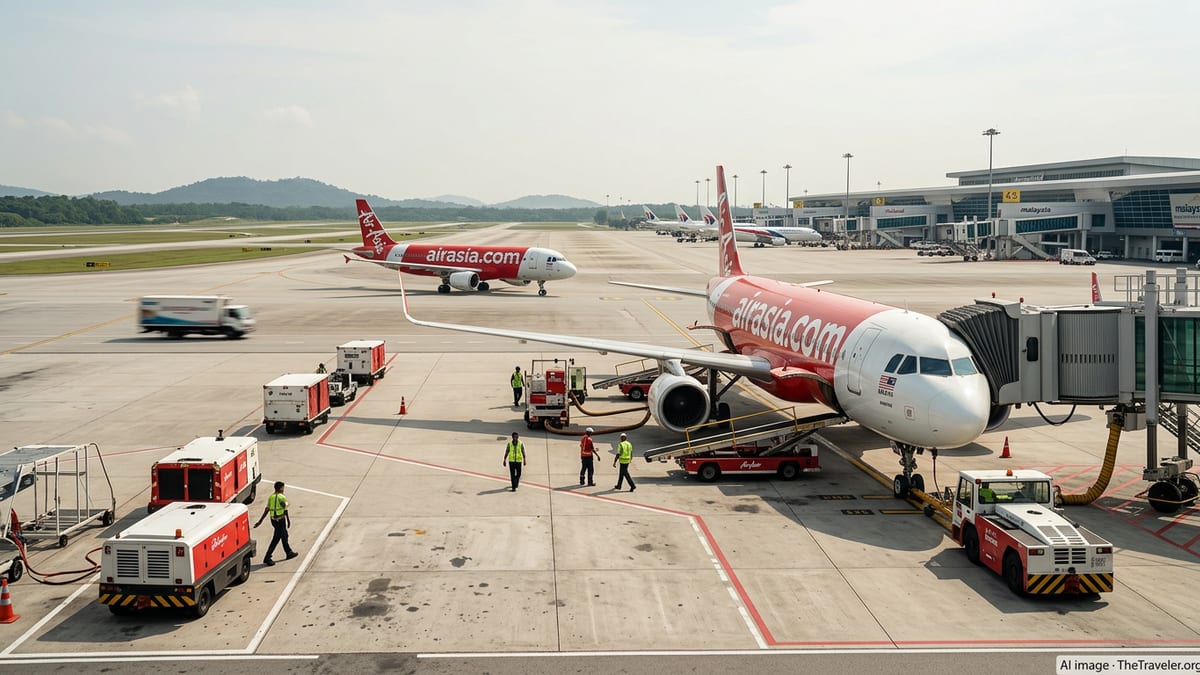
New Accreditation Underscores Expanding Green Airport Network
Recent coverage from regional business media indicates that Penang International Airport and Kuching International Airport have attained Level 1 status under the Airport Carbon Accreditation scheme, joining a growing group of Malaysian airports formally recognised for carbon management. The accreditation confirms that both gateways have measured their carbon footprints and put in place verified processes for monitoring and reporting emissions.
The latest awards build on earlier Level 1 achievements at Langkawi International Airport and Kota Kinabalu International Airport, while Kuala Lumpur International Airport has already progressed to Level 3, a higher tier that reflects more advanced optimisation of carbon reduction measures. Collectively, these steps show Malaysia Airports moving from isolated pilot projects toward a more systematic, network-wide approach to decarbonisation.
Publicly available information on the Airport Carbon Accreditation registry shows that participation in the programme has grown rapidly worldwide in recent years, and Malaysia’s inclusion across multiple airports signals that its major gateways are increasingly aligned with recognised international standards. For travellers, the new certifications serve as a visible indicator that environmental performance is being tracked alongside operational reliability and service quality.
The recognition for Penang and Kuching was presented during the Airports Council International Asia-Pacific and Middle East regional gathering in Bangkok in mid-May, placing Malaysia’s progress on a stage shared with leading airports from across the region. The timing underscores how sustainability is now a central theme of aviation conferences, rather than a side issue.
What Airport Carbon Accreditation Means for Travellers
Airport Carbon Accreditation is described by programme documents as the only institutionally endorsed global carbon management certification dedicated specifically to airports. It assesses how airport operators measure, manage, and reduce carbon emissions under their direct control, using a ladder of seven levels that run from basic footprinting at Level 1 to advanced net zero performance at Level 5.
At the entry Level 1 stage reached by Penang, Kuching, Langkawi, and Kota Kinabalu, airports must identify emissions sources within their operational boundary, calculate an annual carbon footprint, and subject this data to independent verification. This may sound technical, but it provides the baseline needed for future investments such as more efficient lighting, upgraded cooling systems, or renewable energy deployment on airport grounds.
By contrast, higher levels such as Level 3, which Kuala Lumpur International Airport currently holds, require airports to demonstrate tangible emissions reductions over time and to involve third parties on the airport campus, such as airlines and ground handlers. The framework therefore nudges airports from internal housekeeping toward broader collaboration across the value chain, which is essential if the aviation sector is to meet its longer term climate goals.
For passengers, these distinctions are rarely visible on the terminal floor, yet they help shape practical changes, from reduced energy consumption in terminals to more efficient airside vehicle fleets. Over time, airports that climb the accreditation ladder typically report lower operating emissions per passenger, even as traffic grows, helping to moderate the environmental impact of air travel.
Malaysia Airports’ Roadmap Within Global Aviation Climate Goals
Malaysia Airports has framed its carbon accreditation efforts as part of a broader sustainability roadmap that aligns with national low-carbon aspirations and the aviation industry’s global target of net zero carbon emissions by 2050 for operations under direct control. The group has progressively rolled out projects across its network, including energy efficiency upgrades, modernised building management systems, and more granular tracking of Scope 1 and Scope 2 emissions.
The incremental pattern of accreditation, with regional airports joining the programme after the hub airport, reflects a common path seen in many countries. First, a primary hub demonstrates feasibility and builds internal expertise. Then, secondary airports adopt the same frameworks and tools, tailoring them for different scales and climates. In Malaysia’s case, a diverse portfolio of island, coastal, and inland airports provides a real-world laboratory for testing sustainable solutions in varied operating environments.
International reports on Airport Carbon Accreditation highlight that hundreds of airports worldwide now participate at Levels 1 through 5, collectively cutting millions of tonnes of carbon dioxide equivalent compared with historical baselines. By embedding its airports in this system, Malaysia Airports ensures its performance is benchmarked against global peers and that future targets will be set in line with evolving scientific guidance, including the tightening expectations for higher levels such as Level 4 and Level 5.
While aircraft emissions remain the largest share of aviation’s climate footprint, airports play a critical enabling role. Their progress on decarbonising infrastructure and ground operations also supports emerging technologies, from sustainable aviation fuel distribution to electric ground support equipment. As Malaysia Airports advances through the accreditation tiers, it is positioning its terminals and airfields to accommodate these shifts.
Regional Context and Competitive Positioning
The latest recognition comes at a time when airports across Asia and the Middle East are intensifying sustainability efforts in parallel with major capacity expansions. Recent Airport Carbon Accreditation annual reports describe strong growth in participation across the region, with several leading hubs already operating at the upper accreditation levels and moving toward net zero emissions for assets under their control.
Against this backdrop, Malaysia Airports’ expanding roster of accredited facilities helps maintain the country’s competitiveness as an aviation gateway. Environmental performance is increasingly considered by airlines when selecting hubs, particularly as carriers seek to align their own climate strategies with those of their airport partners. A credible, independently verified carbon management framework strengthens the case for routing more traffic through Malaysian airports.
Within Southeast Asia, the race to combine capacity growth with climate responsibility is accelerating. New terminals are designed with stricter energy codes, and many airports are exploring on-site solar, greener building materials, and advanced cooling technologies suited to tropical conditions. Malaysia’s airports, by entering and advancing within the Airport Carbon Accreditation system, are signalling that environmental considerations are now integral to their long term investment plans.
The recognition in Bangkok also places Malaysia Airports in the conversation about how the region will collectively meet international aviation climate targets. As more airports in neighbouring countries announce their own decarbonisation milestones, the shared framework of Airport Carbon Accreditation provides a way to compare progress while respecting the unique operating realities of each facility.
Next Steps in Reducing Aviation’s Environmental Footprint
Looking ahead, the key question is how quickly Malaysian airports can move from baseline measurement toward deeper emissions cuts, particularly at facilities that are still at Level 1. Programme documents indicate that higher tiers require not just incremental improvements, but clear evidence of sustained reductions, alignment with global climate pathways, and in the most advanced cases, net zero operations for emissions under the airport operator’s control.
For Malaysia Airports, this is likely to mean accelerating investment in low carbon technologies, enhancing data systems to capture real-time energy and fuel use, and working more closely with airlines, retail tenants, and service providers operating on airport grounds. Experience from other regions suggests that collaborative projects, such as shared electric vehicle charging infrastructure or joint efficiency retrofits, can deliver larger emissions savings than isolated measures.
The broader aviation ecosystem in Malaysia is also evolving. Policy measures, voluntary carbon initiatives, and growing public awareness of climate issues are encouraging operators to move beyond compliance and toward demonstrable leadership. In this context, the new carbon accreditation recognitions serve both as a validation of work completed and a platform for more ambitious commitments.
As global travel demand continues to recover and grow, the challenge for airport operators is to decouple passenger numbers from emissions. The steps taken by Malaysia Airports under the Airport Carbon Accreditation framework show that this decoupling is possible in practice, even if progress is incremental. For travellers passing through Penang, Kuching, Langkawi, Kota Kinabalu, or Kuala Lumpur, the latest awards provide some reassurance that the environmental impact of their journeys is being measured, managed, and gradually reduced.