


More news on this day
South Korea is recalibrating its global travel risk map, easing some high-level alerts affecting Cambodia, Venezuela and Nepal while extending strict no‑go designations across major conflict zones through 2027, reshaping how international travelers may route trips through the wider region.
Get the latest news straight to your inbox!
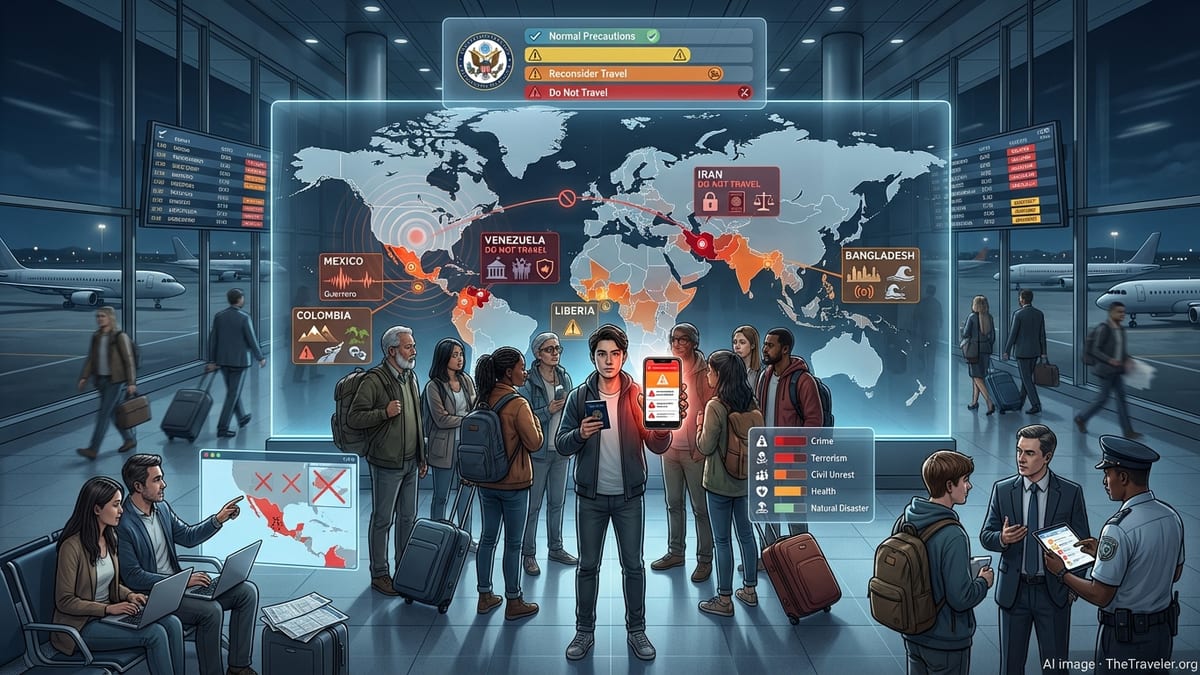
Regular Travel Alert Review Brings Mixed Changes
South Korea operates a four-tier overseas travel alert system, ranging from a level urging caution to an outright ban on travel. The Ministry of Foreign Affairs conducts scheduled reviews, and a mid‑2026 adjustment has brought a mix of relaxations and long‑term extensions as authorities reassess conflict, crime and political risk abroad, according to publicly available notices from Seoul.
The latest update maintains South Korea’s long‑standing approach of tightly restricting direct travel by its citizens to active war zones and kidnap‑prone territories, while fine‑tuning alerts in destinations where security conditions have stabilized or where high‑risk areas are confined to specific regions. International travelers transiting South Korea, and foreign visitors planning multi‑country itineraries in Asia and Latin America, are likely to feel the effects in the form of altered flight patterns, insurance rules and tour offerings.
For global tourism, the move underlines how national travel warning systems are starting to diverge, even as airlines and tour operators seek clearer forward guidance. Some regions that remain high on risk lists for North American or European advisories are seeing more granular treatment in Seoul’s system, while simultaneously, a number of conflict zones will remain effectively off limits to Korean nationals until at least the end of 2027.
Cambodia: Targeted Easing Amid Localized Tensions
In Southeast Asia, attention is focused on Cambodia, where South Korea has adjusted its travel advisory by differentiating between the bulk of the country and areas near the border with Thailand. Cambodian‑wide advisories from other governments still call out crime, trafficking and political sensitivities, but recent Korean updates treat most of the country as a destination where citizens can travel with heightened awareness rather than blanket restrictions.
Reports on Cambodia’s security environment highlight that the most acute risks continue to be concentrated in specific provinces and in zones close to contested border areas. South Korea’s latest recalibration appears to acknowledge this, softening a previously more generalized reading of the country’s risk profile and instead emphasizing avoidance of defined high‑tension districts while allowing greater travel flexibility elsewhere.
For international travelers, the signal is that Cambodia is likely to remain on mainstream tourism circuits, including for visitors arriving via Seoul’s major hubs. Airlines and tour operators that rely on Korean outbound demand may see more confidence for routes to Phnom Penh and Siem Reap, even as specialized tours steer clear of militarized border stretches. Travelers using South Korea as a gateway are still being advised, in public information from multiple governments, to monitor local security reports closely before moving into rural or frontier areas.
Venezuela: Partial Openings Against a Backdrop of Persistent Risk
South Korea’s travel policy toward Venezuela continues to reflect deep concern over crime, political volatility and infrastructure fragility, but the latest notices show nuanced regional distinctions. Korean travel alerts for some parts of the country have been periodically adjusted in line with conditions, with material from the Venezuelan posting and broader foreign ministry updates indicating that certain zones remain subject to the highest alert level, while others are managed under strict “reconsider travel” guidance.
The current mid‑2026 recalibration does not signal a full normalization of travel to Venezuela. Rather, it points to a cautiously more flexible approach for limited areas where public reports indicate relatively better security and connectivity, while frontier regions and states associated with armed groups or trafficking stay under harsh restrictions. The overall message remains that non‑essential travel by Korean nationals is strongly discouraged across much of the country.
International travelers connecting through Seoul to Latin America are unlikely to see a rapid restoration of wide‑scale leisure traffic into Venezuela. Aviation analysts expect that most scheduled capacity will continue to favor neighboring states regarded as more stable entry points, with Venezuela serving primarily as a specialized or last‑resort destination. Those who do enter are being urged by multiple national advisories to plan for limited consular and medical support, disrupted domestic transport and rapidly shifting local security dynamics.
Nepal: Elevated Caution, But Tourism Remains Viable
Nepal occupies a more balanced position in South Korea’s evolving travel map. Publicly available advisories describe a setting where tourism remains central to the economy and key destinations such as Kathmandu and major trekking corridors are accessible, yet where structural risks persist. International assessments in early 2026 characterize Nepal as a destination requiring increased caution due to periodic unrest, challenging aviation safety in remote regions and vulnerability to natural disasters.
South Korea’s recalibration reflects that blend of opportunity and risk. Instead of moving toward outright bans, current guidance emphasizes route planning, seasonal awareness and preparation for sudden disruptions in mountainous areas. Travelers are advised in global public coverage to pay particular attention to domestic flight conditions, to be aware of winter air pollution in urban centers and to monitor political developments that may trigger localized protests or transport blockades.
For visitors using South Korea as a gateway to Himalayan trekking or cultural tourism, the practical consequence is that Nepal remains firmly on the map, provided travelers adopt a more risk‑managed mindset. Industry observers expect Korean and international operators to continue offering package itineraries that bundle flexible scheduling, reputable domestic carriers and contingency funds, while steering clients away from ad‑hoc trips to less regulated airstrips or isolated districts.
Conflict Zones: Extended Travel Bans Through 2027
The toughest element of South Korea’s mid‑2026 review is the long‑term extension of absolute bans on travel by its citizens to some of the world’s most dangerous conflict theaters. Public records on Korean outbound travel restrictions and international reference sources show that Afghanistan, Somalia, Syria, Yemen, parts of Sudan and other active war zones have been subject to no‑go orders for years, reflecting extreme risks of terrorism, armed clashes and kidnapping.
Under the latest policy horizon, these prohibitions are being locked in until at least 2027, giving airlines, insurers and tour intermediaries a clearer planning window. The move also aligns South Korea’s stance with a broader pattern among governments and major insurers that treat certain destinations as effectively uninsurable for leisure or non‑essential business travel, regardless of any isolated reports of improved security in specific cities.
For international travelers, the extended bans act as a strong signal of underlying risk levels, even if they are not directly bound by Korean law. Trip planners using Seoul as a transfer hub are likely to find very limited commercial options into the affected states, while those who might otherwise consider overland routes through neighboring regions will face additional hurdles. Across the travel industry, the expectation is that energy, humanitarian and diplomatic missions will remain the primary reasons for presence in these zones, with mainstream tourism effectively halted for the foreseeable future.