


More news on this day
South Korea is moving to revive a long-stalled rail project toward the border with North Korea, signaling a renewed use of cross-border infrastructure as a tool for tourism, regional development and long-term reconciliation, even as political and security tensions remain high on the peninsula.
Get the latest news straight to your inbox!
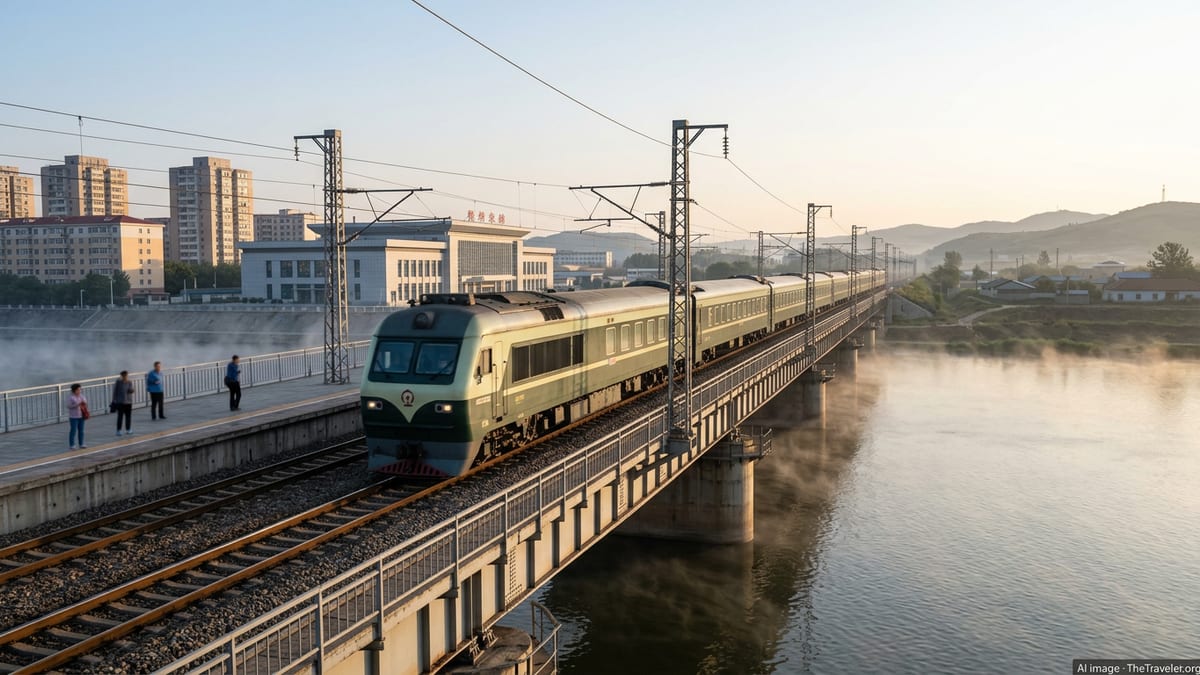
From Peace Symbol to Stalled Project and Back Again
The rail corridor leading from Seoul toward the Demilitarized Zone has long carried a significance that reaches far beyond its modest length. Lines such as the Gyeongui route to Dorasan Station were originally promoted as physical symbols of inter-Korean rapprochement and, in the late 2010s, became stages for ceremonies and surveys aimed at reconnecting tracks across the border. According to publicly available historical records, South Korean inspection trains briefly crossed into North Korea in 2018 to study future modernisation of northern railways, before diplomacy stalled and most joint projects froze.
Subsequent years brought a deterioration in relations and a halt to regular inter-Korean cooperation. Unification-focused rail schemes were shelved, cross-border tourism shut down and domestic attention shifted toward South Korea’s internal high-speed network and links to global trade routes. Coverage of North Korea’s missile and nuclear programs, coupled with sanctions and closed borders during the pandemic, left the idea of seamless rail travel between Seoul and Pyongyang looking increasingly distant.
Recent reporting now indicates that the South Korean government is dusting off at least part of that earlier vision. Rather than waiting for a breakthrough with Pyongyang, planners are refocusing on the southern side of the line: restoring tourist-oriented rail services to the frontier area, upgrading stations near the DMZ, and ensuring that any revived route could one day plug into a cross-border system if conditions allow.
This shift reflects a broader recalibration in Seoul’s approach. Analysts of Korean policy note that, since 2025, the emphasis has moved toward practical engagement and incremental steps that can proceed without formal agreements with the North. In rail terms, that means improving access to border districts, creating visible symbols of openness and readiness, and keeping alive infrastructure that could serve as a bridge to future cooperation.
Tourism-Focused Service to the DMZ
A central feature of the revived initiative is a plan to restart and expand tourist rail services to areas just short of the Demilitarized Zone. Domestic media coverage of the project describes efforts to bring back excursion trains from the Seoul region to near-border stations, which in the past hosted guided visits to observation posts, peace parks and war memorials. These trains are expected to operate entirely on South Korean territory, avoiding the complexities of crossing into the North while still capitalizing on the powerful draw of the frontier for both domestic and international visitors.
South Korean unification policymakers have publicly framed such tourism lines as a “starting point” for a more peaceful environment around the DMZ. The logic is that steady flows of civilian passengers can help normalize what remains one of the most heavily militarized borders in the world, turning nearby communities into gateways for education and remembrance rather than simply buffer zones. At the same time, operating the services as regular, ticketed trains ensures that they fit within existing national rail regulations and safety standards.
Local governments in frontier cities have been lobbying for renewed rail tourism for years, citing potential economic benefits for small businesses and cultural venues. Investment brochures from municipalities such as Paju highlight planned improvements to road and rail connections leading to the DMZ area, positioning the region as a logistics and tourism hub where freight lines, expressways and visitor-oriented trains intersect. Reviving the near-border rail route dovetails with these development strategies by bringing predictable passenger flows and raising the profile of local attractions.
For travelers, the return of DMZ-bound trains would mean a more seamless journey from central Seoul to the edge of the cease-fire line, avoiding transfers to tour buses and reducing congestion on highways. Operators are expected to market the route not only as a geopolitical curiosity but also as a gateway to hiking trails, riverside bike paths and cultural sites in northern Gyeonggi Province, broadening the appeal beyond purely political tourism.
Strategic Value Beyond Tourism
While the immediate focus is on tourism, the decision to revive the rail project also has clear strategic dimensions. South Korea’s long-term national railway plans, as reflected in official planning documents, envision a dense web of high-speed and conventional lines converging toward the northern border. Even if trains cannot yet cross into North Korea, maintaining and upgrading the approach corridors preserves the option of rapid integration at a later stage.
South Korean policy analysts frequently point out that, if political conditions were to change, rail links through North Korea could connect the South directly to China, Russia and the wider Eurasian network. That prospect has underpinned earlier concepts such as linking the Trans-Korean Railway to the Trans-Siberian line, potentially shortening freight routes between Northeast Asia and Europe. By keeping the southern approach in good condition, Seoul avoids having to start from scratch should a future opening occur.
The revived project also comes at a time when North Korea is reported to be deepening its own overland connections with China and Russia, including upgrades to border bridges, road corridors and regional rail hubs. Although these developments currently bypass South Korea, they underscore how infrastructure on and around the peninsula is being reshaped by shifting geopolitical and economic ties. In this context, a modern, fully functional rail line up to the DMZ serves as a visible statement that the South still sees value in eventual connectivity across the 38th parallel.
Security considerations remain central. The line runs through areas dominated by military installations and, in some sections, shares corridors with strategic roads. Any increase in civilian traffic must be balanced with defense requirements, contingency planning and coordination among multiple government agencies. For now, publicly available information suggests that planners are limiting the project’s scope to what can be safely operated without new cross-border agreements, effectively treating the frontier as a hard terminus while leaving the tracks symbolically pointing north.
Implications for Travelers and Regional Gateways
For international visitors, the revived rail project adds a compelling new option to South Korea’s already sophisticated transport landscape. Travelers accustomed to the country’s high-speed KTX services and extensive metro systems may soon have the chance to board a dedicated excursion train that traces the path of a divided history, ending within sight of a border that has shaped Northeast Asian politics for more than seven decades.
Tour operators are likely to package DMZ rail journeys with museum visits, cultural performances and guided walks, emphasizing both the human stories of separation and the forward-looking message of peaceful coexistence. The use of regular rail stock and existing stations could keep prices accessible, turning the route into a standard addition to itineraries for first-time visitors as well as repeat travelers seeking a deeper understanding of the peninsula.
The project also reinforces the role of northern Gyeonggi cities as regional gateways. Local development materials already promote industrial parks, logistics bases and residential districts clustered along the rail corridor. Enhanced passenger services would strengthen these nodes, supporting cafes, guesthouses and visitor centers tailored to travelers heading toward or returning from the DMZ. Over time, such growth could help balance tourism away from Seoul’s traditional hotspots by distributing visitor spending along the border belt.
Crucially, the revived line offers a means for South Korea to keep the idea of connection alive in the minds of both citizens and visitors, without relying on political breakthroughs that may be years away. Each departure toward the frontier serves as a reminder that the tracks do not end with the current stop, but continue in principle through fields and fences toward cities that remain out of reach.
A Rail Line Pointing Toward an Uncertain Future
Despite its new momentum, the project unfolds against a backdrop of persistent tension. Recent months have seen renewed missile tests by North Korea and a hardening of its official rhetoric, including constitutional changes that downplay the goal of Korean reunification. In this environment, few observers expect imminent progress on fully reconnecting the peninsula’s rail networks or restoring regular cross-border passenger services.
Yet the decision to advance the southern segment illustrates how infrastructure can serve as a form of quiet diplomacy. By investing in tracks, stations and services that stop just short of the border, South Korea keeps open a channel that is at once practical and symbolic. Should dialogue resume or circumstances shift, the physical foundations for deeper cooperation will already be in place.
For now, the revived rail project is less about where trains can go today than about what they represent. To ride north from Seoul toward the DMZ is to travel along a line of unresolved history, one that simultaneously reflects division and preserves the possibility of a different future. In the calculus of both policy and tourism, that combination is powerful enough to bring the dormant route back to life.