


More news on this day
CrossCountry, one of Britain’s largest long-distance rail operators, is entering a pivotal period of timetable upgrades and fleet refurbishment that is set to reshape east–west and cross-country rail travel through 2025 and 2026.
Get the latest news straight to your inbox!
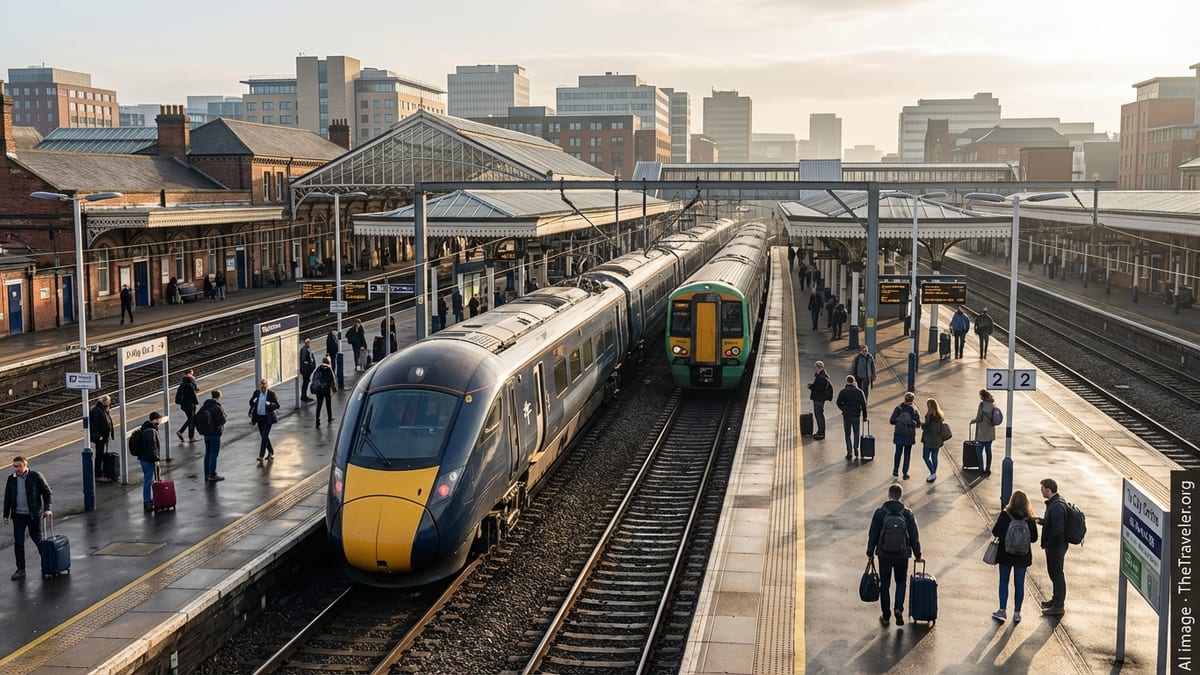
Major timetable uplift targets overcrowding and reliability
CrossCountry’s published plans for 2025 and 2026 indicate one of the most significant timetable overhauls on its network in more than a decade, with changes phased in from May 2025, December 2025 and May 2026. Publicly available company reports describe these changes as a multi-year effort to add capacity, simplify patterns and reduce chronic overcrowding on some of Britain’s busiest intercity flows.
The May 2025 timetable introduced new and adjusted services across the network, forming what the operator has described in its business plans as the first step in a broader uplift. Executive summaries released for the 2025–26 period highlight a focus on training additional crew and rebalancing rolling stock to support more frequent and longer trains on core routes.
According to CrossCountry’s own customer and performance reports, the December 2025 change is scheduled to deliver a further increase in services, with an emphasis on restoring and strengthening links that had been cut back in earlier years. The operator has framed this as part of a “sustainable programme of change,” coordinated with Network Rail and other train companies to fit within a congested national timetable.
Industry documents and parliamentary material show that these upgrades form part of contractual commitments agreed with the Department for Transport under CrossCountry’s current operating contract. The uplift is intended to address historic crowding and punctuality concerns that have drawn regular criticism from passengers and rail advocates.
Restored long-distance links and faster seaside connections
Detailed timetable information published by CrossCountry shows that the December 2025 change is due to reintroduce important long-distance services between Reading and Newcastle, as well as between Birmingham and Leicester. These flows strengthen cross-country connectivity without requiring passengers to travel via London, a long-standing feature of the brand’s network.
Press material issued by the company ahead of the December change indicates that additional services are planned between Reading and Newcastle via Birmingham, with selected trains operating in a more “express” pattern, calling at fewer intermediate stations. This is expected to cut journey times on some key flows while freeing up seats on stopping services for local passengers.
CrossCountry has also highlighted seasonal and leisure markets as a priority. In its recent announcements, the operator notes that more seats will be directed to coastal and “seaside” destinations through timetable tweaks, with extra capacity on certain weekend and holiday services. This responds to strong demand on summer Saturdays, when trains towards the south coast and South West have frequently been reported as heavily overcrowded.
For travellers, the practical effect is a denser service pattern on several trunk routes linking the South of England, the Midlands, the North East and Scotland. While exact stopping patterns vary across the week, journey planners for the 2025–26 period show more through options between regional cities, alongside a small number of faster services designed for longer-distance passengers.
Fleet refurbishment promises upgraded on-board experience
Alongside timetable changes, CrossCountry has begun a substantial refurbishment of its Voyager fleet, the diesel multiple units used on many of its longest services. Company statements and rail-industry briefings indicate that the first refurbished train is expected to enter service by spring 2026, with work continuing across the fleet thereafter.
The refurbishment programme focuses on modernising interiors rather than procuring new trains. Public information shows that upgrades include revised seating layouts, improved luggage and cycle storage, new or expanded power and charging facilities and refreshed interior finishes. The aim is to extend the life of the existing trains while bringing them closer to the standards now common on newer intercity fleets elsewhere on the network.
Documents circulated within the wider rail supply chain in early 2026 describe CrossCountry’s overhauled trains as part of a pipeline of refurbishment work passing through major UK rolling stock works. The investment reflects ongoing debate across the industry about the balance between new-build trains and life-extension projects for existing fleets.
For passengers, the changes are intended to translate into more reliable on-board systems and a more comfortable environment on journeys that can run for several hours across multiple regions. However, the pace at which refurbished units are introduced, and how quickly older interiors disappear from daily service, will be closely watched by frequent travellers.
Public scrutiny, performance pressures and contract context
Despite the planned improvements, CrossCountry remains under intense public and political scrutiny. Passenger forums, social media discussions and consumer coverage through 2026 frequently highlight overcrowding, short formations and service disruptions, particularly on peak-time and long-distance trains linking major cities such as Manchester, Birmingham, Bristol and Southampton.
Official correspondence published by the Department for Transport in 2024 and subsequent updates show that CrossCountry’s performance has been closely monitored against contractual benchmarks. Publicly available letters and business-plan summaries refer to expectations around punctuality, capacity and customer satisfaction, with timetable changes framed as a key mechanism for meeting those targets.
At the same time, broader structural shifts in Britain’s rail industry are influencing CrossCountry’s operating environment. Government policy in recent years has moved away from traditional franchising towards contracts that give the state a much greater role in specifying services and managing revenue risk. Collections of official documents on rail franchising indicate that several operators have already transferred to public-sector control following new legislation.
Within that context, CrossCountry’s contract and future status continue to attract interest from transport commentators. While there is no confirmed change to the operator at the time of writing, sector analysts regularly point to the company’s performance and passenger sentiment as factors that could shape longer-term decisions about who runs cross-country services in Britain.
What the changes mean for travellers planning trips
For leisure and business travellers using CrossCountry, the most immediate impact of the current wave of changes is a more dynamic timetable pattern through the remainder of 2025 and into 2026. National planning information confirms that network-wide timetables are adjusted twice a year, in May and December, meaning that some of the operator’s planned uplifts will arrive in stages rather than all at once.
CrossCountry’s own timetable pages now carry the latest schedules for the period from 17 May to 12 December 2026, reflecting previous uplift phases and incremental adjustments. Travellers booking ahead are encouraged by industry guidance to use journey planners rather than relying on printed or cached timetables, as late alterations for engineering work or operational reasons can affect specific trains.
For those journeying between regional centres such as Reading, Birmingham, Manchester, Newcastle, Bristol and the South Coast, the restored and enhanced services should gradually increase choice, with more direct trains and some faster options on key flows. However, ongoing infrastructure work, speed restrictions and seasonal demand patterns mean that crowding and delays may still be a feature on busy days, even as extra capacity is added.
As Britain’s rail network moves through a period of restructuring and large-scale infrastructure delivery, CrossCountry’s timetable uplift and fleet refurbishment represent an attempt to improve one of the country’s most important non-London rail networks. How far these measures go towards satisfying passengers will become clearer as refurbished trains arrive and the full 2026 timetable pattern beds in.